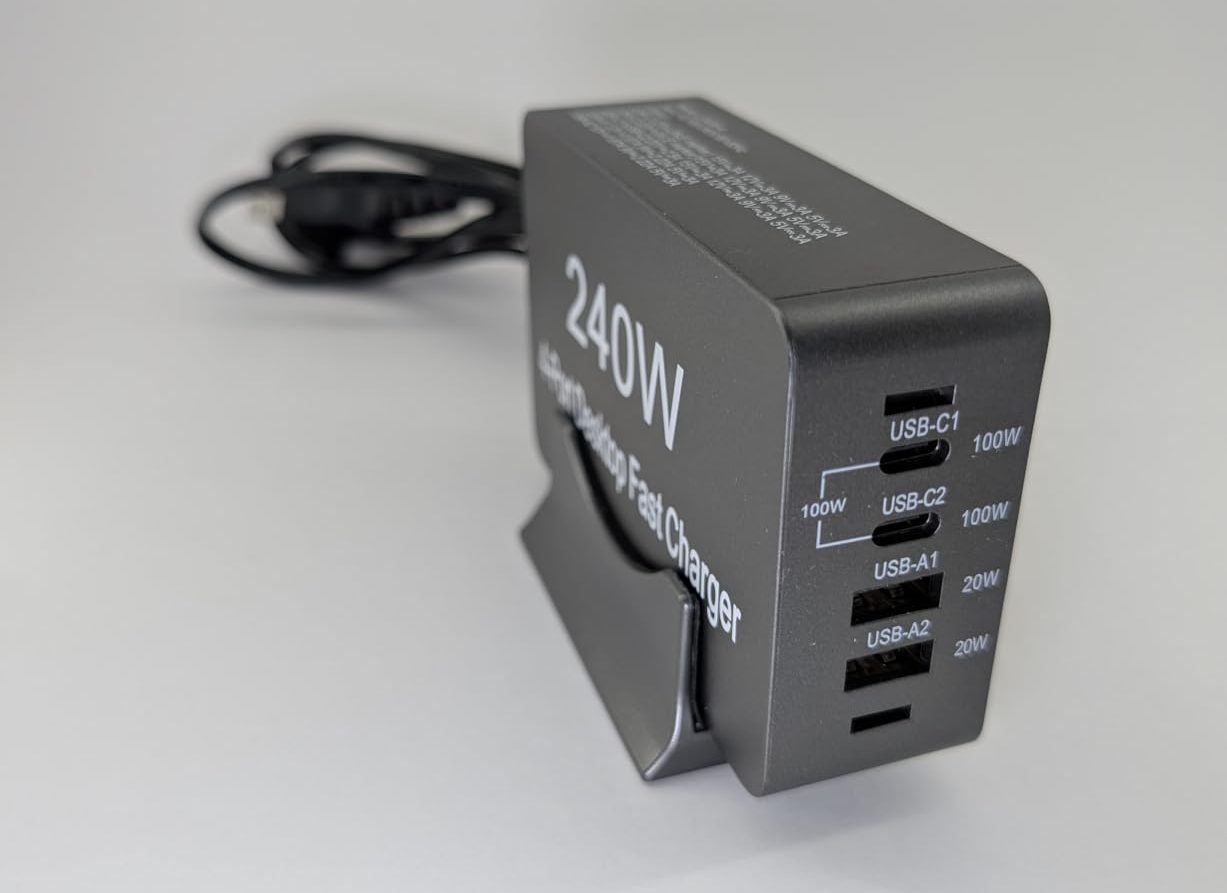
The corner of the desk where charging cables used to sprawl has become something else in many homes: a single point of convergence. One block, four ports, everything plugged in at once. The shift happened gradually, then all at once, as people realized they were managing five or six separate adapters for devices that could theoretically share power through USB-C. The consolidation felt less like an upgrade and more like an overdue correction.
For iPhone users still carrying Lightning cables alongside USB-C equipped iPads and MacBooks, the transition created a brief period of confusion. Some households ended up with hybrid setups—one multi-port station for the newer devices, one old adapter for the phone that hadn’t been replaced yet. The friction point wasn’t the technology, it was the timing. People don’t replace all their devices simultaneously, which means the promise of unified charging lives a few product cycles ahead of reality.
The tangle wasn’t just physical—it was a daily reminder that every device carried its own separate power requirement. Laptop chargers took up multiple outlets. Phone adapters competed for space. Tablet charging happened whenever someone remembered to swap cables. The four-port station didn’t eliminate those tensions entirely, but it did compress them into a smaller footprint. Now the question isn’t where to plug something in—it’s which port to use.
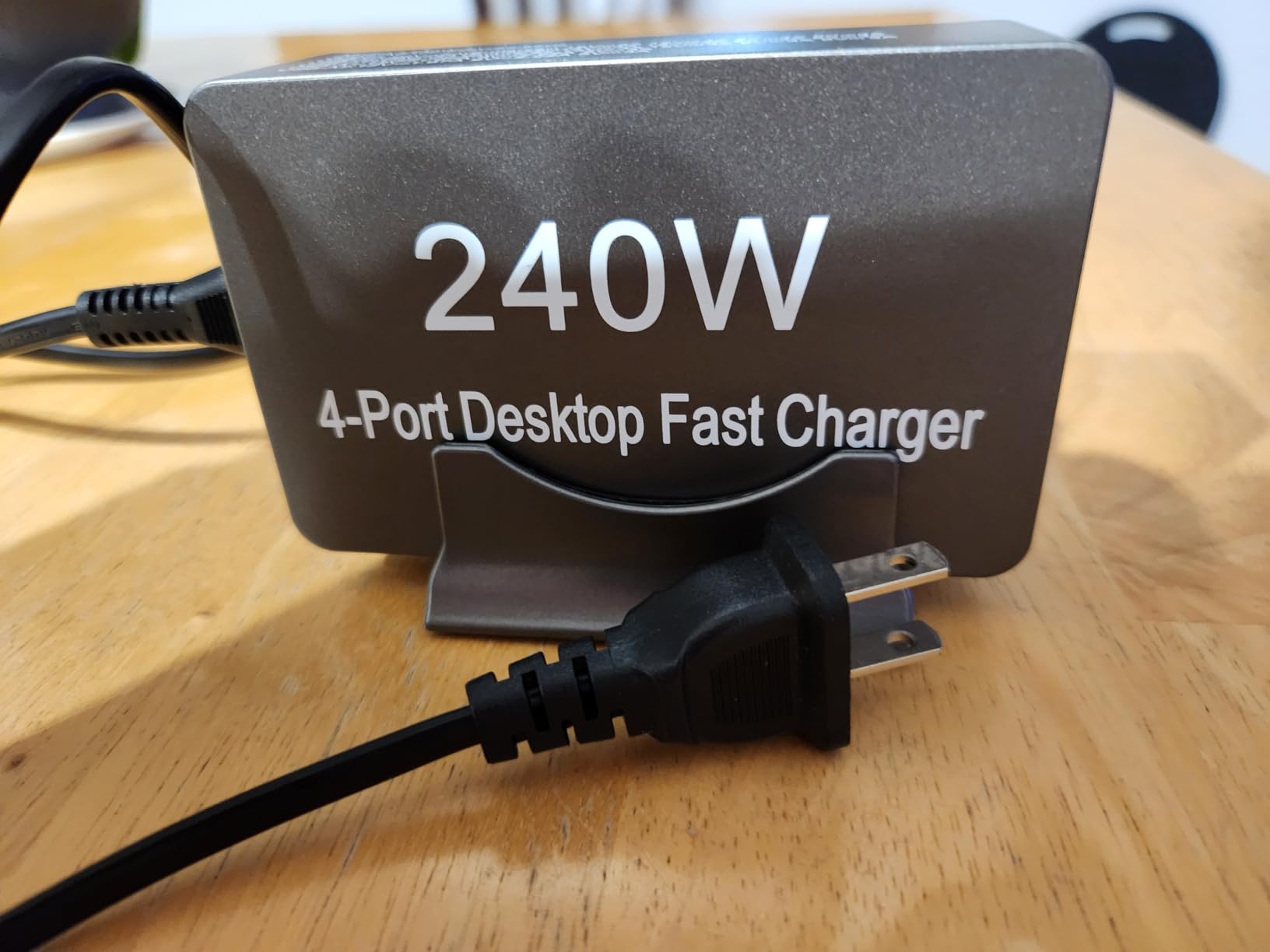
That shift introduced a new kind of negotiation. Higher wattage ports are reserved for laptops. Lower wattage handles phones. Tablets occupy the middle ground. There’s an informal hierarchy that develops, usually unspoken, about which device gets priority when all four ports are occupied. It’s not dramatic, but it’s present. Someone unplugs the iPad to charge the MacBook. The iPhone waits until morning. These are the small domestic calculations that didn’t exist when every device had its own dedicated adapter.
The consolidation also revealed how many things people charge simultaneously. Two phones, a laptop, and a tablet isn’t an unusual combination anymore. Add wireless earbuds or a smartwatch, and the four ports fill quickly. The station didn’t create the demand—it made the demand visible. Before, those devices charged in rotation, spread across different rooms and different outlets. Now they charge together, which means people see the cumulative power draw in real time.
MacBook users, accustomed to bulky proprietary adapters, adapted to the four-port model more slowly. There’s a residual hesitation about whether a shared hub can deliver the same wattage as a dedicated brick. The specs say it can, but trust lags behind capability. Some people still use the original laptop adapter and reserve the hub for smaller devices, just in case. That caution reflects a deeper truth: power delivery is one of the last places where people allow margin for error.
Previously listed at fifty dollars, current models of these multi-port stations now appear around thirty dollars, a price that makes the consolidation feel less like an investment and more like routine maintenance. View Listing. The cost aligns with what people used to spend on individual adapters anyway, except now it happens once instead of incrementally. The station doesn’t solve every charging problem, but it does remove the visual clutter of multiple cords snaking across the same surface. That alone has been enough to shift how people think about power distribution in shared spaces.
"Note: Readers like you help support The Apple Tech. We may receive a affiliate commission when you purchase products mentioned on our website."