There’s a specific kind of math that happens when your iPhone is at 8 percent and the only available cable is the short one velcroed to the nightstand. You can charge it, but you can’t use it. You can plug it in, but you can’t answer texts from bed, can’t scroll while it’s tethered to the wall. The cable decides the posture.
This wasn’t always a negotiation. When Lightning cables first arrived, a three-footer felt sufficient. The phone charged overnight on a bedside table, or during a commute in a cupholder, or for 20 minutes on a desk between meetings. The cable’s job was to connect two points, and three feet covered most of those geometries without much thought.
But iPhone usage has drifted. The device isn’t just a phone anymore—it’s the remote for the TV, the boarding pass at the airport, the two-factor authentication device for everything else. It’s in constant rotation, and when it needs power, it needs power now, but it also needs to keep working. The three-foot cable that worked perfectly fine two years ago now feels like a tether, not a convenience.
So people started buying longer ones. Six feet. Ten feet. Lengths that allow the phone to reach from an outlet behind the couch all the way to where you’re actually sitting. Cables that let you charge in the car while the phone sits in a passenger’s lap instead of dangling from the dashboard. The iPad does the same calculation—it’s easier to watch something while it charges if the cable doesn’t dictate your viewing angle.
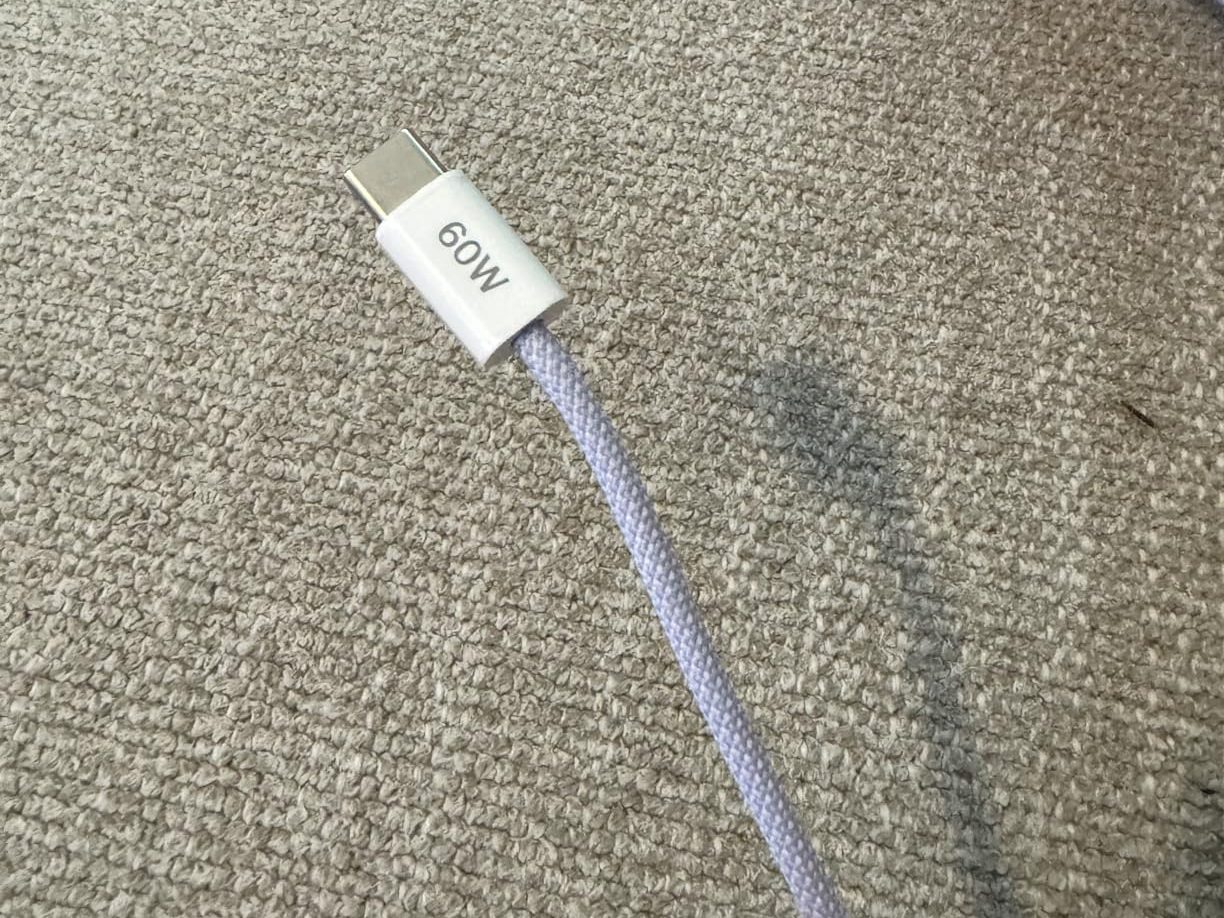
Apple’s ecosystem shift to USB-C across iPhones and iPads collapsed what used to be two separate cable inventories into one shared standard. That should have simplified things, but it also meant that every device now competes for the same cable at the same time. If the MacBook is charging, the iPhone waits. If the iPad is plugged in, the phone doesn’t get priority. The household cable supply becomes a system of substitutions and compromises.
What emerged isn’t a single perfect cable but a distributed network of cables in different lengths, stored in different rooms, optimized for different contexts. A short one stays in the car. A long one lives behind the couch. A medium one sits on the kitchen counter. Each one encodes a specific use case, a small behavioral accommodation that got locked in over time.
The rhythm of charging has changed, too. It’s no longer just overnight. It’s during lunch, during a meeting, during the 30 minutes before leaving the house. The cables aren’t backups—they’re infrastructure. Previously listed at $15, current listings hover around $9 for five-cable assortments that acknowledge this isn’t about redundancy. It’s about having the right length in the right place when the battery icon turns red.
"Note: Readers like you help support The Apple Tech. We may receive a affiliate commission when you purchase products mentioned on our website."