The iPhone’s camera produces professional-quality images, but moving those files off cameras and memory cards into iOS requires adapters that highlight gaps in Apple’s wireless-everything vision.
The iPhone can shoot ProRAW images, record 4K video at 60fps, capture Dolby Vision HDR footage. It’s a capable camera in its own right. What it can’t do is read the SD card from your mirrorless camera or drone or action cam. Those files live on physical media, and getting them into the iPhone requires an external card reader that connects via USB-C and dangles from the phone’s charging port.
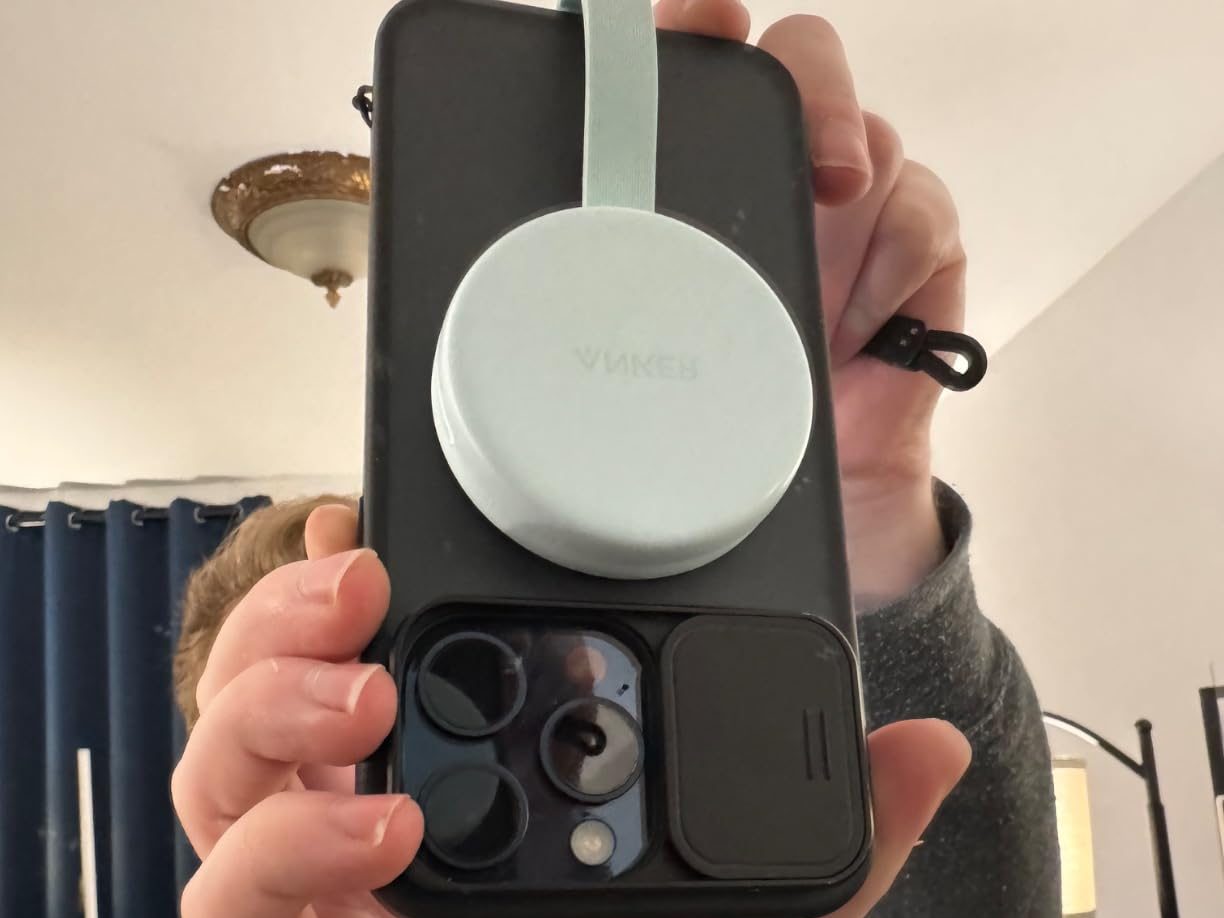
MagSafe introduced a magnetic attachment system for wireless chargers, battery packs, and wallets. The magnets align accessories precisely on the iPhone’s back, creating a reliable connection without requiring cases with special mounting points. Card readers with built-in MagSafe magnets use this same system, snapping onto the iPhone’s back and routing a cable around to the USB-C port. The setup is more integrated than a standard dongle, but it’s still external hardware compensating for the iPhone’s lack of a card slot.
The magnetic attachment addresses a specific frustration with traditional card readers. Dongles that plug directly into the USB-C port protrude from the phone’s edge, creating leverage that can damage the port if the phone shifts or if the reader gets bumped. MagSafe distribution of attachment across the entire back panel reduces this stress, making the reader more stable during file transfers even if the phone isn’t perfectly stationary.
Transfer speeds determine how long the reader stays attached to the iPhone. A 32GB SD card full of photos might take five minutes to copy at 312MB/s, or twenty minutes at slower speeds. The iPhone isn’t unusable during transfers—you can browse other apps, send messages, take calls—but the Files app needs to remain active to complete the copy, and disconnecting the reader prematurely interrupts the process. Faster speeds reduce the duration of this tethered state.
The Files app treats the SD card as a removable volume, which means you’re navigating file structures designed for cameras, not iOS. Folders have cryptic names like DCIM and 100CANON. Files are numbered sequentially with extensions that indicate format but not content. You can preview images by tapping them, but organizing and selecting what to import requires more manual work than the Photos app’s usual import interface, which is optimized for iPhone-to-iPhone or camera-to-Mac transfers via iCloud Photo Library.
MagSafe was designed to attach chargers and wallets to the iPhone, but its magnetic array has become a mounting system for accessories Apple never envisioned. The ecosystem’s modularity extends beyond what Apple sells directly, allowing third-party manufacturers to create tools that leverage MagSafe’s mechanical connection while serving purposes outside Apple’s original intent. The card reader is one example. Car mounts, tripod adapters, and desktop stands are others.
The reader’s compact form factor makes it viable to carry routinely, which changes when you transfer files. Instead of waiting until you’re back at a desk with a Mac, you can import photos to the iPhone immediately after shooting, edit them on the device, and share them before you’ve left the location. This immediacy is valuable for social media, for time-sensitive documentation, for backing up files while they’re fresh. The workflow isn’t as seamless as shooting directly on the iPhone, but it’s faster than deferring all transfers to a computer.
Previously listed at $25, current listings hover around $9 for MagSafe-compatible card readers with built-in USB-C cables. The low price point has made these accessories common enough that they’re shifting from specialty tools to standard gear for iPhone users who also shoot with dedicated cameras. The reader doesn’t replace iCloud or eliminate the need for a Mac in a photography workflow, but it fills a gap—moving files from physical media into the iPhone’s ecosystem—that Apple’s cloud-first approach doesn’t address. The magnetic attachment is elegant, but the need for the reader at all reflects a tension between Apple’s vision of a wireless future and the reality that physical storage media remains central to how many people create and manage content.
"Note: Readers like you help support The Apple Tech. We may receive a affiliate commission when you purchase products mentioned on our website."