
CarPlay adoption has created a generational divide between newer cars and older models, forcing iOS users into workarounds that feel increasingly outdated yet remain functionally necessary.
The auxiliary port represents a technological dead end that refuses to die, sustained entirely by the number of vehicles still on the road that have nothing else. Apple removed the headphone jack from the iPhone 7 in 2016, signaling a wireless-first future. But millions of cars manufactured before that shift still rely on 3.5mm connections as their only interface for external audio. The gap between Apple’s trajectory and automotive replacement cycles has created a strange persistence: adapters that bridge Bluetooth to a port that shouldn’t still matter but does.
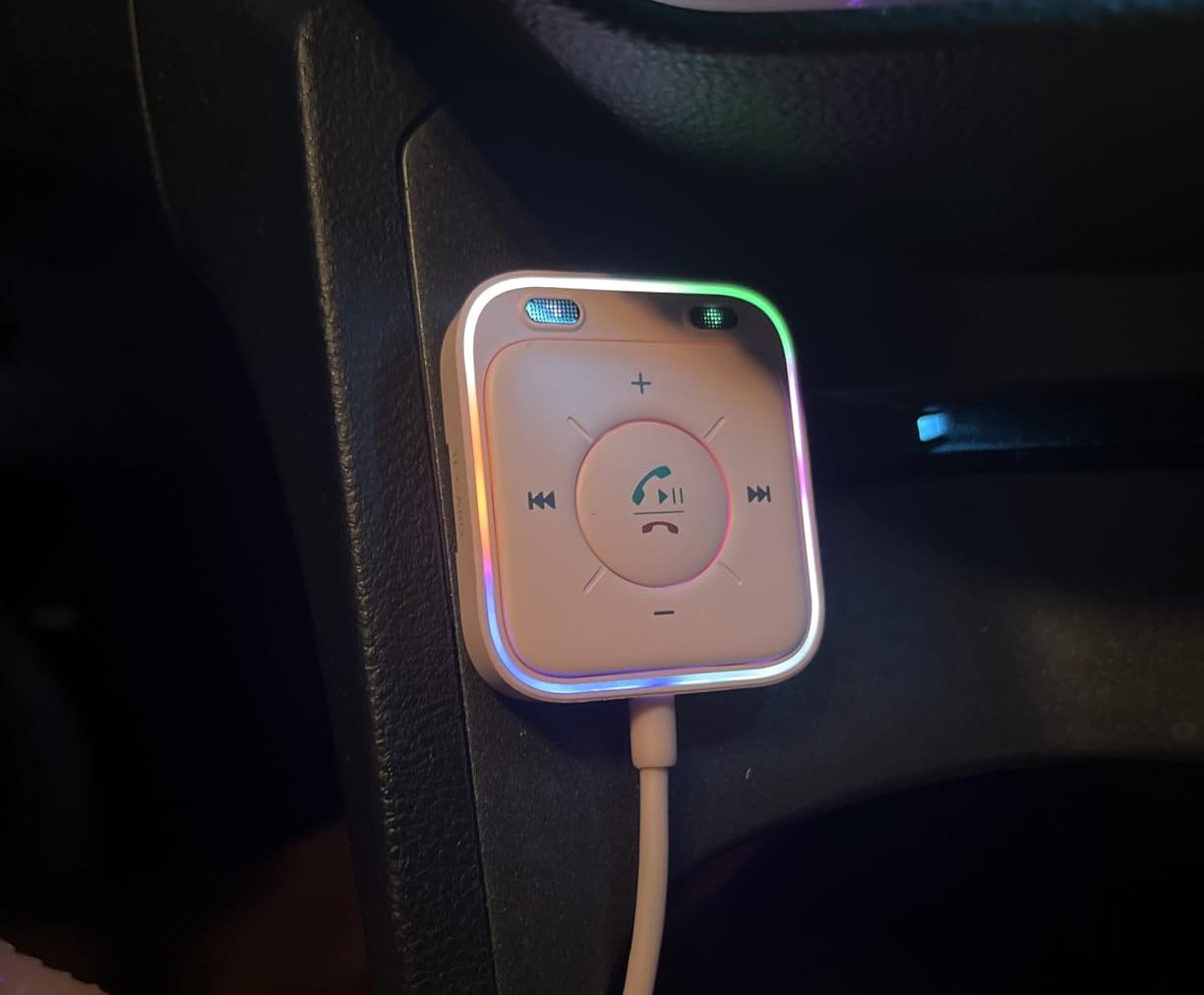
The user experience is layered. Plug the adapter into the car’s auxiliary input. Pair an iPhone via Bluetooth. Route audio through the adapter, which converts the wireless signal back into analog and sends it through a cable to the car stereo. It’s a convoluted path that exists only because two incompatible technologies must coexist in the same space. The iPhone streams wirelessly to a device whose entire purpose is to make that stream wired again.
Voice calls introduce additional complexity. Older car stereos weren’t designed for hands-free calling—they expected music, not bidirectional audio. The adapters compensate with built-in microphones and noise cancellation, attempting to turn a music-only system into something that can handle phone conversations. The quality varies. Some calls are clear enough. Others require repeating yourself or pulling over to finish the conversation on the phone itself, defeating the purpose entirely.
Apple’s own solution to in-car iPhone integration is CarPlay, which assumes a compatible head unit. For vehicles without it, the options narrow quickly. Replacing the stereo is possible but expensive and sometimes impractical depending on the car’s age and dashboard design. The adapter becomes the path of least resistance—cheap, immediate, reversible. It solves the problem without requiring permanent modification to the vehicle.
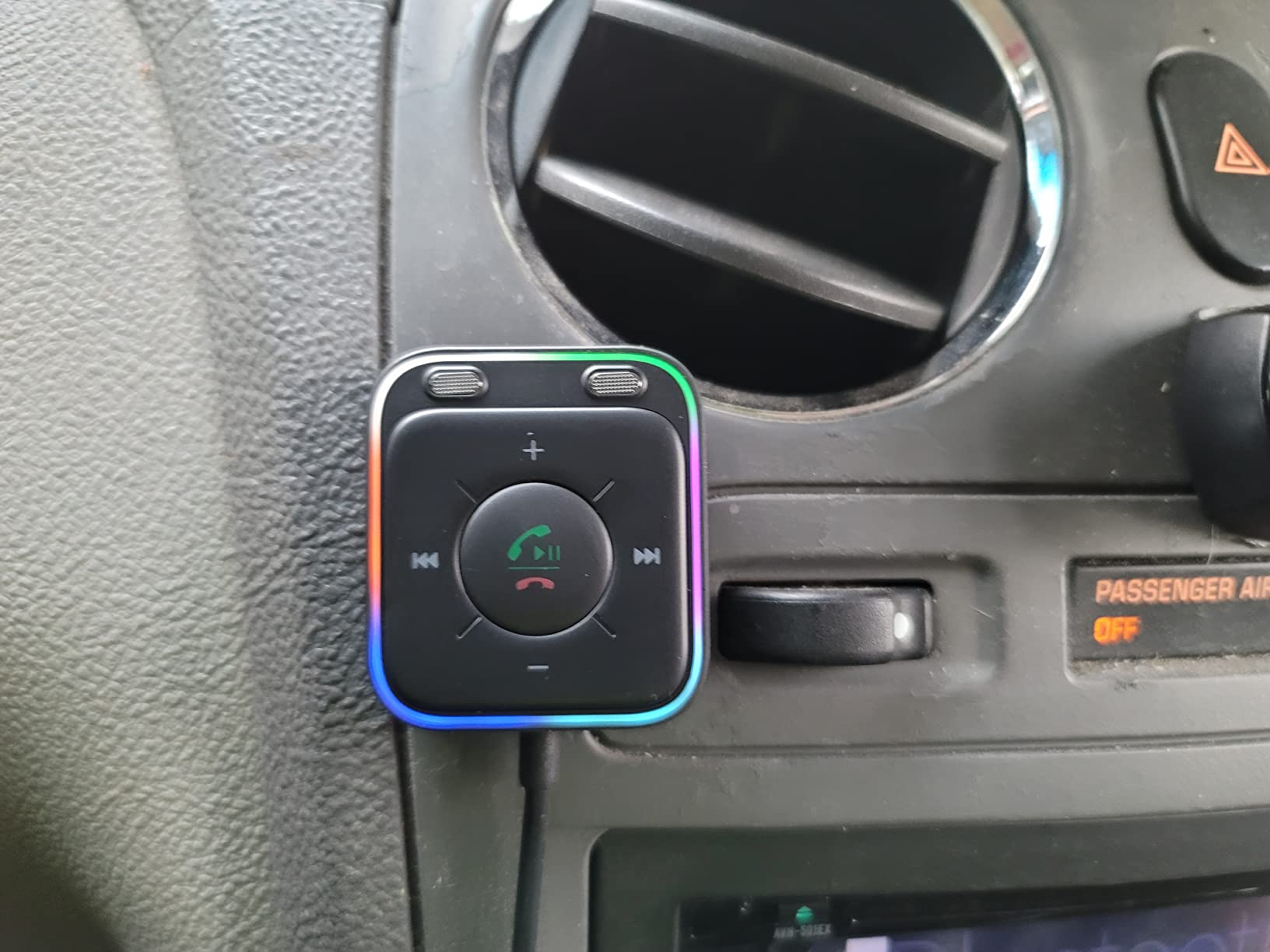
What’s interesting is how normalized this workaround has become. iPhone users in older cars don’t see the adapter as a failure of ecosystem design but as an expected part of ownership. It lives in the center console or glove box, pulled out when needed, largely invisible otherwise. The behavior is habitual now, unremarkable, even though it represents a friction point that newer vehicles eliminate entirely.
The auxiliary port’s persistence also highlights automotive upgrade cycles that don’t align with consumer technology refresh rates. An iPhone gets replaced every two to four years. A car might last ten or fifteen. The adapter exists in that gap, serving users who’ve moved through multiple iPhones while driving the same vehicle, each new phone requiring the same old workaround.
Previously listed at $21.99, current listings hover around $10.79(CODE OGUEJO7S) for Bluetooth 5.4 adapters with dual microphones, noise cancellation, and plug-and-play functionality. The pricing reflects a category that’s become commodified through sheer ubiquity, serving a user base that’s large enough to sustain a market but shrinking gradually as older vehicles leave circulation.
"Note: Readers like you help support The Apple Tech. We may receive a affiliate commission when you purchase products mentioned on our website."