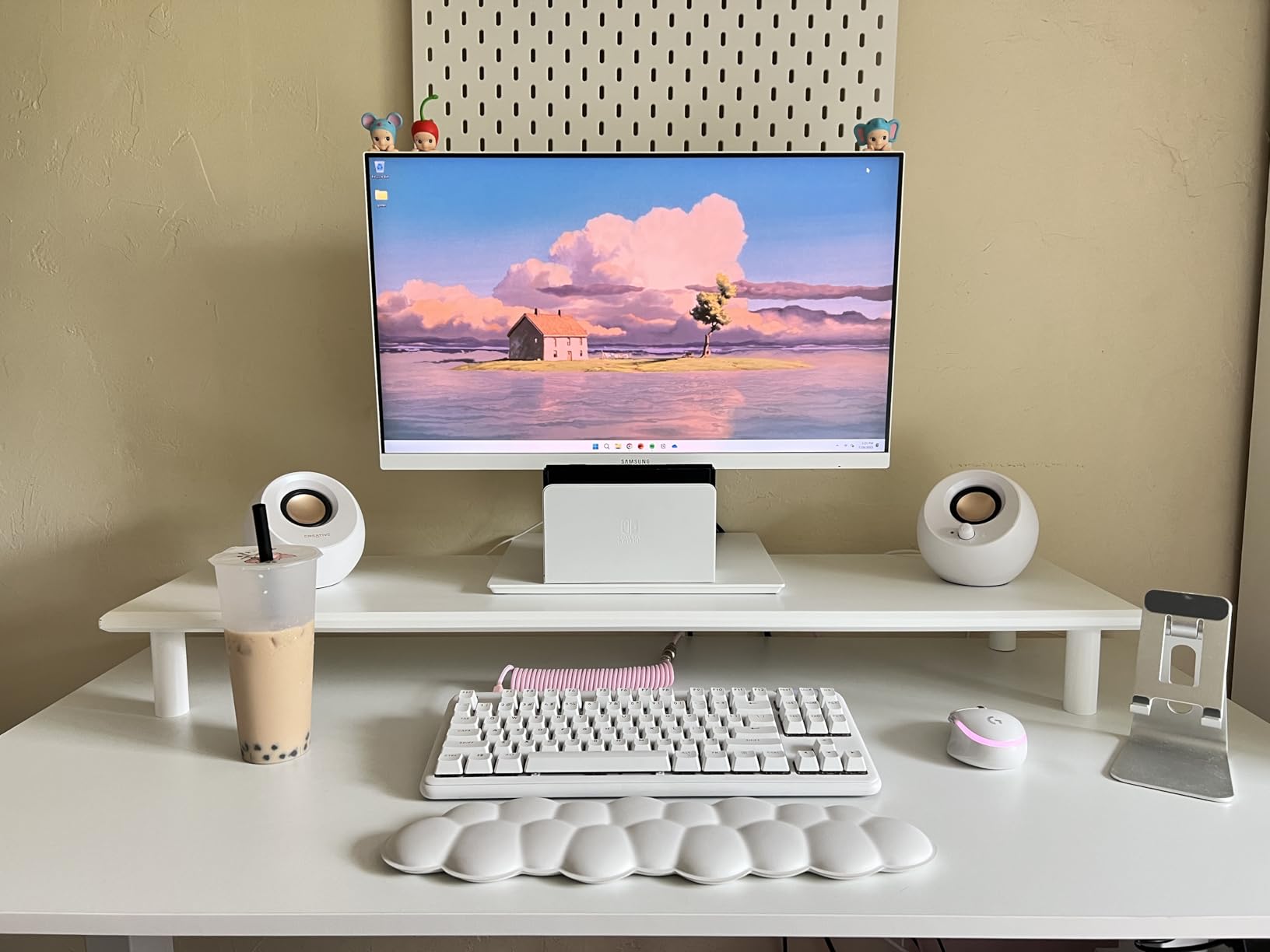
Dual monitor arrangements prioritize symmetry over ergonomics. Apple Sidecar’s flexibility gets constrained by furniture that was never designed for multiple screen levels.
White finishes in workspace accessories signal specific aspirational aesthetics—Scandinavian minimalism, clinical productivity, the visual language of tech company marketing materials. This color choice narrows the potential user base. Darker wood tones hide wear and disappear into varied environments. White demands maintenance and announces itself constantly. Choosing white means committing to a particular visual identity for your workspace, one that requires defending through cleaning and careful use.
The 300-pound weight rating addresses a concern most users don’t have while ignoring one they do. Desktop monitors rarely exceed thirty pounds even in dual setups. The excessive capacity is reassurance theater, making the product feel substantial. But what users actually need is lateral stability—resistance to wobbling when typing or adjusting monitor angles. Weight capacity and wobble resistance aren’t the same property. A riser can support 300 pounds while still transmitting every keystroke vibration to the screens above it.
Dual monitor risers assume both screens are the same size and height. They’re not. A 27-inch primary display next to a 24-inch secondary creates an uneven roofline. Some users place the smaller screen on a separate riser to align the tops. Others accept the asymmetry. A few place books or reams of paper under the smaller monitor. Each solution introduces new problems—more desk clutter, visual chaos, instability. The dual riser promised to solve organization problems but reveals how difficult it is to organize inherently asymmetric objects.
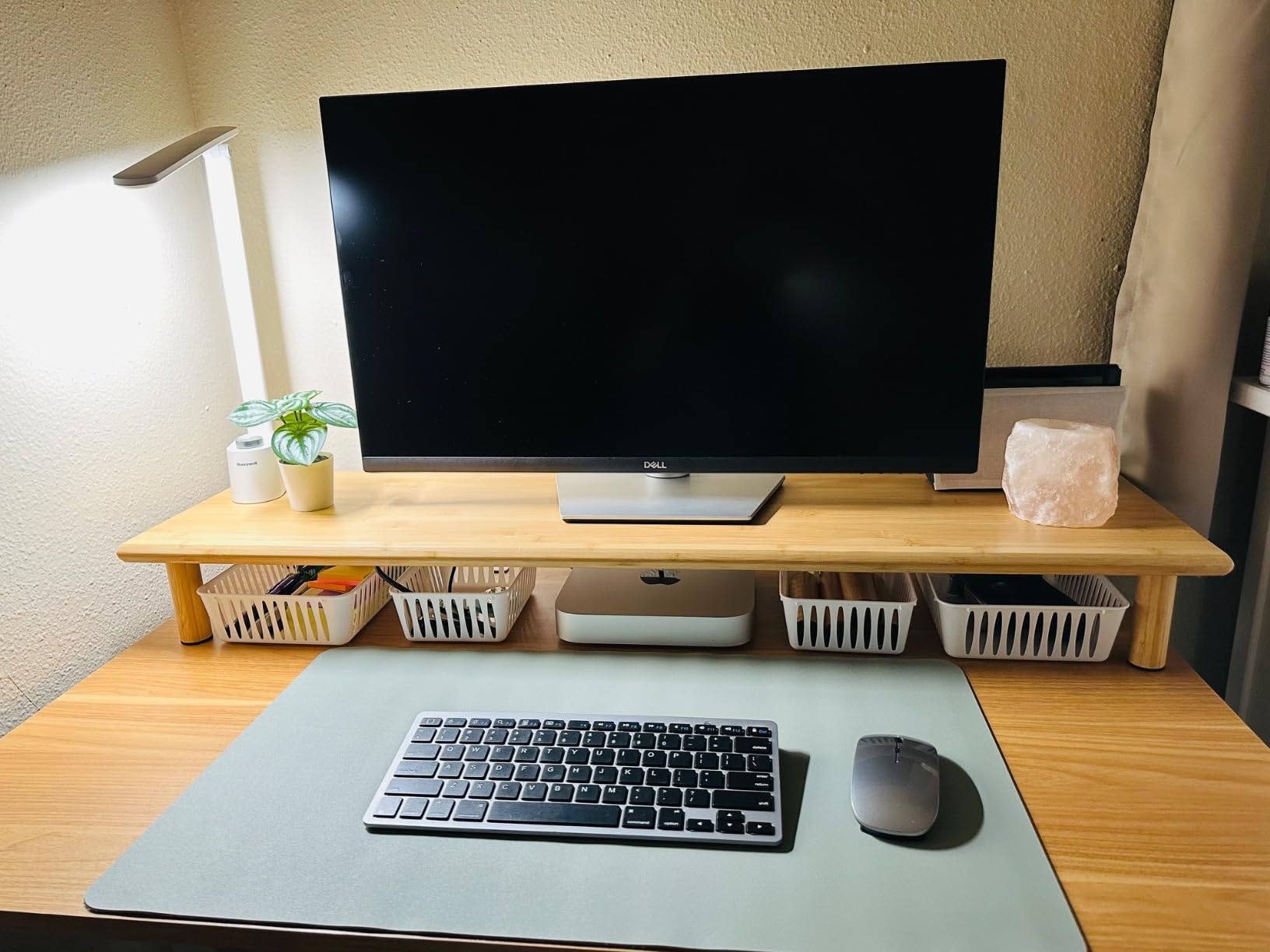
iPad as a secondary display via Sidecar theoretically benefits from a riser system. Elevate the primary monitor, keep the iPad on the desk surface, use both comfortably. But the height separation creates vertical eye movement that’s fatiguing. Reading from the top of the elevated display, then dropping your gaze to the iPad eighteen inches lower, then back up—this pattern strains neck muscles differently than horizontal multi-monitor setups. The ergonomic benefit of raising the primary display gets offset by the ergonomic cost of the vertical separation.
Underneath storage at this height accommodates slim items only. A wireless keyboard slides underneath, maybe a notepad or slim laptop. Anything with meaningful thickness—a book, external hard drive with its cable, a coffee mug—doesn’t fit. The storage becomes a landing zone for items that need hiding but not necessarily organizing. Receipts, adapters, that microfiber cloth you keep meaning to use. The space fills with debris rather than serving as functional storage.
Bamboo material choice intersects with environmental branding. Bamboo grows quickly and is marketed as sustainable, which provides moral justification for purchasing another desk accessory. But bamboo scratches easily and shows wear faster than harder woods. Within months, the sustainable choice looks damaged, undermining its premium positioning. The environmental benefit is real; the longevity suggestion is misleading.
The white color also complicates cable management visibility. Black cables against white surfaces create high visual contrast. Every cable becomes more noticeable, which defeats the clean aesthetic goal. Users end up buying white cables to match, or white cable management channels, each accessory purchase cascading from the original color choice. The bamboo riser becomes the anchor for a color-coordinated ecosystem of workspace products. Previously listed at $70, current listings show similar pricing.
"Note: Readers like you help support The Apple Tech. We may receive a affiliate commission when you purchase products mentioned on our website."