
The phone used to disappear when not in use. It lived in a pocket, a bag, somewhere out of sight until needed. That geography has changed. Now it sits on the desk, face-up, screen cycling through notifications, a persistent presence in the peripheral vision. The shift created new frictions.
A flat phone on a flat surface is difficult to grab quickly. It slides when nudged. The screen scratches against wood or glass. Video calls require improvised stacks of books to achieve a usable angle. What seemed like a minor inconvenience compounded over hundreds of daily interactions, each one a small moment of awkwardness.

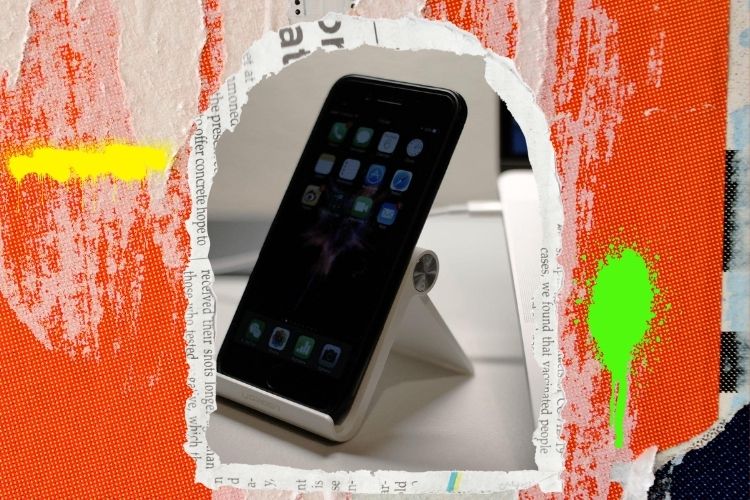
The desk stand quietly solves a problem most people didn’t realize they had until the device was constantly within arm’s reach. Elevating the screen changes the relationship. It becomes easier to glance at, easier to ignore, easier to incorporate into a workspace without committing full attention. The angle matters more than expected.
This isn’t about aesthetics, though that plays a role. It’s about creating a semi-permanent home for a device that otherwise lacks one. The phone is too important to be buried in a drawer, too distracting to be face-up and flat. The stand negotiates that middle ground, acknowledging the device’s centrality while containing its sprawl.
SIMILAR
This 71-inch iPhone tripod with wireless remote drops to $12.74 from $44.99
iPhone 17 Pro Max clear cases fall to $11 as users debate protection trade-offs
Apple Watch braided band pricing hits $7.59, testing user replacement patterns
Different phones bring different challenges. Larger models wobble on stands designed for smaller screens. Cases add bulk that disrupts the fit. The adjustability becomes crucial—not as a feature, but as a necessity for accommodating the unpredictable variety of devices cycling through a household.
The stand also signals something about work-from-home habits. The desk is no longer just a workspace; it’s a command center for multiple devices, each requiring its own position, its own sightline. The phone competes with monitors, tablets, notebooks. The stand is a claim to territory, a small assertion that the device deserves dedicated real estate.
What starts as a practical solution becomes a fixture. The stand doesn’t get moved or packed away. It remains, even when the phone isn’t docked, a placeholder for the device that will inevitably return. Previously listed at $8.99, current listings hover around $6.99.
"Note: Readers like you help support The Apple Tech. We may receive a affiliate commission when you purchase products mentioned on our website."