
There’s a particular posture that’s become common in coffee shops and open offices: someone wearing over-ear headphones, iPhone facedown on the table, no sound visibly playing. They’re not listening to anything. They’re listening to nothing, intentionally.
Active noise cancellation has evolved from a feature into a behavioral signal. What began as a tool for frequent flyers has become a daily friction reducer for people managing the cognitive load of iOS notifications, ambient noise, and the expectation of constant availability. The headphones create a bubble that airplane mode never quite achieved—visible, socially legible, and revocable at will.

This shift has less to do with audio quality than with boundary enforcement. iPhone users already manage Do Not Disturb schedules, Focus modes, and notification filtering, but those controls are invisible to others. Headphones communicate unavailability without explanation. They’re a physical manifestation of digital self-preservation.
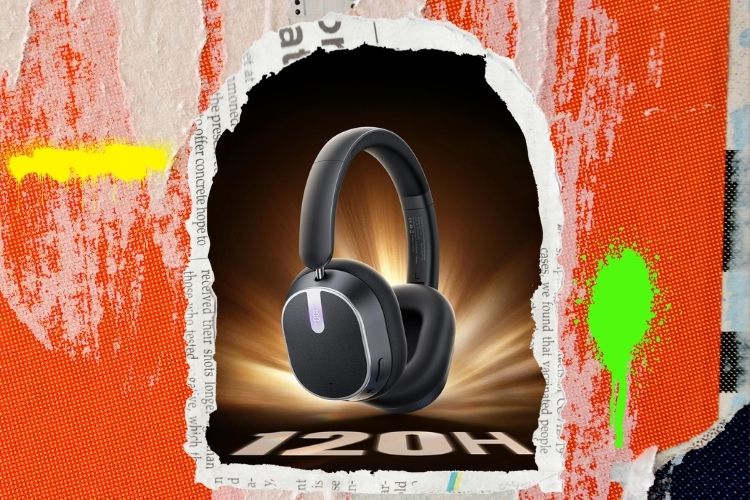
The hardware itself has adapted to this use case. Battery life now stretches across workweeks rather than flights. Transparency modes allow selective re-entry into ambient sound without removal. Spatial audio creates immersive environments that iOS alone cannot. These aren’t incremental improvements—they’re acknowledgments that the product serves a psychological function as much as an auditory one.
Some users report wearing them during Zoom calls even when relying on the MacBook’s built-in microphone, or keeping them on during commutes where podcasts used to fill the silence. The common thread isn’t content consumption. It’s the creation of a controllable acoustic environment in a world where iOS delivers dozens of micro-interruptions daily.
SIMILAR
Why iPhone users are carrying standalone noise machines instead of relying on sleep apps
Apple Watch charging became a bedside ritual, here's why the placement matters more than expected
iPhone users are quietly giving up the cable and most dont realize why it happened so gradually over time
The behavior raises questions about what Apple’s ecosystem has encouraged. If users need physical objects to enforce the boundaries that software promises but rarely delivers, the stack may be optimizing for engagement rather than equilibrium. Noise cancellation becomes a patch for notification overload, a hardware workaround for software design.
What’s emerged is a quiet arms race between iOS’s pull and the user’s desire for uninterrupted thought. The headphones become a kind of analog shield against digital intrusion, a tool that predates the smartphone but has found renewed utility in its wake.
Previously listed near $200, current listings for extended-battery models with iOS compatibility hover around $50, reflecting both market saturation and the normalization of all-day wear.
"Note: Readers like you help support The Apple Tech. We may receive a affiliate commission when you purchase products mentioned on our website."