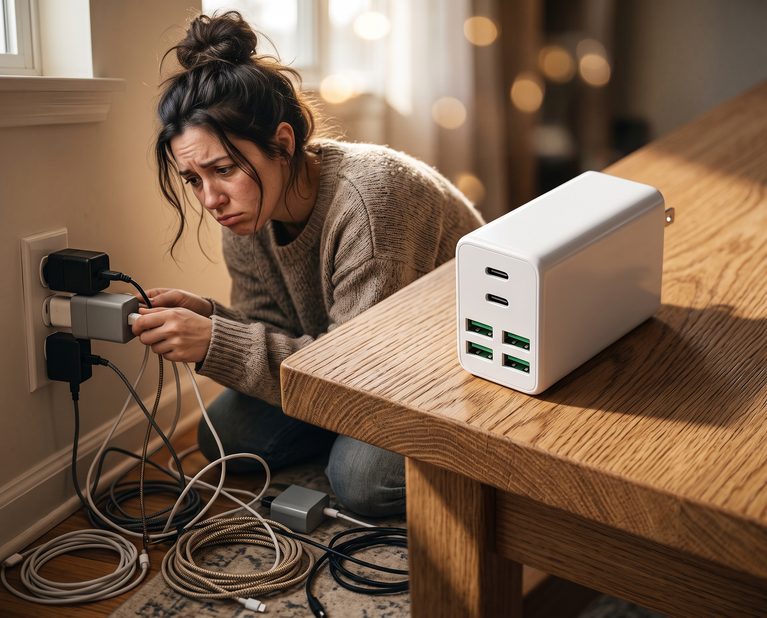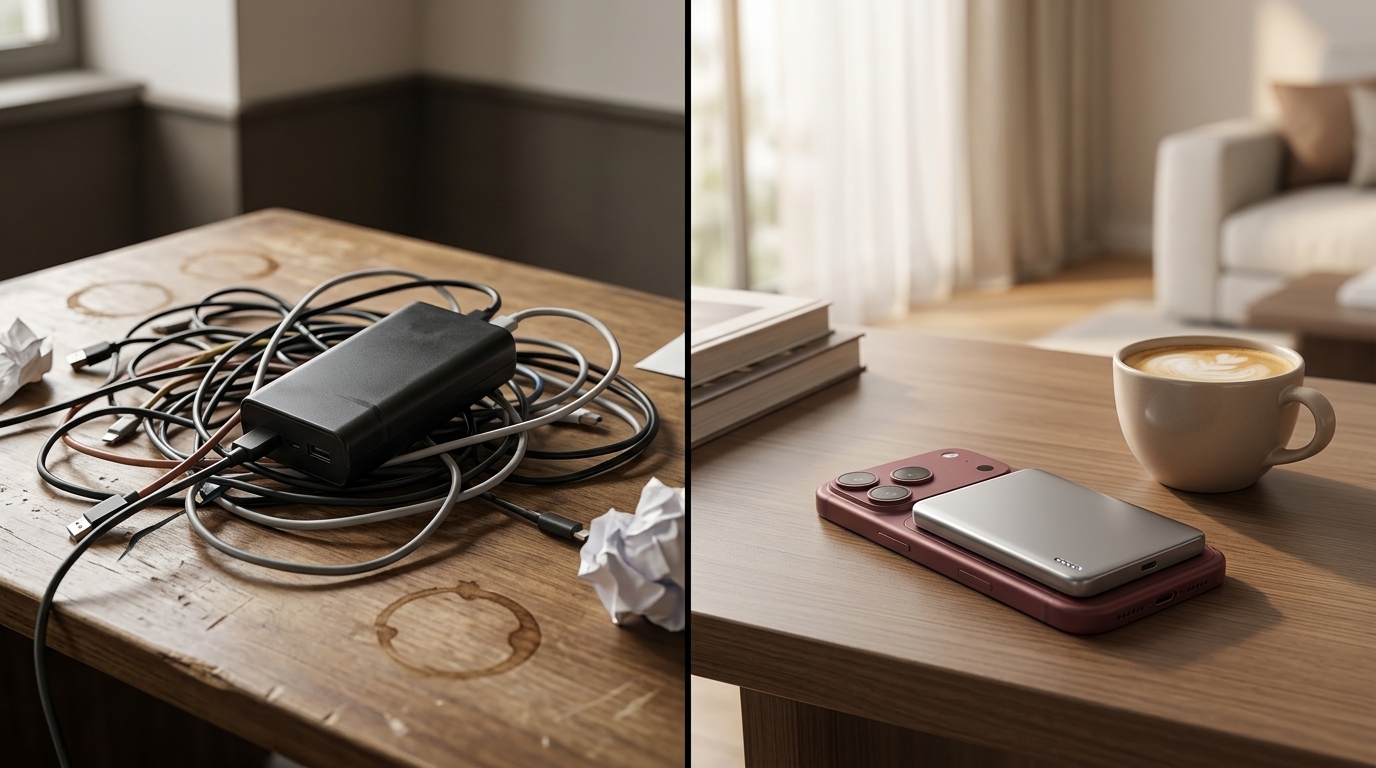
Portable batteries have carried a persistent frustration since their introduction: they require cables to be useful, and cables have a remarkable ability to disappear exactly when needed. The battery sits fully charged in a bag, but the cable is in another bag, another room, another time zone entirely.
Built-in cable designs attacked this problem directly. Instead of assuming users would keep track of separate components, manufacturers integrated cables into the battery casing itself—folded, coiled, or tucked into channels that keep them attached and accessible.
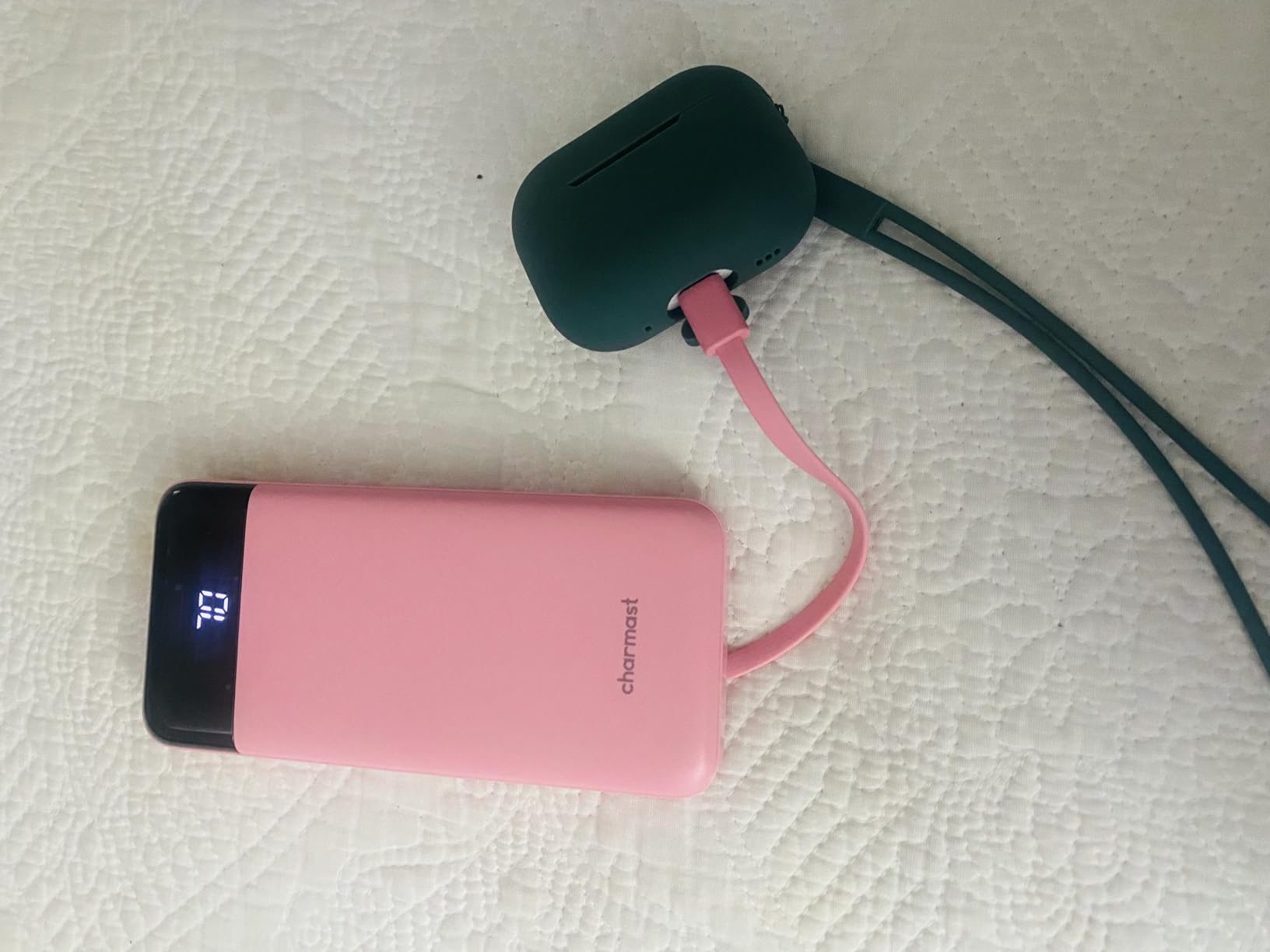
The behavioral impact is subtler than the engineering suggests. People don’t think about these batteries differently, they just stop thinking about them altogether. The device becomes genuinely grab-and-go, requiring no assembly, no hunting through pockets for the right connector, no moment of realization that the necessary cable is currently plugged into a wall somewhere else.
Mixed-device households—where iPhones and Android phones coexist—see particular value in batteries that include multiple cable types. The same battery can serve different devices without requiring adapters or separate equipment. It consolidates rather than multiplies.
SIMILAR
iPhone and MacBook users are compensating for a port problem Apple created
iPhone users are eliminating the tangled cable from every car charging session
iPhone users are transforming nightstands into silent charging infrastructure
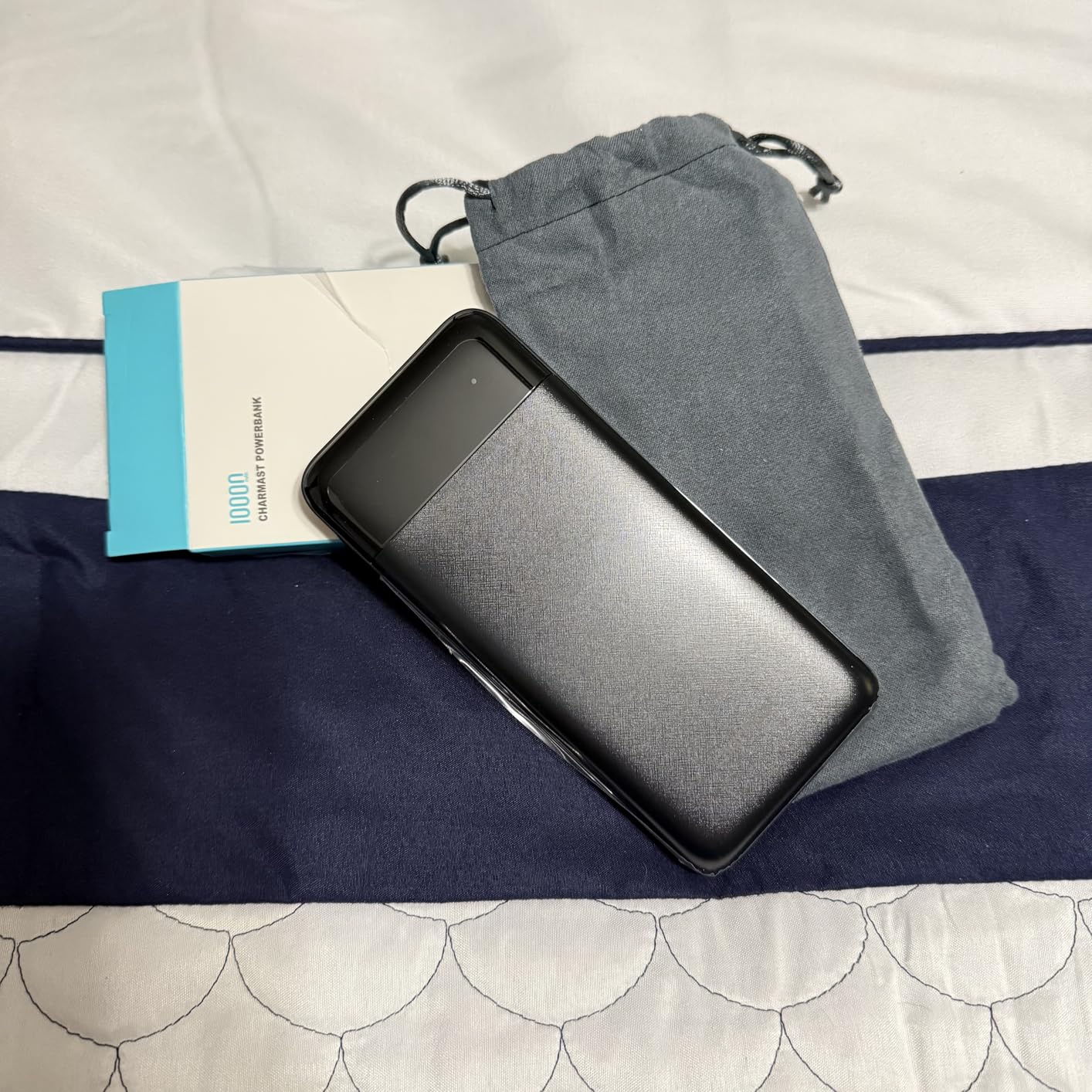
The capacity on these models tends toward the practical rather than the extreme. Ten thousand milliamp-hours is enough for two or three full phone charges, which covers most travel scenarios without adding significant bulk. The math works out: carry a bit less total capacity in exchange for actually having it when needed.
Design choices reveal themselves through use. Cables that retract cleanly stay functional longer. Cables that dangle or fold awkwardly snag on bag contents and fray faster. The best implementations make the cable presence nearly invisible until the moment it’s deployed.
These batteries typically range from twenty to thirty-five dollars depending on cable count and capacity. Previously listed at $29.99, current listings hover around $20.98 for variants offering six outputs and compatibility across major platforms.
The shift is simple: one less thing to remember, one less reason portable power stays home when it should be traveling.
"Note: Readers like you help support The Apple Tech. We may receive a affiliate commission when you purchase products mentioned on our website."