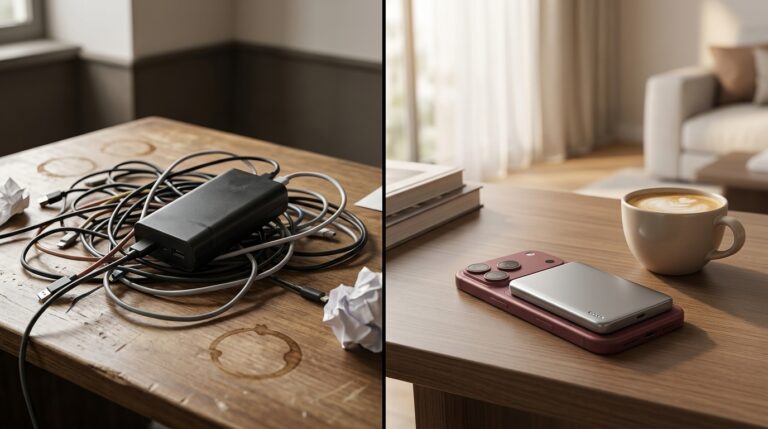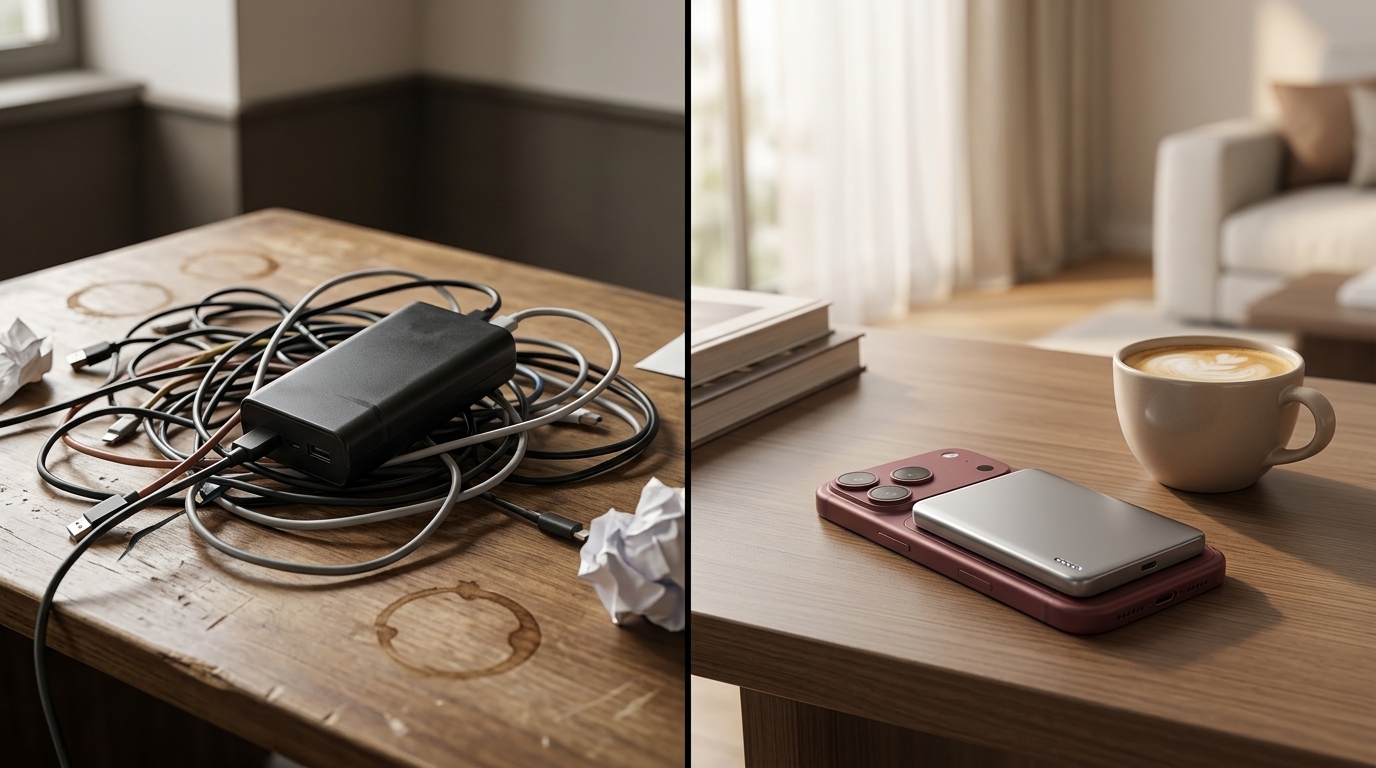

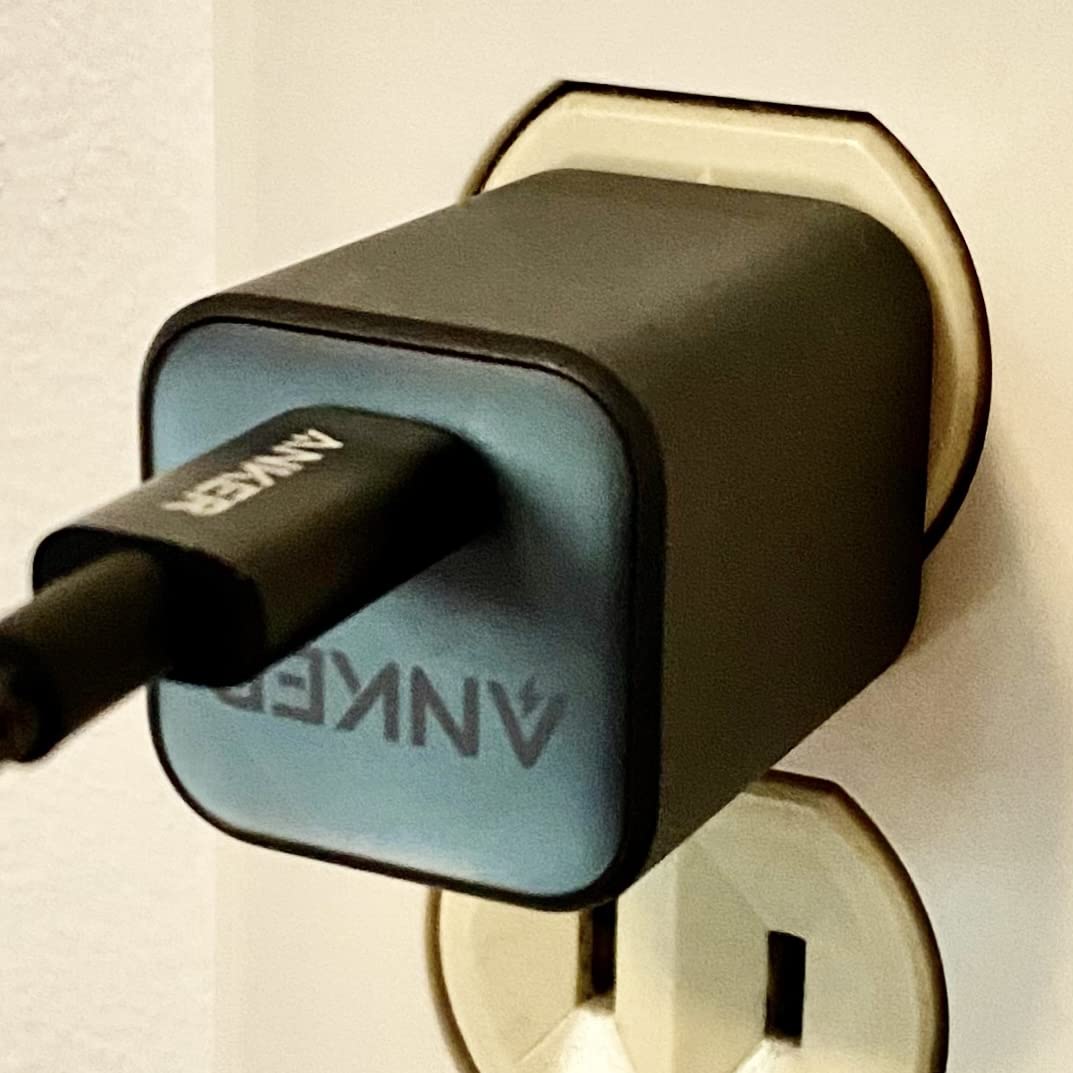
There’s a moment most iPhone users recognize but rarely discuss: the phone hits 8%, the calendar shows a meeting in twelve minutes, and suddenly the entire morning hinges on whether the battery can climb fast enough to survive the commute. That calculation—minutes of charge translated into percentage points—has become so internalized that the object doing the work barely registers anymore.
The shift happened gradually. A few years ago, the assumption was that charging happened overnight, or during long stretches at a desk. The adapter was either the one that came in the box or a replacement that looked identical. Speed wasn’t a variable people thought to optimize. But as screen time grew and battery anxiety became a daily texture, the equation changed. The question stopped being whether the phone would charge and became how fast it could happen.
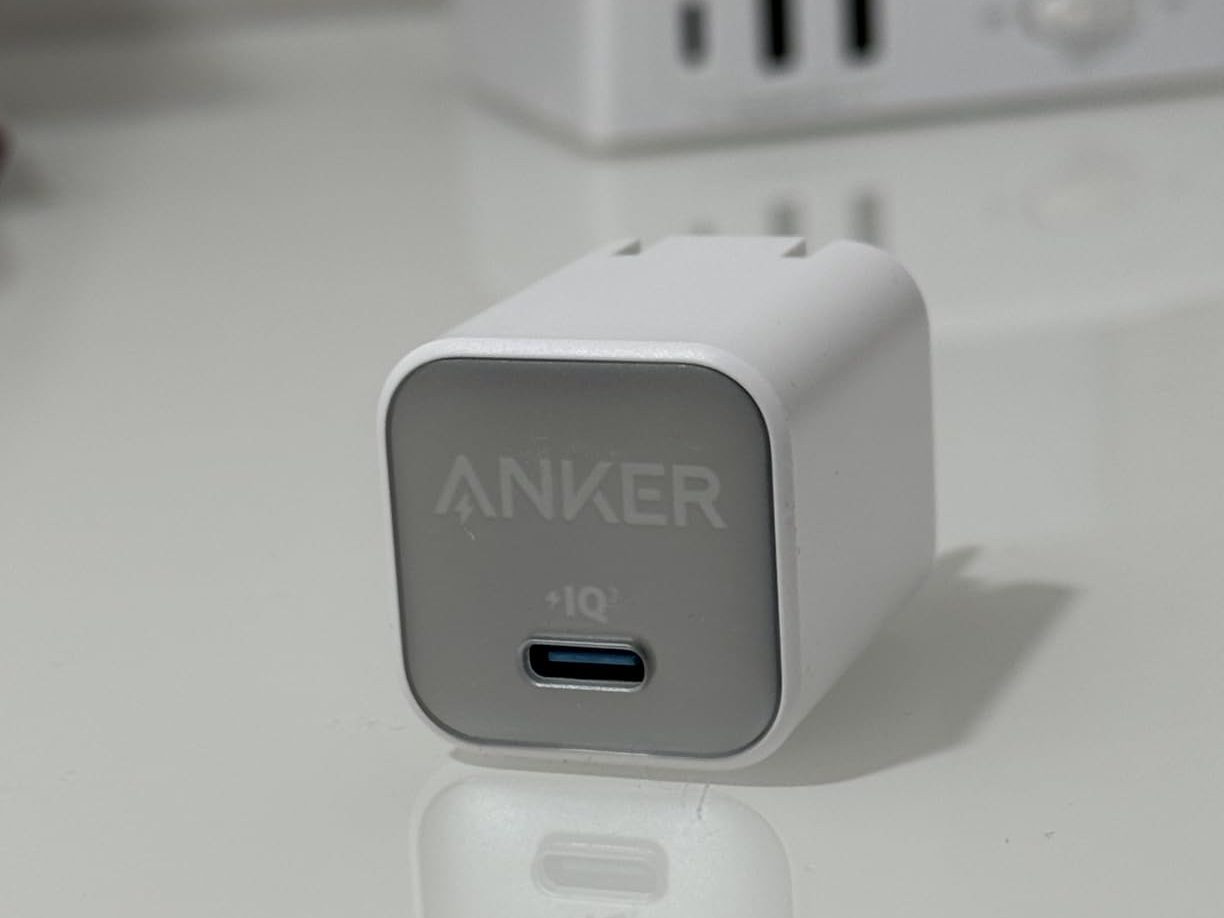
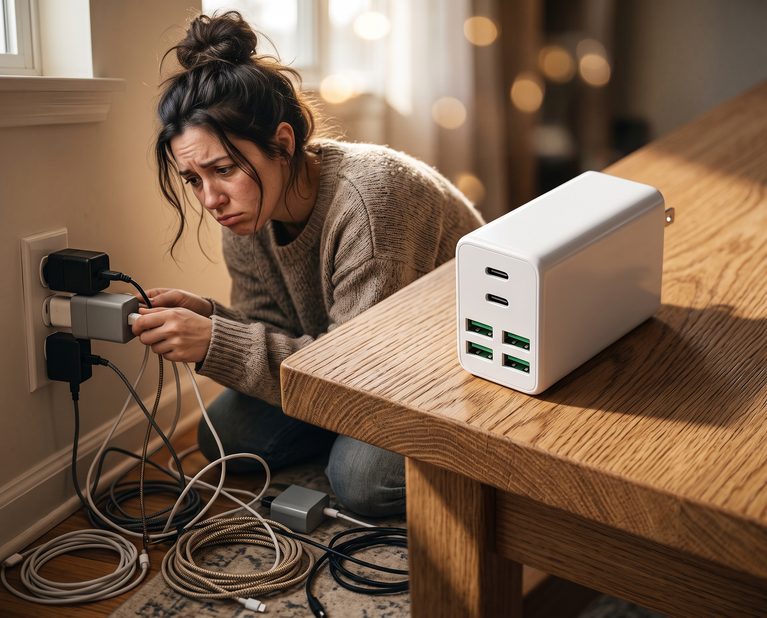
Foldable prongs entered the picture as a design answer to a problem most people didn’t articulate. The adapter itself took up space in bags, snagged on fabric, bent in pockets. Making it smaller wasn’t about aesthetics—it was about fitting into routines that had become more compressed. The folding mechanism turned the adapter into something that could live in a jacket pocket or a purse side compartment without announcing itself.
What’s more interesting is how power delivery became a quiet differentiator. Thirty watts doesn’t mean much as a number, but it translates into observable behavior: plugging in during a coffee run and leaving with enough charge to stop worrying. That reliability reshaped expectations. The phone became something that could recover quickly rather than something that needed to be carefully rationed throughout the day.
SIMILAR
iPhone and MacBook users are compensating for a port problem Apple created
iPhone users are eliminating the tangled cable from every car charging session
iPhone users are transforming nightstands into silent charging infrastructure
The Apple ecosystem’s shift toward USB-C compatibility made third-party adapters less of a gamble. Previously, there was hesitation around anything that wasn’t Apple-branded, a worry that the wrong adapter might damage the battery or charge inefficiently. That caution has softened. People still want fast charging, but they’re less concerned about whether the adapter bears a particular logo.
The language around charging has changed too. “Fast charging” used to be a feature mentioned in reviews; now it’s an assumed baseline. The conversation has moved to whether an adapter works with MagSafe, whether it can handle an iPad and an iPhone simultaneously, whether it generates too much heat. The speed itself is no longer noteworthy—it’s the surrounding convenience that gets attention.
Pricing has fluctuated as the market matured. Previously listed at $19.99, current listings hover around $11.99. The cost has dropped enough that people keep multiple adapters in rotation—one at home, one at the office, one in a travel bag. The adapter became disposable in a way it wasn’t before, not because it breaks but because redundancy became cheap enough to be practical.
What remains peculiar is how invisible the adapter has become even as its role has intensified. It’s the thing people grab without thinking, the object that lives in a drawer until it’s suddenly essential. The behavior it enables—those hurried ten-minute charging sessions, the assumption that a phone can always recover in time—has become more rigid even as the hardware itself has become easier to overlook.
"Note: Readers like you help support The Apple Tech. We may receive a affiliate commission when you purchase products mentioned on our website."