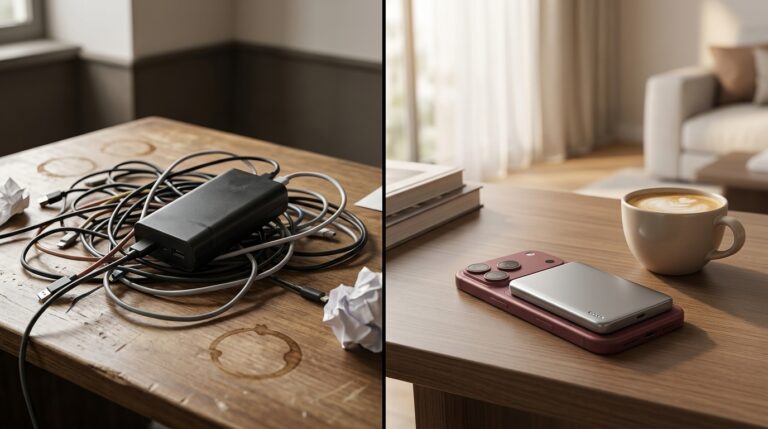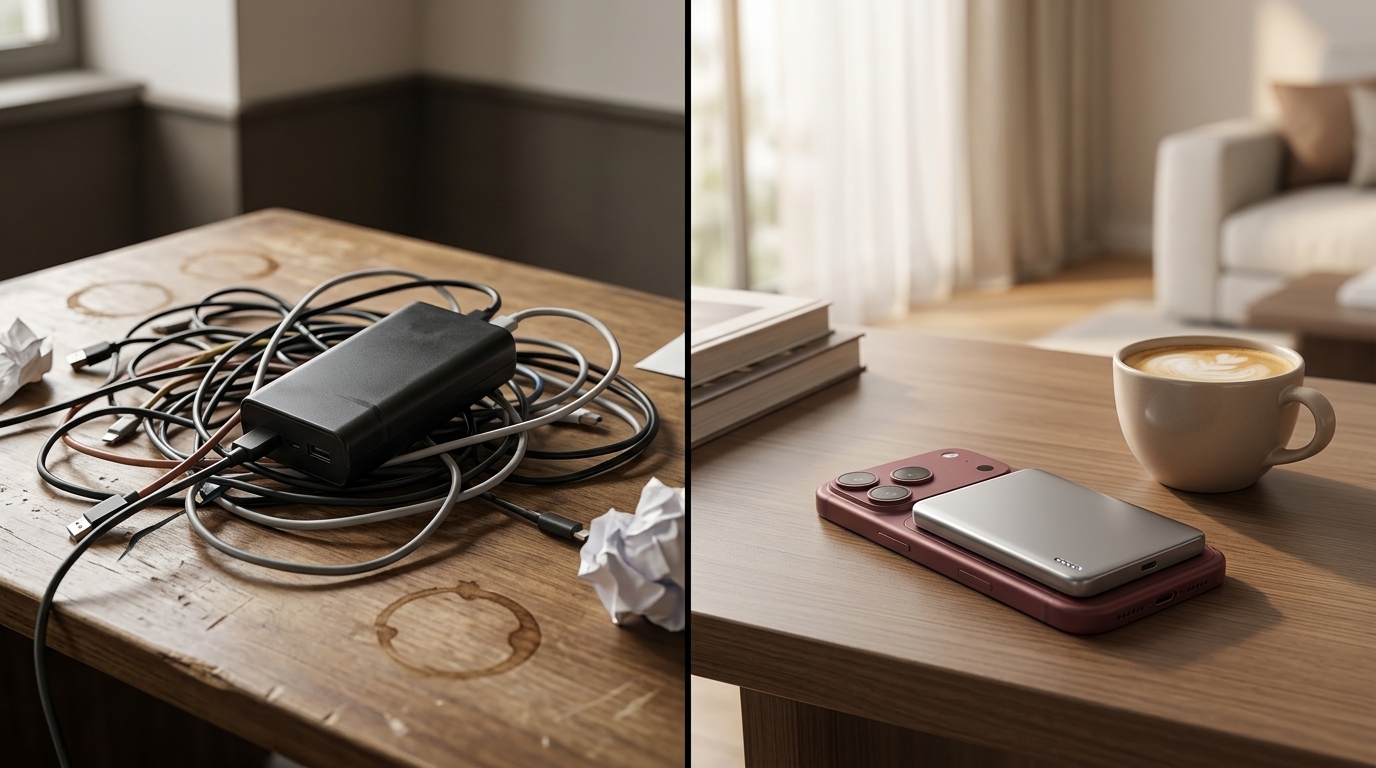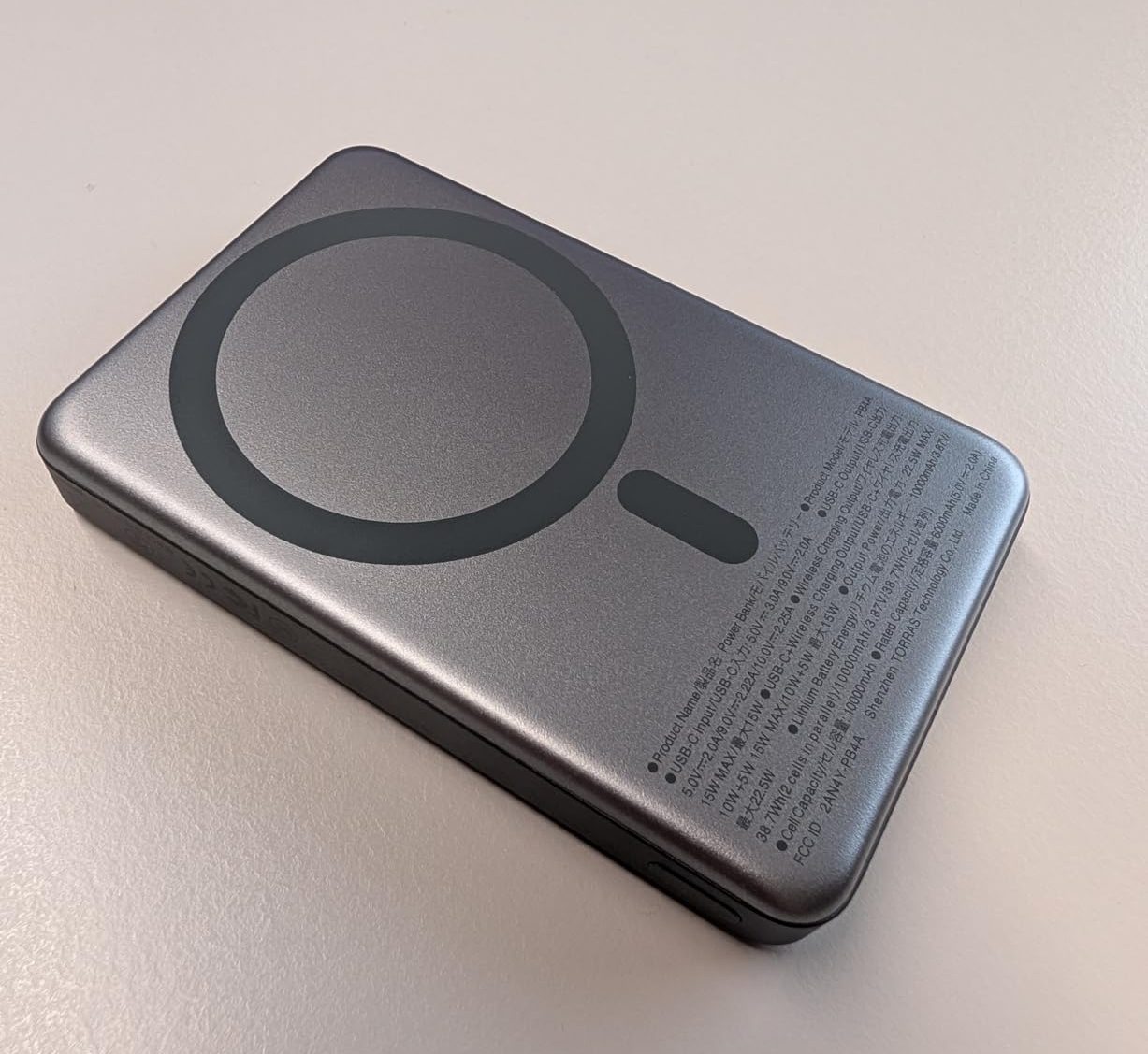
The battery pack that was supposed to simplify travel often never makes it out of the bag during the trip itself. Instead, it lives in a drawer at home, getting used the night before departure when someone realizes their iPhone is at 34% and there’s no time for a full outlet charge. The wireless charging happens on the kitchen counter, not at the gate or in the hotel room.
This gap between intended use and actual behavior shows up in how people talk about portable power. The pitch is always about mobility—keeping devices alive during long flights, cross-country train rides, unexpected delays. But the real-world pattern skews heavily toward stationary moments: sitting at a desk during lunch, leaving the phone on the pack while working from a couch, topping off before a long evening out. The “portable” part matters less than the “wireless” part.
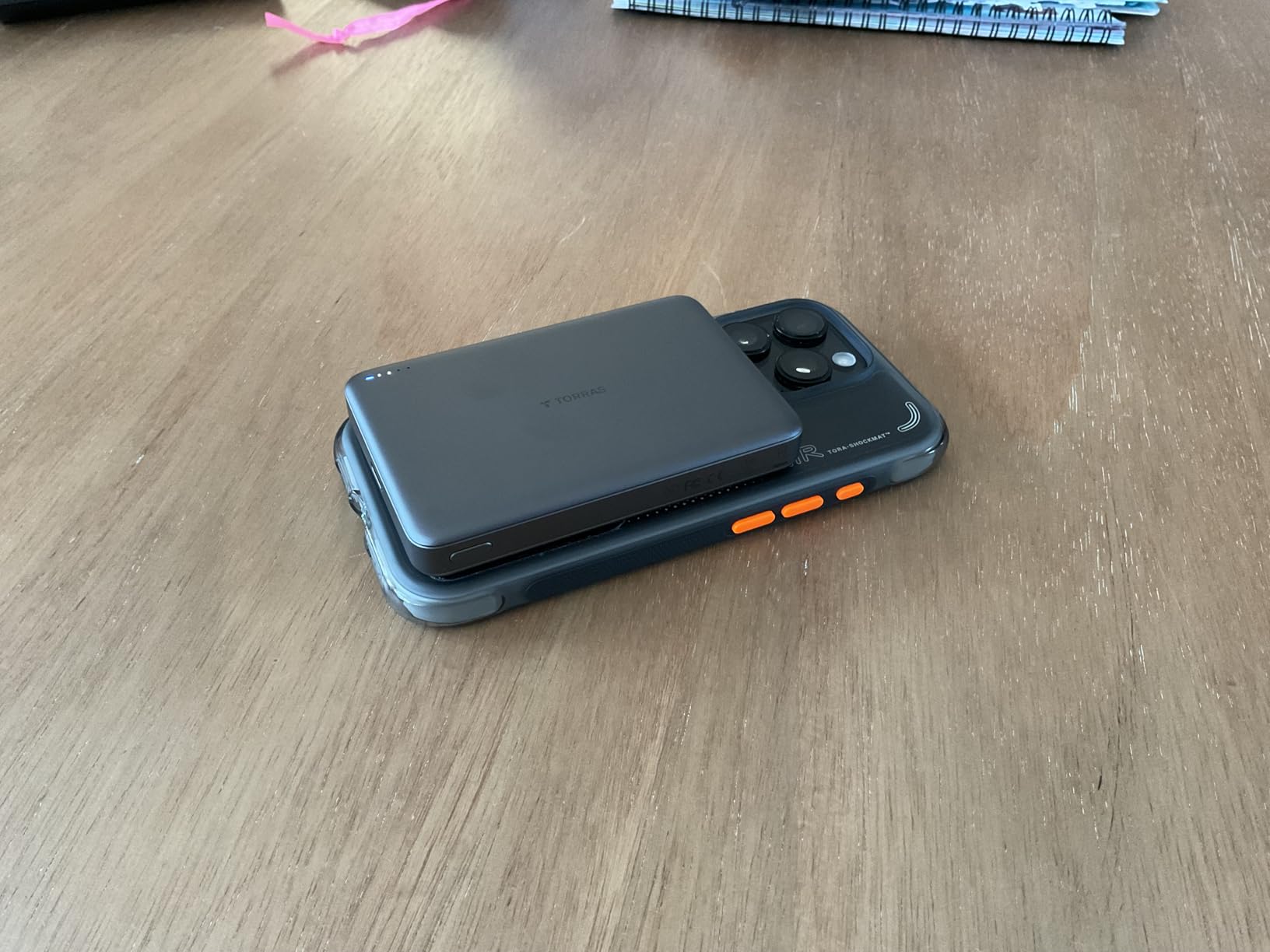
Thinness became the unexpected priority. A 10,000mAh capacity was table stakes, but whether the pack added noticeable bulk to a jacket pocket or a small crossbody bag determined whether it actually got carried. The difference between 12mm and 18mm sounds trivial until it’s the reason something stays home. Apple’s ecosystem has always rewarded minimalism, and that aesthetic preference extended to accessories that were never designed by Apple itself.
Magnetic alignment solved a problem people didn’t realize was a problem until it was gone. Earlier wireless charging required precise placement; a phone shifted half an inch overnight would wake up uncharged. MagSafe-style attachment removed that friction. The phone snapped into place, and the charging happened without thought. That reliability made wireless feel less experimental and more like a default behavior.
SIMILAR
iPhone and MacBook users are compensating for a port problem Apple created
iPhone users are eliminating the tangled cable from every car charging session
iPhone users are transforming nightstands into silent charging infrastructure
The speed tension is still unresolved. Wireless charging remains slower than wired, and 22.5W fast charging on a battery pack sounds impressive until it’s compared to plugging directly into a wall adapter. People tolerate the slowness because the convenience trade-off feels worth it—until it doesn’t. On days when time is tight, the pack gets plugged in with a cable anyway, and the wireless feature goes unused.
Color choices signal something about how these objects get used. A gray or black pack disappears into a bag; a brighter color makes it easier to find in a cluttered backpack but also makes it feel more like a gadget than a tool. The people who choose neutral tones tend to be the ones who want the pack to feel like part of their everyday carry, not a tech accessory they’re conscious of carrying.
Pricing reflects how the category matured. Previously listed at $62.99, current listings hover around $44.98. That’s still expensive enough that people hesitate before buying a second one, but cheap enough that replacing a lost or worn-out pack doesn’t feel like a major purchase decision. The price point sits in an odd middle zone—not quite impulse buy, not quite investment.
The behavioral shift is subtle but consistent. People who own these packs charge them more often than they charge their phones with them. The pack itself becomes another device to maintain, another thing to remember to plug in before bed. The convenience it offers is real, but it comes with its own cognitive load, a new item in the mental checklist of things that need power to be useful.
"Note: Readers like you help support The Apple Tech. We may receive a affiliate commission when you purchase products mentioned on our website."