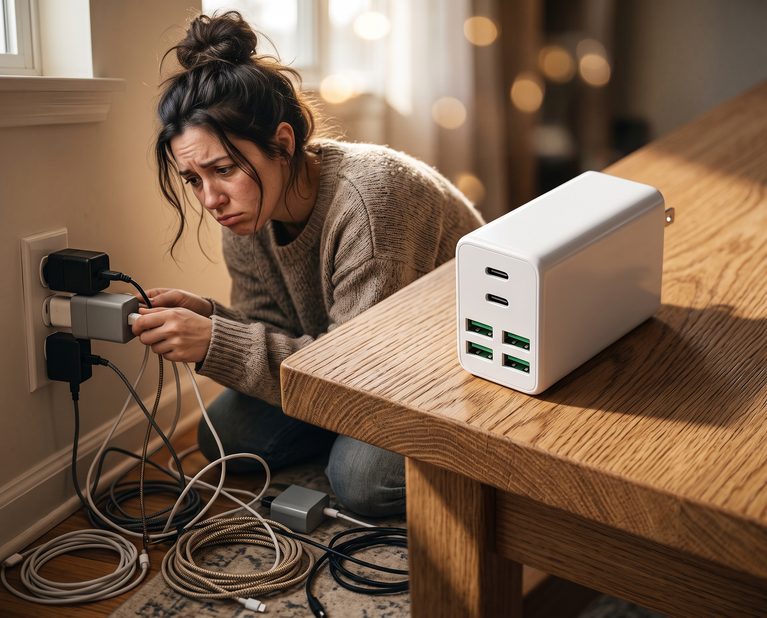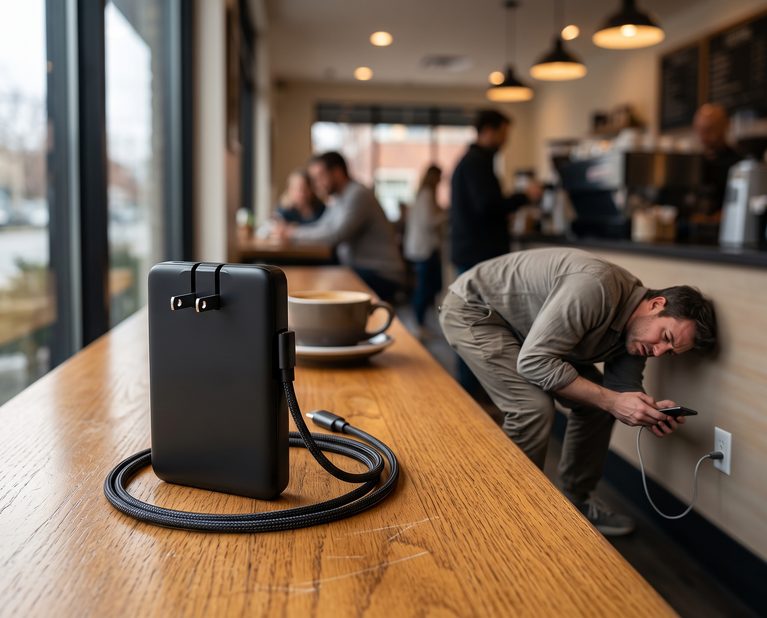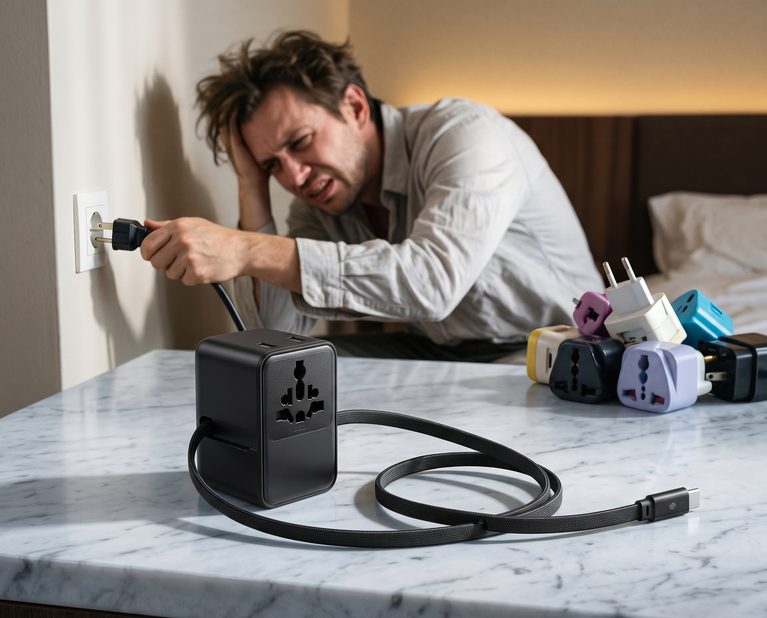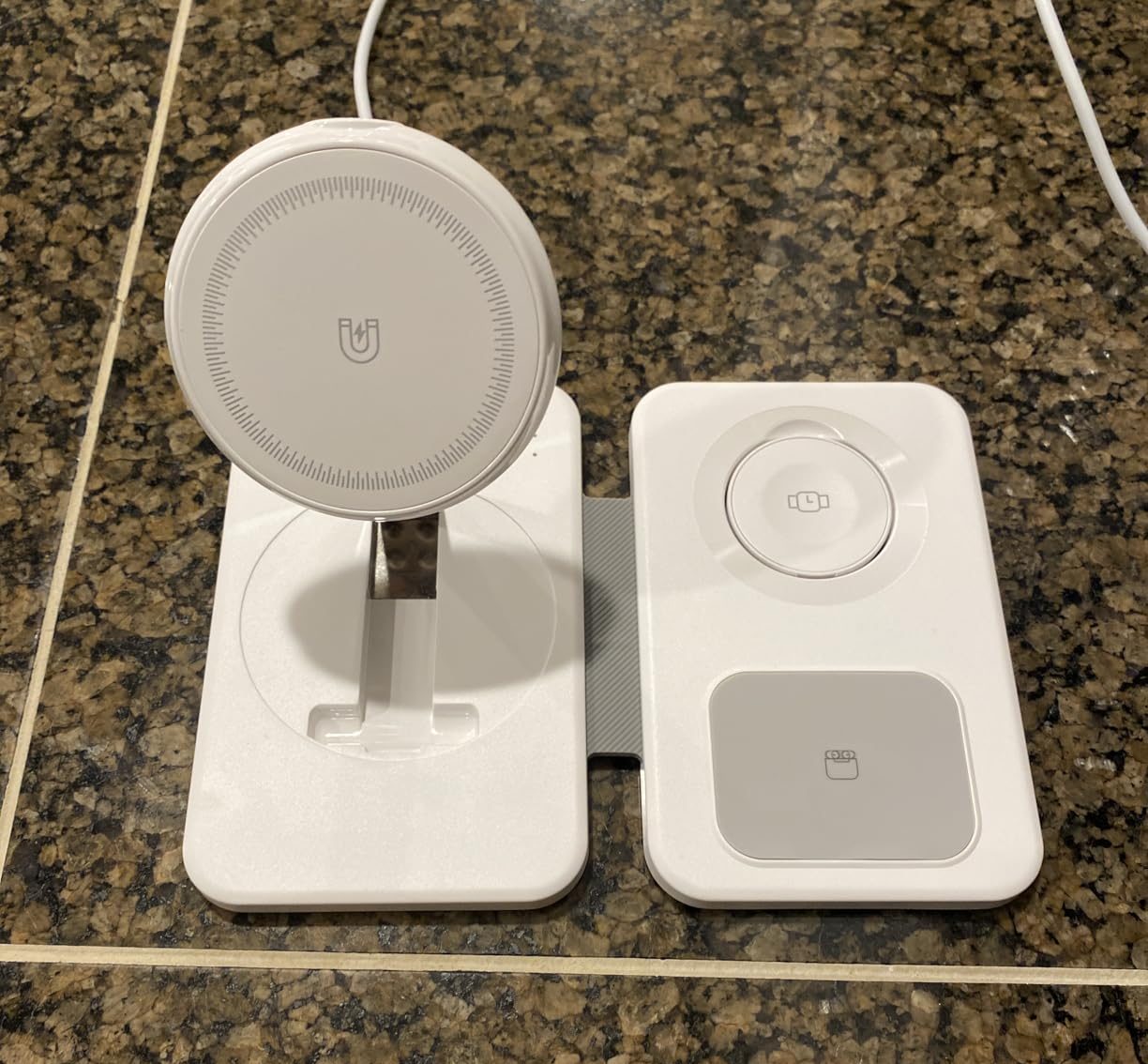
Travel charging has always been a problem of reduction. How many cables can you eliminate? How small can the adapter be? How much can you consolidate before you sacrifice functionality? Foldable wireless charging pads attempt to answer all three questions at once by collapsing into a slim profile when not in use and expanding into a three-device station when needed.
The appeal is strongest in airports. Gate-side outlets are contested territory, often limited to one or two per seating cluster. A traveler with a phone, watch, and earbuds traditionally occupies three cables and three outlet slots, or at least three USB ports if they’re using a shared adapter. A foldable charging pad consolidates that into a single plug, freeing up space for others and reducing the cable tangle that inevitably forms when multiple people are charging in close proximity.
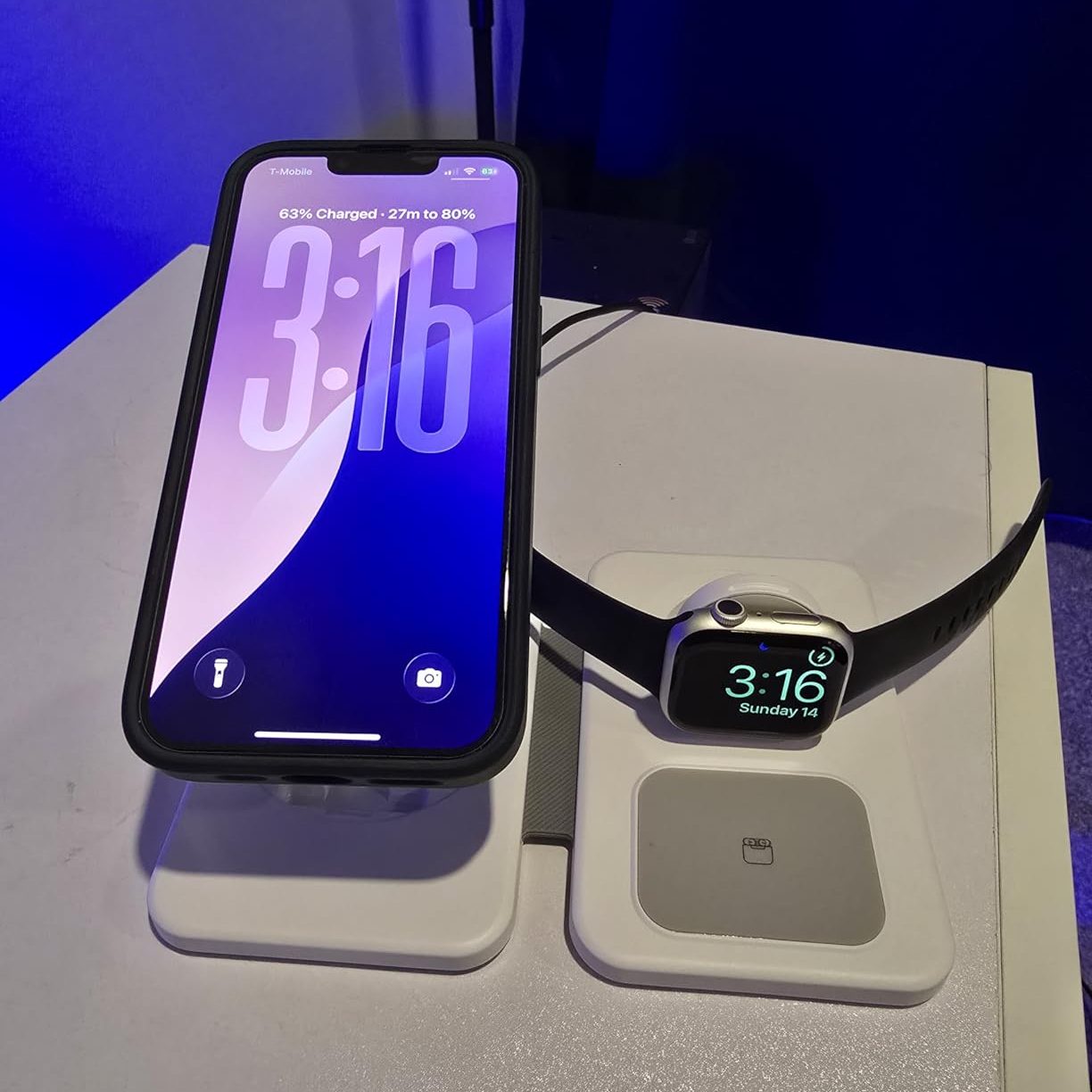
Hotels present a different challenge. Outlets are rarely positioned where you want them. Nightstands lack power. Desks are across the room. The foldable pad’s portability makes it easier to move the charging zone to wherever is most convenient, but the pad still needs to be near an outlet, which means the user is still constrained by the room’s existing infrastructure. The wireless charging doesn’t eliminate the wall dependency—it just changes the geometry of the problem.
The MagSafe compatibility is crucial for iPhones. Without magnetic alignment, wireless charging requires precise placement, and in a dark hotel room or a crowded airport, precision is the first thing to go. MagSafe ensures the phone snaps into position, reducing the chance of waking up to a dead battery because the phone was two millimeters off-center. But the magnetic pull is also strong enough to make repositioning the phone mid-charge a two-handed operation, which can be awkward if you’re trying to check a notification without fully disconnecting.
SIMILAR
iPhone and MacBook users are compensating for a port problem Apple created
iPhone users are eliminating the tangled cable from every car charging session
iPhone users are transforming nightstands into silent charging infrastructure
The foldable mechanism itself is either a convenience or a nuisance, depending on how often it’s used. For weekly travelers, the fold-and-pack routine becomes second nature. For occasional users, the hinge and panels can feel fussy, especially if the pad doesn’t lay perfectly flat when expanded. Some designs include stiffening plates to keep the surface rigid during charging, but these add weight and bulk—exactly what the foldable design is meant to avoid.
Charging speed is generally adequate but not exceptional. A 15-watt max for the iPhone is sufficient for overnight use but slower than a wired connection. For travelers on tight schedules, this can be a friction point. A phone that needs to charge from 10 percent to 80 percent in under an hour is better served by a cable. The wireless pad is optimized for passive, overnight charging, not emergency top-ups.
Previously listed at $21.99, current listings hover around $15.98, placing foldable chargers in the budget-to-mid range of iPhone travel accessories. The pricing reflects a competitive market where foldable designs are no longer premium features but expected baselines for multi-device charging solutions.
The broader pattern is that travel charging has become a spatial optimization problem. It’s not just about power—it’s about how much space you occupy, how many outlets you need, and how quickly you can set up and tear down your charging zone. The foldable pad solves some of these problems, but it also introduces new ones: hinges that wear, surfaces that don’t stay flat, and the constant question of whether the convenience of wireless is worth the slower charge speed.
"Note: Readers like you help support The Apple Tech. We may receive a affiliate commission when you purchase products mentioned on our website."