

The nightstand used to hold a lamp, a book, maybe an alarm clock. Now it holds a charging station that powers an iPhone, an Apple Watch, AirPods, and sometimes an iPad simultaneously. The station itself has become the anchor, and everything else arranges around it.
What distinguishes the newer generation of charging stations is their attempt to serve multiple functions. The wireless pads charge the iPhone and AirPods. The Apple Watch sits on a dedicated puck. A USB port handles wired charging for an iPad or other tablet. But the station also displays the time in LED digits and cycles through seven ambient light colors, transforming it from a utility object into something closer to a bedside companion.

The clock display is worth examining. It’s redundant—the iPhone already shows the time, as does the Apple Watch. But the station’s clock is always visible, even when the devices are face-down or in sleep mode. It fills the role that traditional alarm clocks once occupied, providing time information without requiring interaction. The station becomes the nightstand’s organizing principle, not just a charging accessory.
The ambient lighting seems frivolous until you use it. Seven color options—white, blue, green, purple, and so on—create a low-level glow that makes the station visible in the dark without being harsh. It’s a navigation aid, helping users locate their devices at night without turning on the main light. But it’s also aesthetic, a small customization that lets users shape the atmosphere of the room.
The folding design addresses portability, though it’s unclear how often these stations actually get moved. The appeal is more about storage and space efficiency. When folded, the station occupies less surface area, which matters in smaller bedrooms or apartments where nightstand real estate is contested. It’s a concession to the reality that not everyone has unlimited horizontal space.
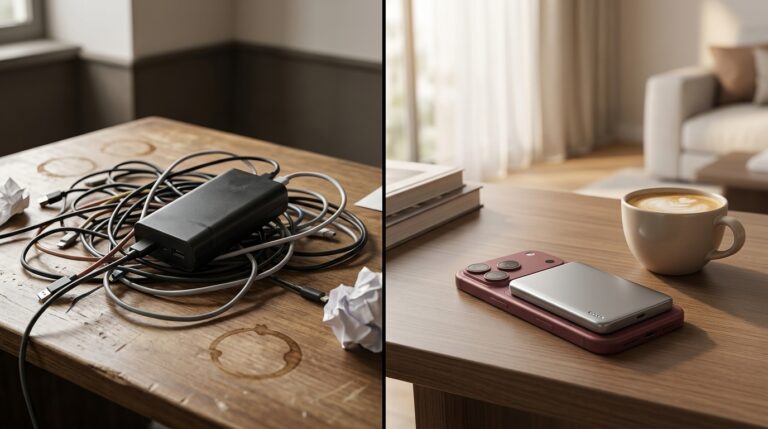
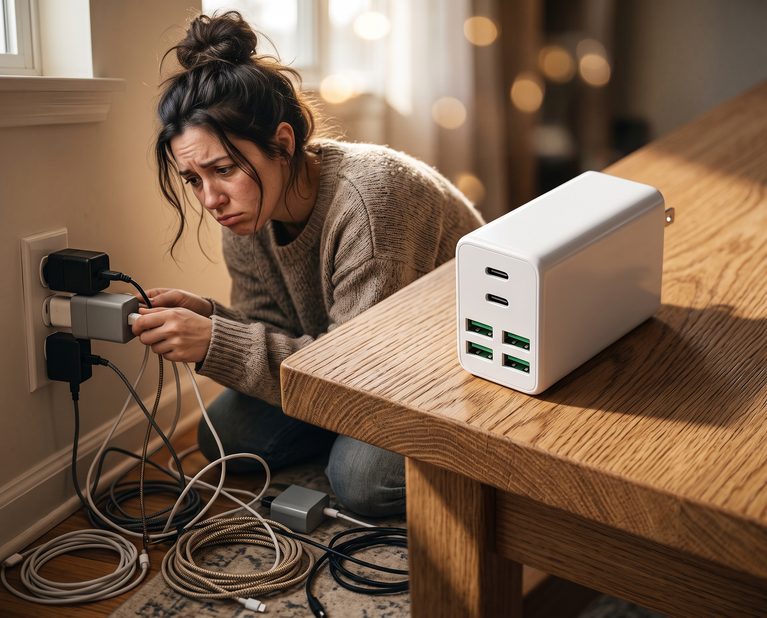
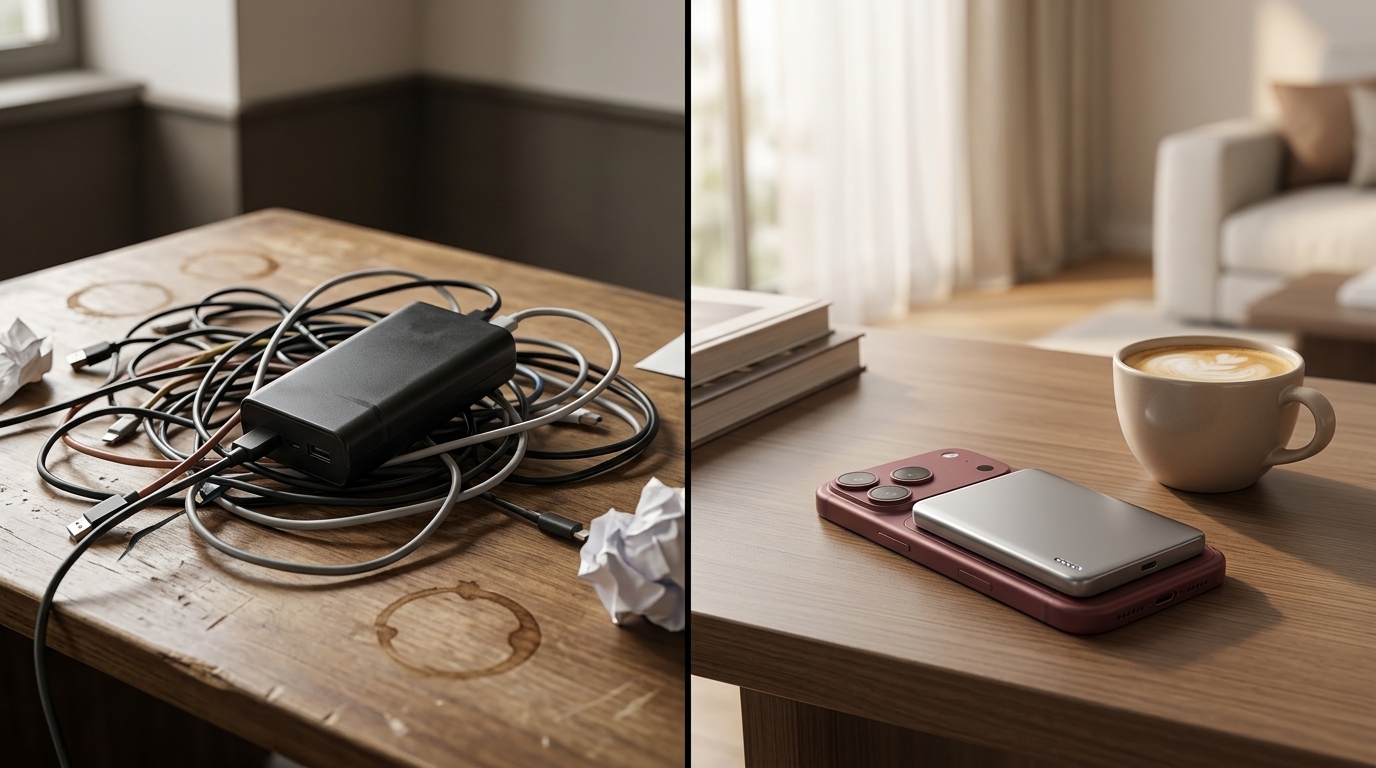
What the station really does is enforce organization. The iPhone goes here, the Apple Watch goes there, the AirPods nestle into this pad, the iPad plugs into that port. Each device has a designated location, and the act of charging becomes a ritual of placement. The station imposes structure on what would otherwise be a chaotic tangle of cables and devices.
The inclusion of wired charging for tablets is a practical acknowledgment that not all Apple devices have adopted wireless charging. The iPad still requires a cable, and the station accommodates that without forcing users to find a separate outlet. It’s an all-in-one solution, even if “all” includes some devices that haven’t fully transitioned to the wireless future.
Previously listed at $59.99, current listings hover around $39.99. The price reflects the consolidation of multiple functions into a single unit, but the real value is spatial. The station takes up one outlet and one corner of the nightstand, replacing what would otherwise be three or four separate chargers and cables. It’s not just about convenience. It’s about reclaiming space and imposing order on an ecosystem that has quietly sprawled beyond its original footprint.
"Note: Readers like you help support The Apple Tech. We may receive a affiliate commission when you purchase products mentioned on our website."