

The iPhone 17 Pro Max is too large to hold comfortably in one hand for most users. The width exceeds the natural span of a thumb, making it impossible to reach the opposite corner of the screen without shifting grip or using a second hand. The magnetic ring holder is a workaround, a small metal loop attached to the back of the phone that fingers slip through, redistributing weight and creating a more secure hold.
The ring itself rotates 360 degrees and adjusts to multiple angles, which means it can function as a grip while holding the phone or as a stand when the device is set on a table. That dual functionality is critical. The ring isn’t just about preventing drops. It’s about enabling one-handed use in situations where two hands aren’t available—holding groceries, gripping a subway pole, carrying a child.
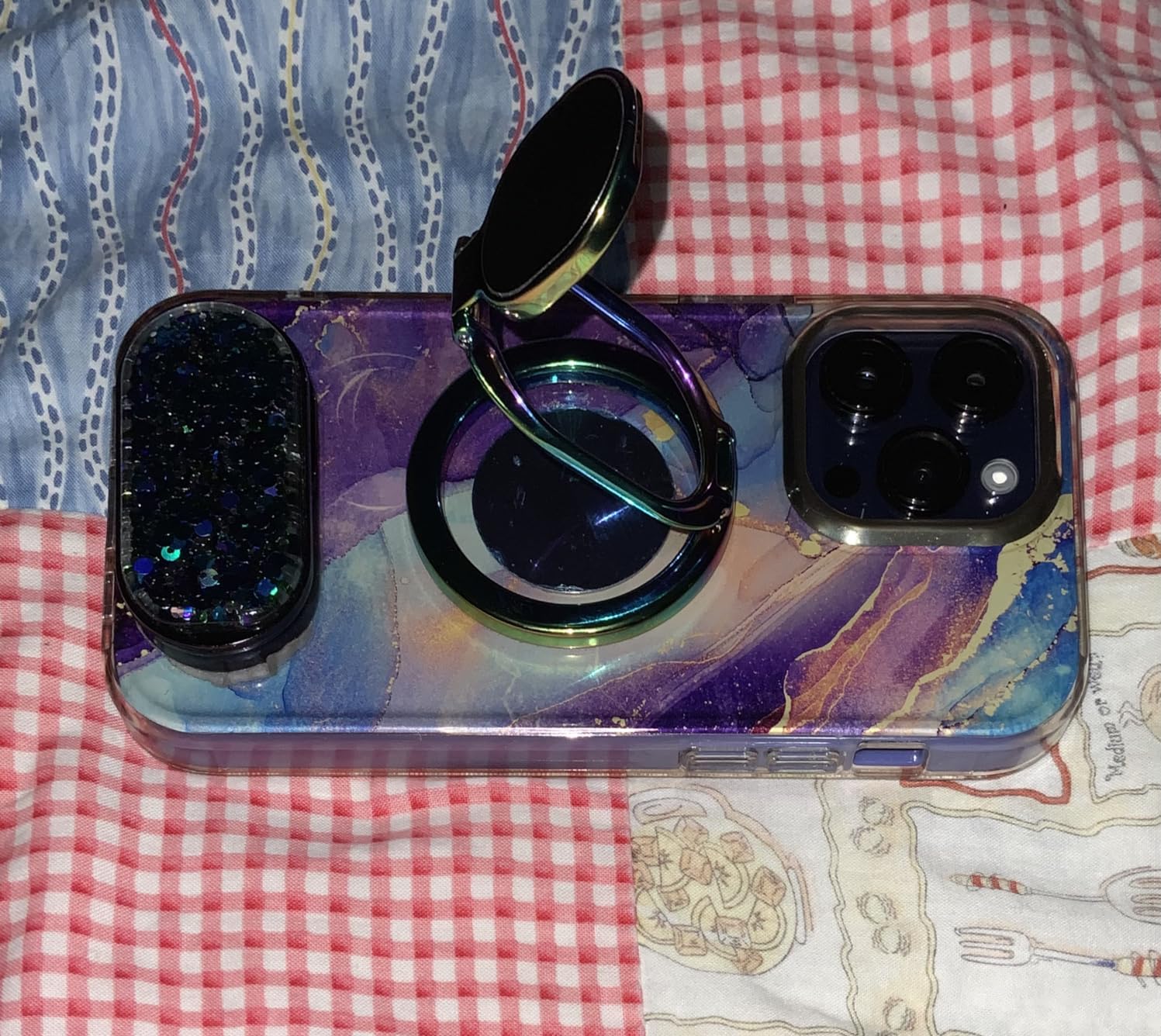
What’s changed is the integration with MagSafe. Earlier ring holders adhered to the phone with strong adhesive, which made them semi-permanent and difficult to remove without leaving residue. The magnetic version snaps on and off, which means it can be removed when using a wireless charger or swapped between devices. It’s modular, not fixed, and that modularity makes it more tolerable for users who otherwise resist adding bulk to their phones.
The gym reference in some product descriptions is telling. The ring holder has found a niche among users who exercise with their phones, using them for music, timers, or workout tracking. The ring prevents the phone from slipping out of sweaty hands, and the adjustable angle lets it prop against equipment for video workouts or form checks. The phone becomes a tool, not a liability.
There’s also an ergonomic dimension that goes beyond the gym. Holding a large phone for extended periods—scrolling through social media, reading articles, watching videos—creates hand strain. The ring distributes the load differently, allowing the phone to rest against the back of the hand rather than being gripped entirely by the fingers. It’s a small shift, but it reduces fatigue.
The colorful design options reflect a shift in how these accessories are perceived. The ring is visible whenever the phone is used, and users want it to look intentional, not like a cheap add-on. The colors range from matte black to iridescent gradients, allowing for personalization in a way that earlier ring holders, which were mostly gray or silver, didn’t.
What the ring holder really does is acknowledge a design tension that Apple hasn’t resolved. The iPhone keeps getting larger, chasing screen real estate and battery capacity, but human hands haven’t changed. The ring is a compromise, a third-party solution to a first-party problem. It doesn’t change the phone. It changes how the phone is held.
Previously listed at $17.99, current listings hover around $9.56. The price drop reflects commodification, but the behavioral shift is more significant. The ring holder has moved from specialty accessory to mainstream adoption, especially among users with larger phones. It’s no longer a novelty. It’s a response to the reality that the iPhone has grown beyond comfortable one-handed use, and users are adapting with whatever tools are available.
"Note: Readers like you help support The Apple Tech. We may receive a affiliate commission when you purchase products mentioned on our website."