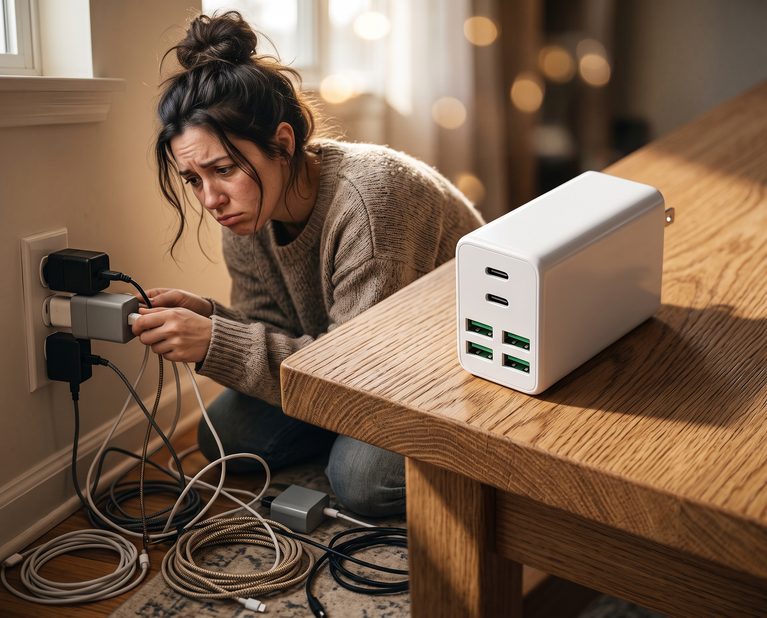

You stop thinking about whether you need the battery or the charger—you just bring the one thing that does both. For years, travelers carried a battery pack for daytime emergencies and a wall charger for overnight hotel charging. They were separate objects with separate jobs, and forgetting either one meant compromising your phone’s availability.
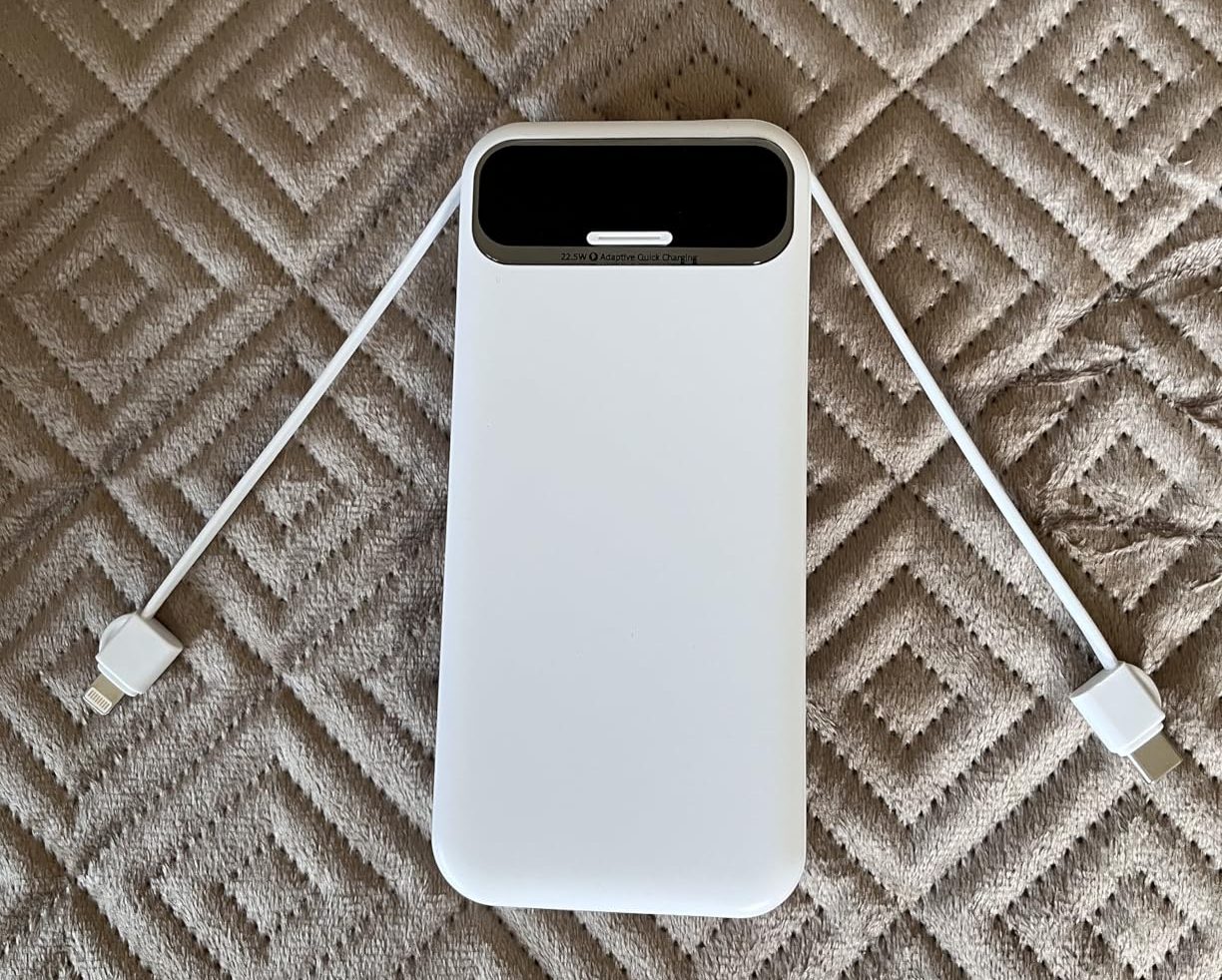
Battery packs with integrated AC plugs collapse this distinction. The device charges itself by plugging directly into a wall outlet, no cable required. Then it disconnects and becomes a portable battery for the rest of the day. At night, it plugs back in, charging itself while simultaneously charging your phone through its built-in cables.
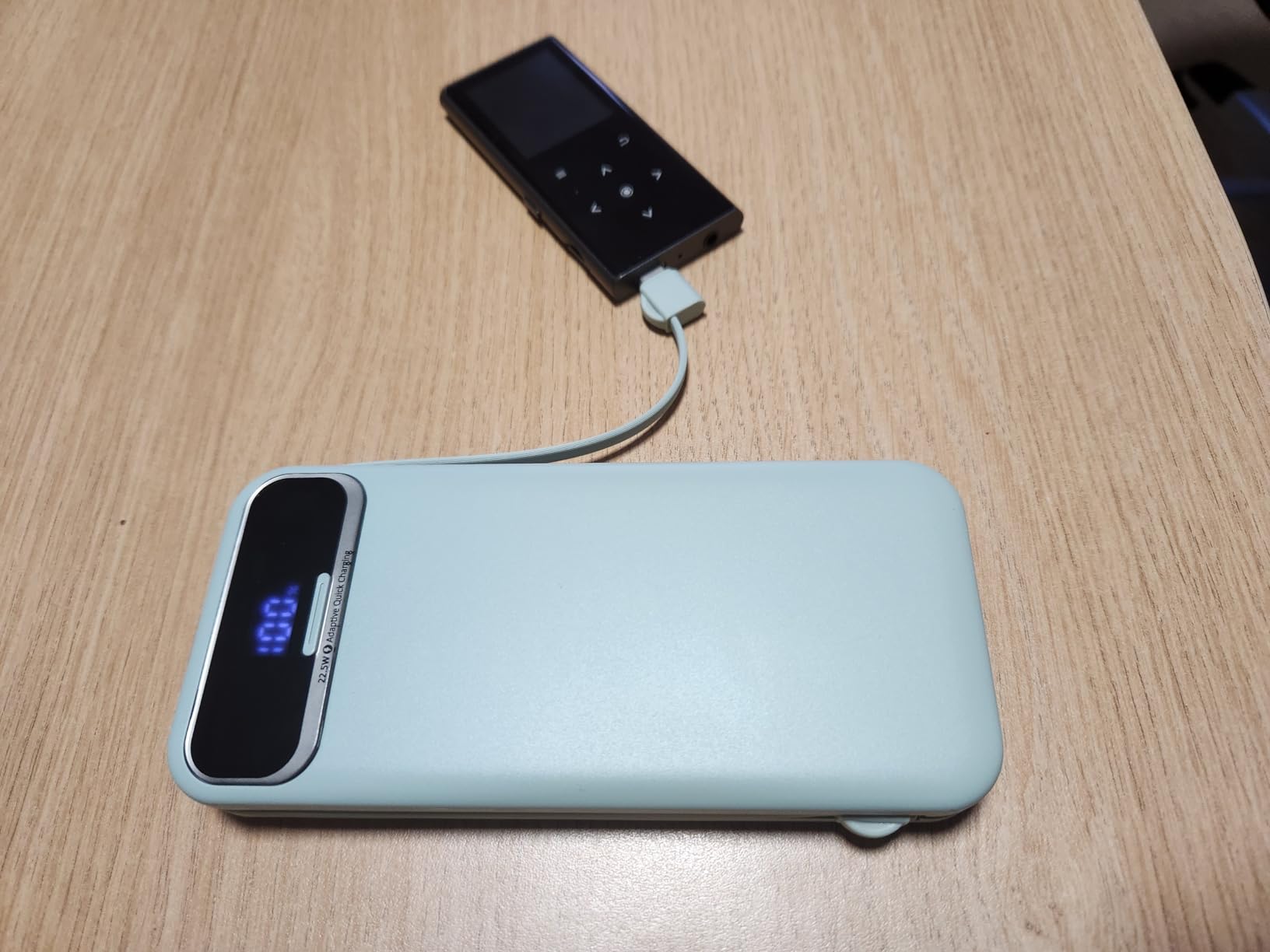
This has quietly simplified packing routines for a particular kind of traveler—the kind who moves frequently between locations but doesn’t want to carry a full electronics kit. Business travelers on overnight trips. Weekend visitors staying with family. Anyone whose relationship with charging is opportunistic rather than ritualized.
The built-in cables matter more than they might seem. A battery pack without cables requires you to bring your own, which reintroduces the very complexity the integrated design was meant to eliminate. With cables permanently attached—Lightning for older iPhones, USB-C for newer models—the device becomes entirely self-contained. There’s nothing else to remember.
But this creates a new dependency. If one of the integrated cables fails, the entire battery pack becomes less useful. You can’t just swap in a fresh cable. The failure is structural, not modular. Some users find this acceptable. Others prefer the flexibility of separate components, even if it means more things to track.
What’s revealing is how this changes the mental model of charging. Instead of thinking “I need power” and then deciding whether that means a wall outlet or a battery pack, users think “I have the thing that handles power” and trust it to work in whatever context arises. The cognitive load shrinks because the decision tree has fewer branches.
Previously listed at $29.99, current listings hover around $23.98. The price reflects commoditization, but also the value of consolidation: paying slightly more for one object that replaces two.
"Note: Readers like you help support The Apple Tech. We may receive a affiliate commission when you purchase products mentioned on our website."