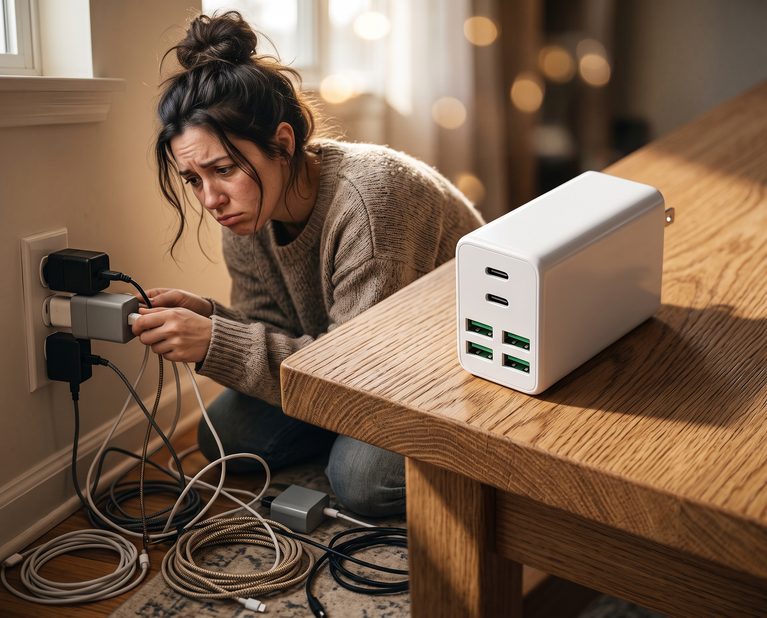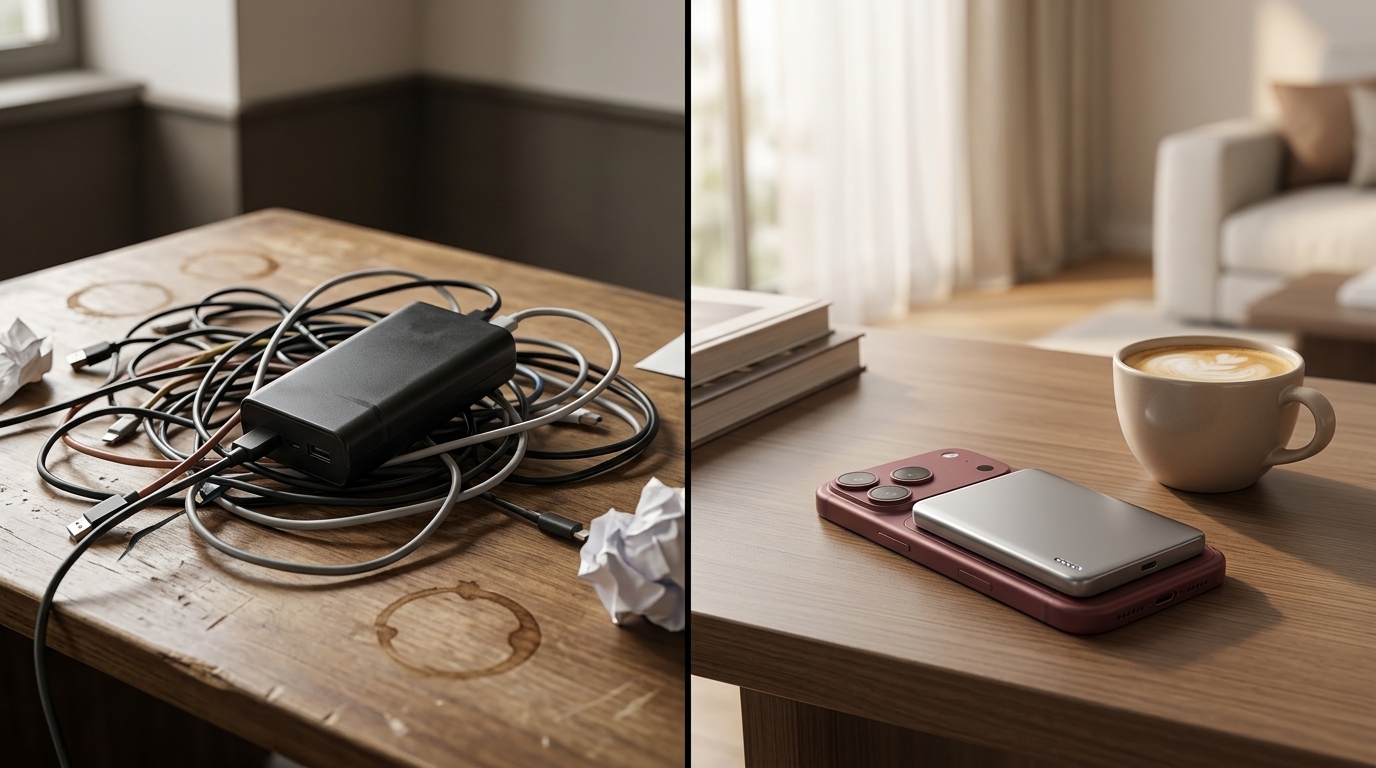

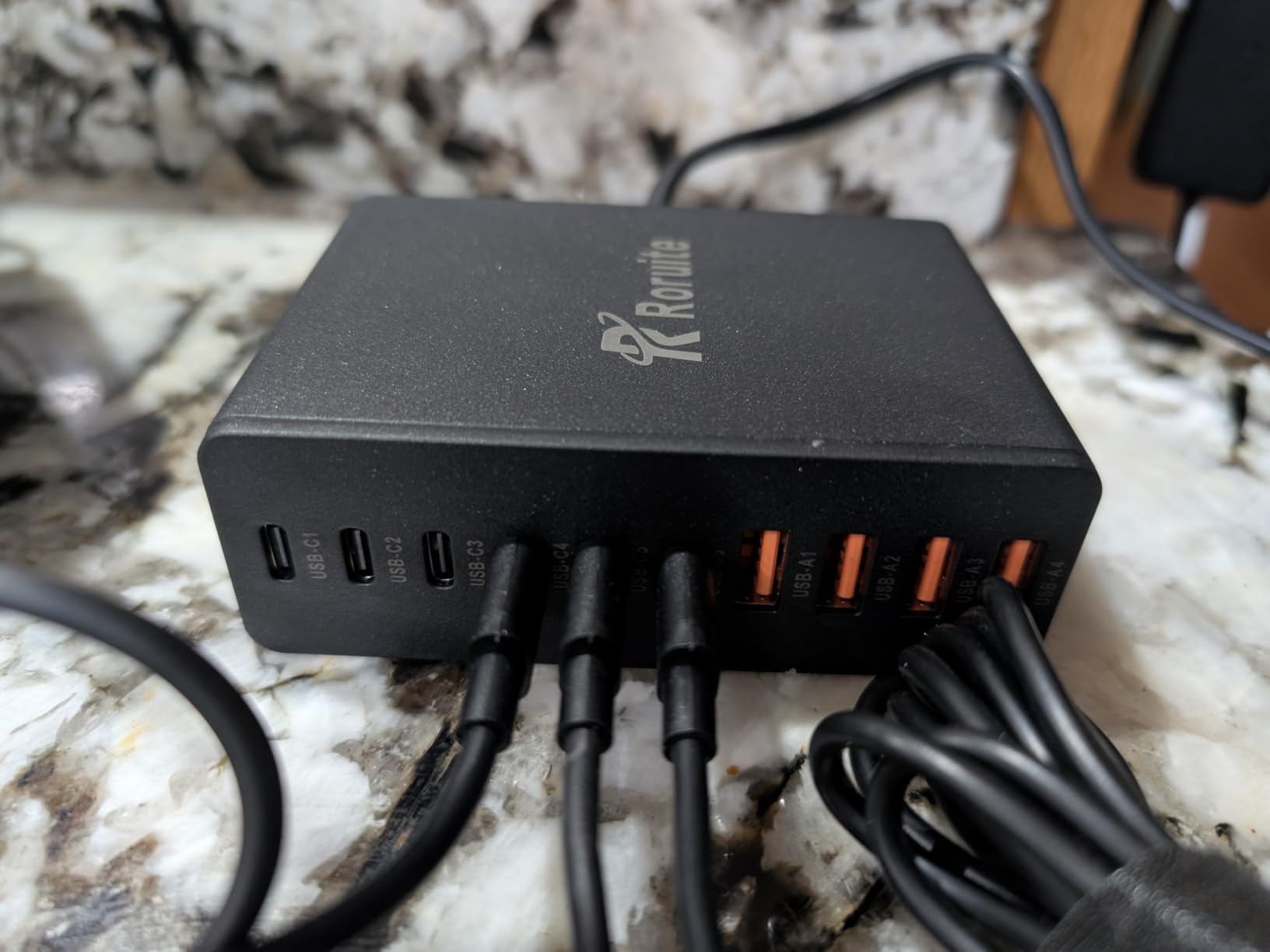
The charging station became the place where devices lived overnight, not just where they powered up. In households with four or more devices—parents’ phones, kids’ tablets, maybe a few pairs of earbuds—individual chargers create outlet scarcity and visual clutter. Every bedroom needs power strips. Every kitchen counter has cables snaking toward outlets.
Ten-port USB-C charging hubs consolidate this. A single device occupies one outlet but provides enough ports to charge a small household’s worth of electronics simultaneously. The included cables—usually four of varying lengths—handle most common devices without requiring users to hunt for their own.
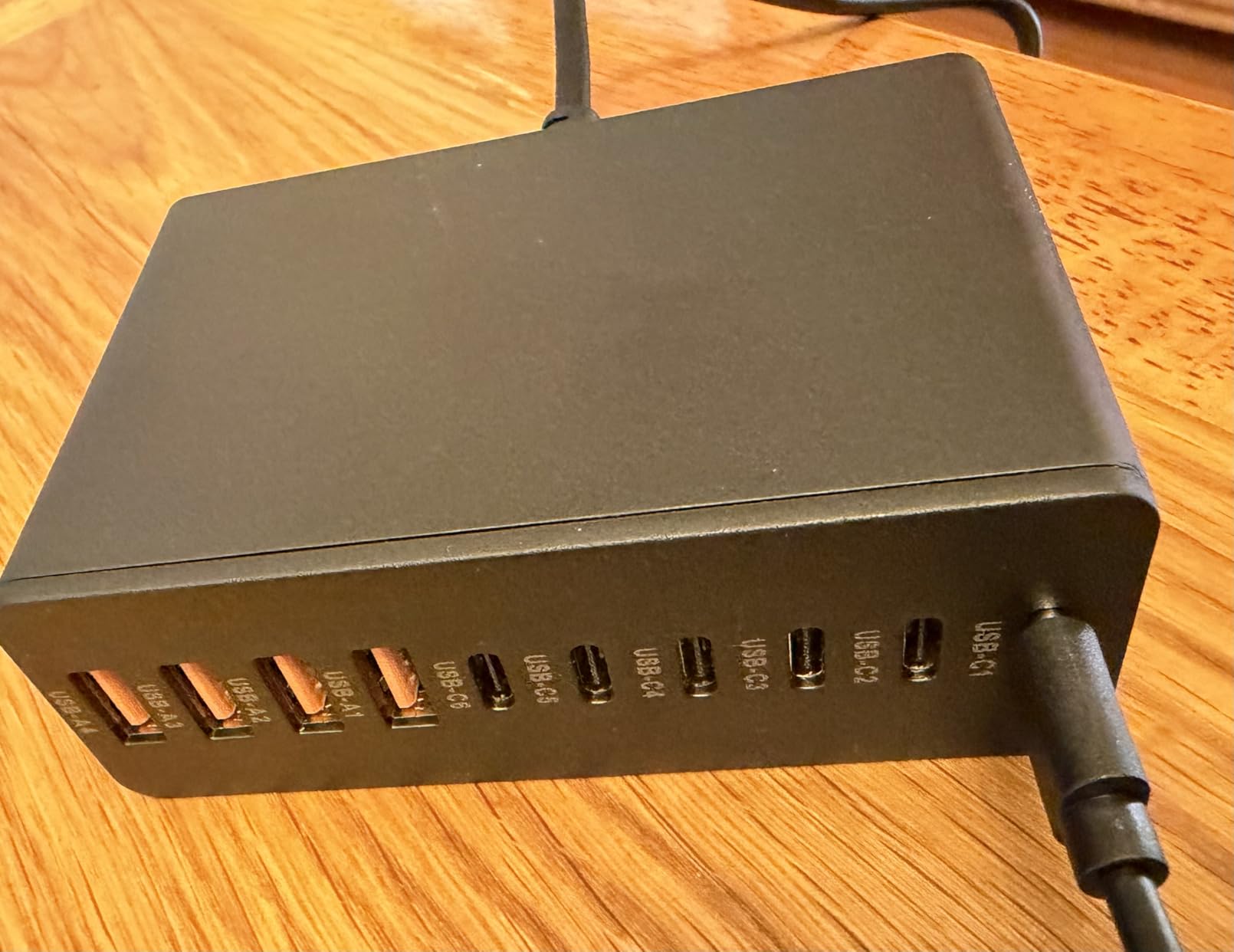
This consolidation has behavioral consequences. Instead of charging devices wherever they happen to be when the battery runs low, users bring devices to the hub. It becomes a centralized charging location, often placed in a common area like a kitchen counter or entryway table. Devices congregate there overnight, which creates a de facto storage point.
For parents, this offers unexpected benefits. Instead of kids charging phones in their rooms overnight—where screen time limits become harder to enforce—the phones charge in the kitchen. The physical separation from bedrooms supports digital wellness routines without requiring constant negotiation. The charging hub becomes infrastructure that reinforces boundaries.
But centralization also creates bottlenecks. If someone needs to charge a device urgently and all ten ports are occupied, there’s friction. Unplugging someone else’s device feels intrusive. Waiting for a port to open up feels inefficient. The hub solves the outlet scarcity problem but introduces a new scarcity: port availability during peak charging times.
What’s interesting is how GaN technology enables this. Gallium nitride chargers run cooler and pack more wattage into smaller form factors than traditional silicon-based adapters. A 200W hub can charge ten devices simultaneously without overheating, which wasn’t feasible even a few years ago. The technology enables the behavior change.
Previously listed at $39.99, current listings hover around $22.79. The dramatic price drop reflects both technological maturation and fierce competition in the multi-port charger category.
"Note: Readers like you help support The Apple Tech. We may receive a affiliate commission when you purchase products mentioned on our website."