
The battery pack stopped being emergency backup and became the primary power source for three or four days straight. For weekend camping trips or music festivals, the iPhone presents a dilemma: it’s essential for safety, navigation, and capturing moments, but it drains quickly and there’s nowhere to charge it. A 10,000mAh battery might get you through one extra day. A 60,000mAh battery handles an entire long weekend.
This capacity enables a different usage pattern. Instead of conserving battery and being selective about phone use, campers use their iPhones normally—taking photos, checking maps, streaming music around the campfire. The anxiety of “will I have enough battery?” dissolves when you’re carrying enough power for ten to fifteen full iPhone charges.
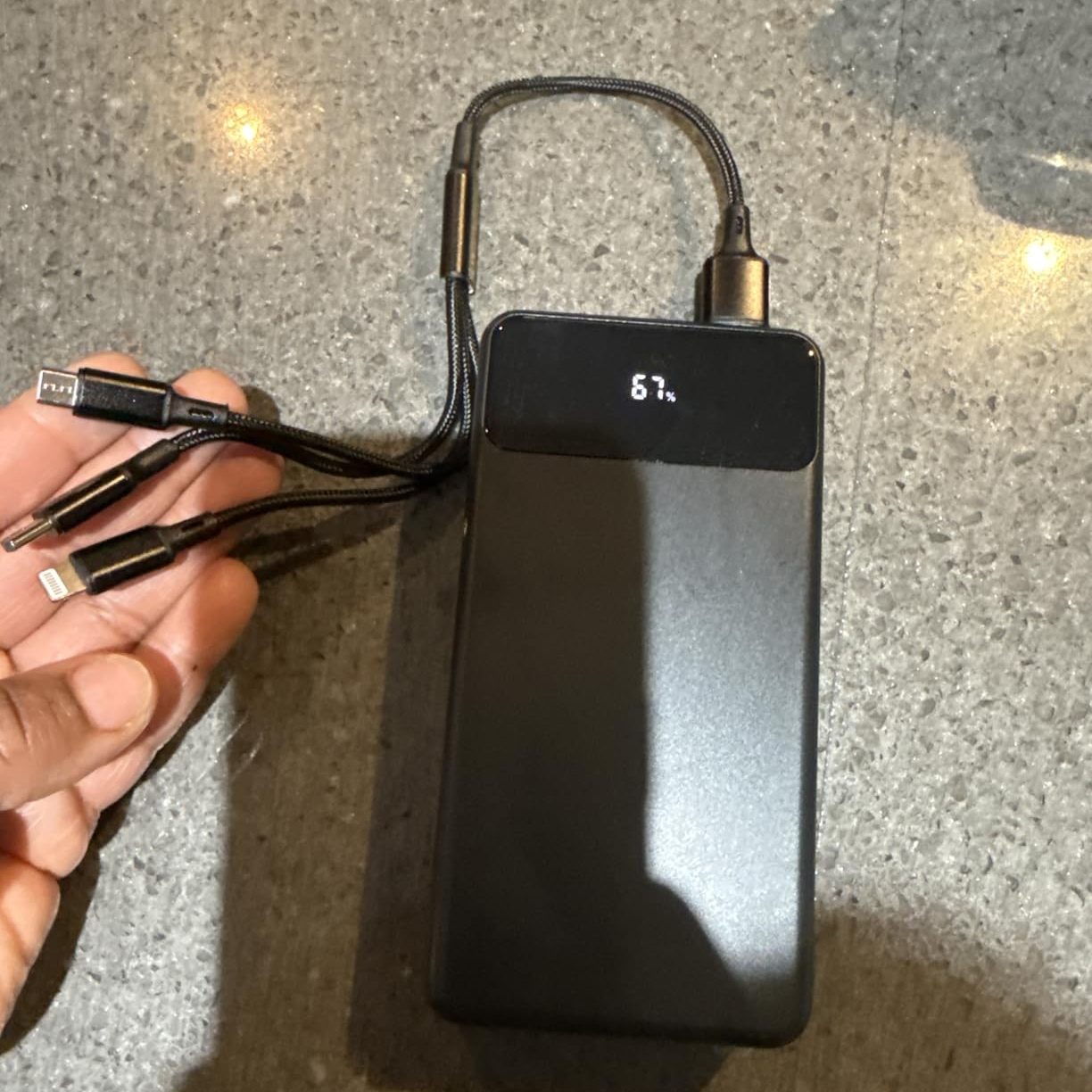
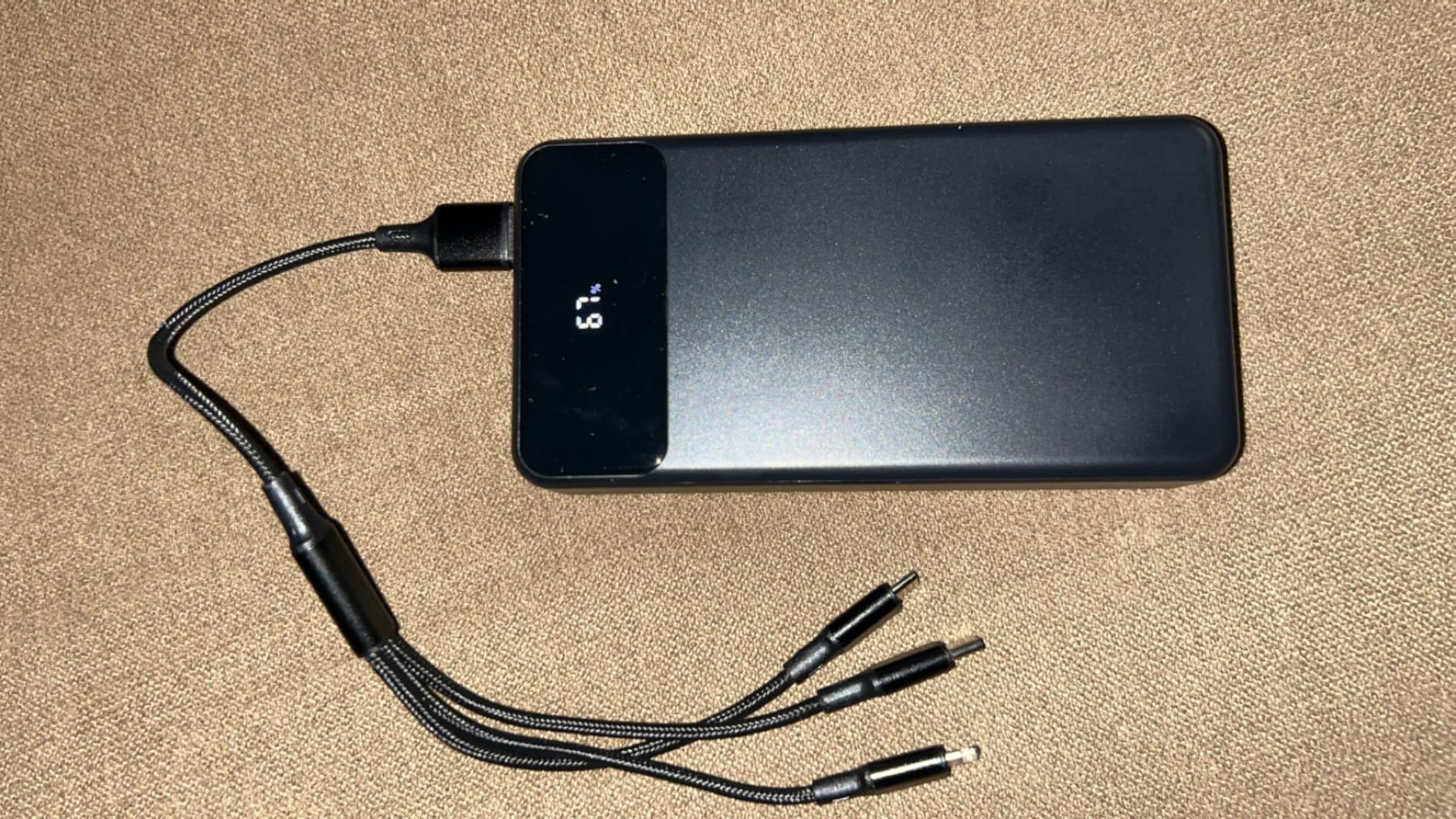
But the capacity comes with physical consequences. A 60,000mAh battery pack weighs over a pound, sometimes approaching two pounds depending on construction. That’s noticeable weight in a backpack, especially on longer hikes. Users have to decide whether the power security is worth the carrying burden, and for some trips the answer is yes, for others it’s no.
The included cable is revealing. Most high-capacity packs don’t come with integrated cables because they’re designed for flexibility—different users need different cable types. But including a USB cable suggests an understanding that these packs often get used in contexts where you might not have brought your usual charging setup. The camping trip where you forgot cables, the festival where you’re trying to minimize what you carry.
What’s notable is how this changes the relationship between outdoor activities and connectivity. Twenty years ago, camping meant disconnecting entirely. Ten years ago, it meant carefully rationing your phone’s single battery charge. Now, with sufficient battery capacity, it means staying fully connected while physically remote. Whether that’s desirable is a different question, but it’s increasingly feasible.
The 22.5W fast charging matters less in outdoor contexts than it would for daily use. When you’re camping, you’re not looking for a quick top-up before leaving somewhere. You’re charging overnight while you sleep, or during downtime at the campsite. Speed is less important than total capacity and reliability.
Previously listed at $52.99, current listings hover around $32.39. The price reflects the massive battery capacity and the weight/size trade-offs, positioning these packs as specialized equipment rather than everyday carry items.
"Note: Readers like you help support The Apple Tech. We may receive a affiliate commission when you purchase products mentioned on our website."