

Apple Watch battery life follows a predictable curve. A full charge lasts roughly a day, sometimes less with heavy use. For most users, the rhythm is simple: charge overnight, wear all day, charge again. The system works until it doesn’t—a long day out, an unexpected evening plan, a forgotten morning charge.
When the battery hits 10%, the options narrow. There’s no universal charger to borrow. Standard USB cables don’t help. The watch needs its proprietary magnetic puck, which is almost never nearby when the low battery alert appears. For years, this meant either heading home early or letting the watch die.
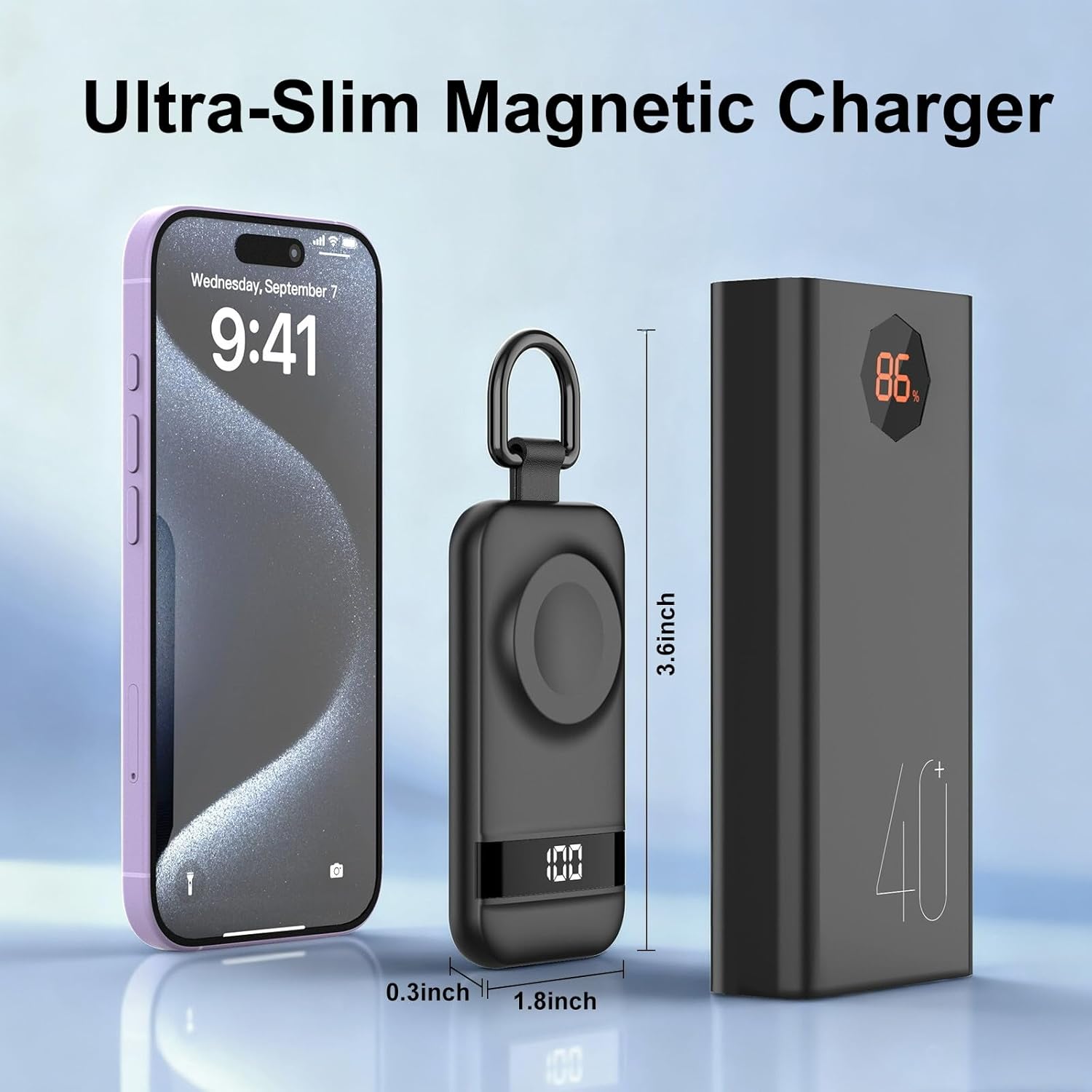
A keychain-sized magnetic charger changes that calculation. It’s small enough to stay attached to a set of keys or slip into a jacket pocket. The 2,500mAh capacity is enough to fully charge an Apple Watch once, with some reserve left over. When the battery runs low, the charger comes out, magnetically attaches to the back of the watch, and charging begins. No outlet needed.
The digital display shows remaining battery percentage, which removes the guesswork that earlier portable watch chargers left open. Users can see exactly how much charge is available before deciding whether to top up the watch or wait. That clarity shifts behavior. Instead of anxiously monitoring the watch’s own battery, users check the external charger once and plan accordingly.
What makes this category of accessory notable is how it reframes Apple Watch charging. At home, the watch charges on a bedside puck or dock. That habit is well-established. But outside the home, charging has historically been impossible unless you carried the full cable and adapter. A keychain charger makes opportunistic charging feasible—charging during a commute, at a desk, in a car.
The form factor matters. It’s not a cable. It’s a self-contained battery with a magnetic surface. There’s nothing to unfold or plug in. The watch sticks to it, charging starts, and both can stay in a pocket or bag. For users who wear their watch all day and into the evening, that portability removes a friction point that previously forced compromises.
Apple Watch users who run or cycle often report the most consistent use. A morning workout drains the battery more than usual, and having a small charger in a gym bag means the watch can top up before the workday begins. The same applies to long flights, all-day conferences, or any scenario where access to an outlet is limited.
The weight is minimal—light enough that it doesn’t noticeably add to a keychain or pocket load. The tradeoff is capacity. It can charge the watch once, maybe twice if used sparingly, but then the charger itself needs recharging via USB-C. For daily use, that’s sufficient. For extended trips, users still pack the standard cable.
The behavior shift is incremental but persistent. Apple Watch battery anxiety lessens. Users stop checking the percentage compulsively. The watch stays on the wrist longer. The charger becomes part of the everyday carry, alongside keys and wallet. Previously listed around $18 in recent availability.
"Note: Readers like you help support The Apple Tech. We may receive a affiliate commission when you purchase products mentioned on our website."






