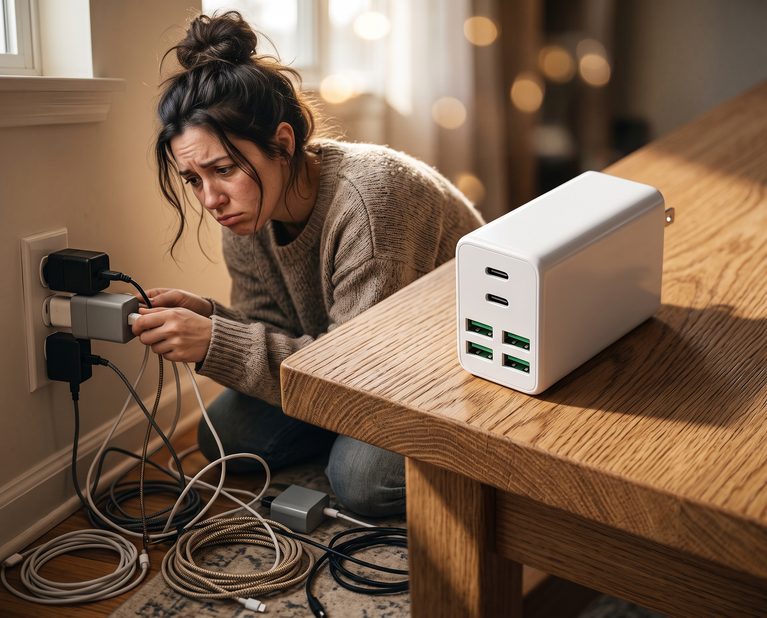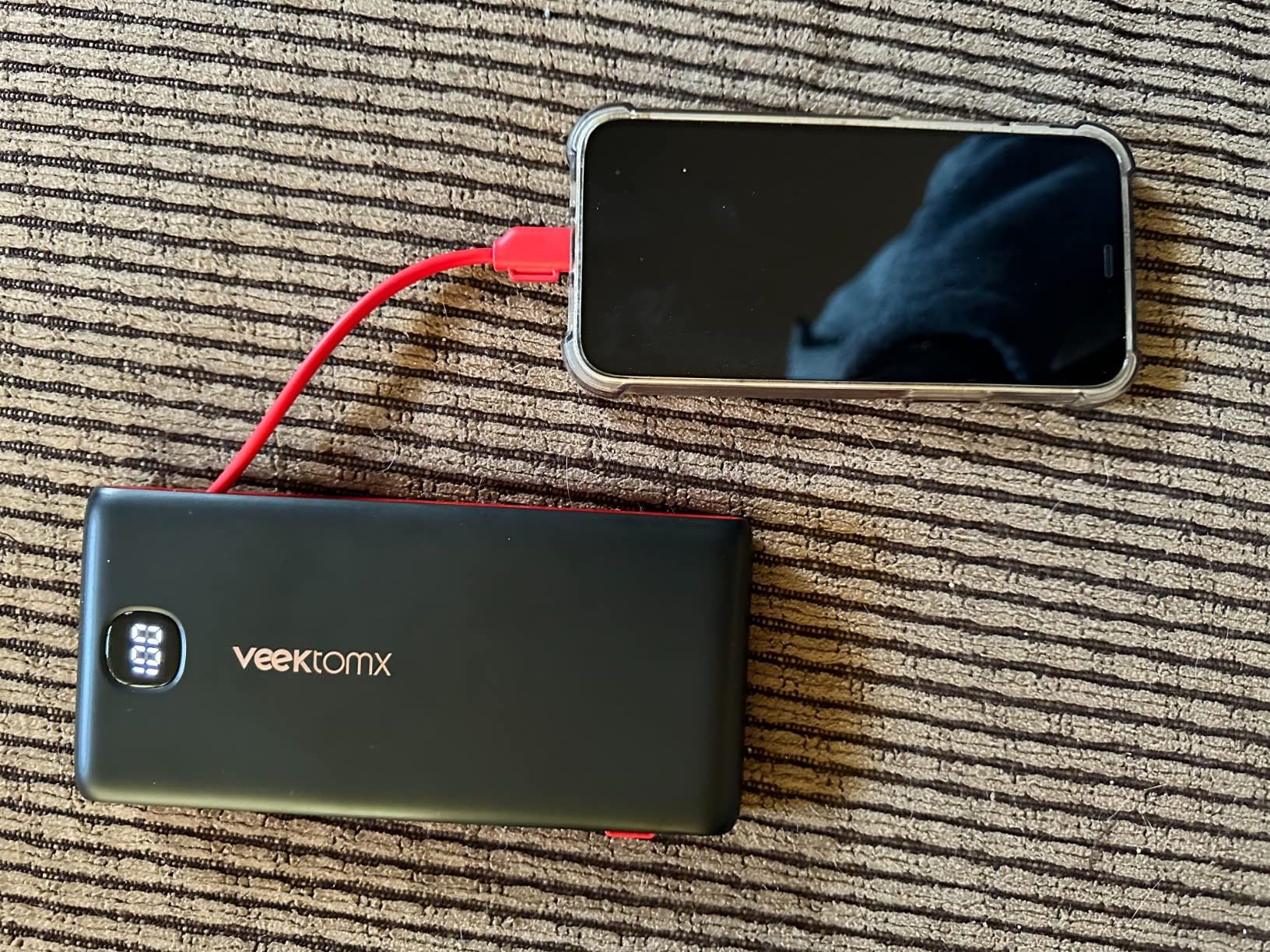
Traditional battery packs require a wall adapter to recharge. The pack itself stores power, but refilling that power means finding a USB cable and a charging block. Battery packs with integrated AC plugs collapse this two-step process into one—when the pack needs charging, it plugs directly into an outlet. No cable, no adapter, no secondary dependencies.
The convenience is most apparent when traveling. Hotel rooms, airports, coffee shops—anywhere with an outlet becomes a viable recharging location without needing to remember a cable. The pack becomes a self-contained unit, reducing the number of objects a traveler needs to track. For people who already juggle phones, tablets, headphones, and chargers, eliminating even one item from the packing list is meaningful.
But the AC prongs create their own set of frictions. When not plugged in, the prongs protrude from the pack’s body. Some designs include foldable prongs that tuck away when not in use, but folding mechanisms add complexity and potential failure points. Non-folding prongs are more durable but also more intrusive—they catch on fabric, press uncomfortably against other items in a bag, and prevent the pack from laying flat on a table or desk.
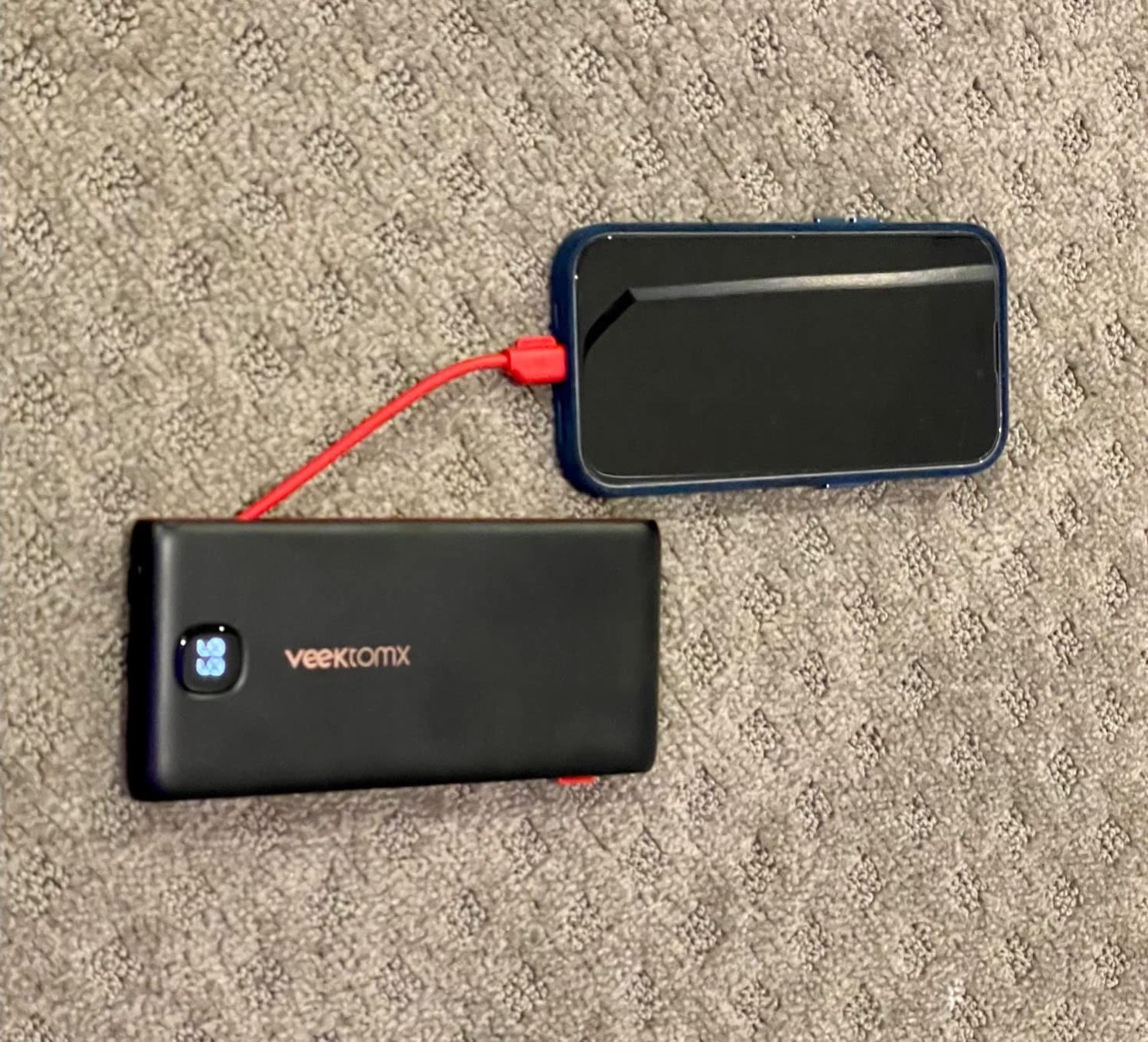
The built-in cables address a related problem: forgetting the charging cable at home. A pack with integrated Lightning and USB-C cables ensures that the user can charge an iPhone or other devices without carrying separate cords. But integrated cables also mean the pack is optimized for specific device types. If the user switches from Lightning to USB-C devices—or vice versa—the built-in cable may become partially obsolete, useful for some devices but not others.
The LED display is a clear improvement over basic battery packs that use four small LEDs to indicate charge level in 25 percent increments. A digital readout shows the exact remaining capacity, which provides more precise information about how much power is left and whether the pack needs recharging soon. But the display also draws a small amount of power continuously, contributing to self-discharge when the pack sits unused for weeks.
Capacity at 10,000mAh is enough to recharge most iPhones 1.5 to 2 times, depending on the model and battery health. This is adequate for a day of heavy use or a short trip, but it’s not enough for multi-day outings without access to wall power. The pack occupies a middle tier—more capable than the smallest pocket-sized chargers, less capable than the high-capacity bricks designed for laptops and extended travel.
Previously listed at $19.99, current listings hover around $17.99, placing these battery packs in the budget-to-mid range of portable iPhone charging solutions. The pricing reflects the added complexity of the integrated AC plug and cables compared to simpler battery-only designs.
The broader shift is that charging accessories are becoming more self-contained. Instead of modular systems where each component—battery, cable, adapter—is separate, newer designs integrate multiple functions into single units. This reduces the total number of objects to carry, but it also reduces flexibility. If any integrated component fails—a cable frays, a plug breaks—the entire pack may need replacement rather than just the damaged part. Convenience and modularity exist in tension, and integrated designs choose convenience, accepting the trade-off in repairability.
"Note: Readers like you help support The Apple Tech. We may receive a affiliate commission when you purchase products mentioned on our website."