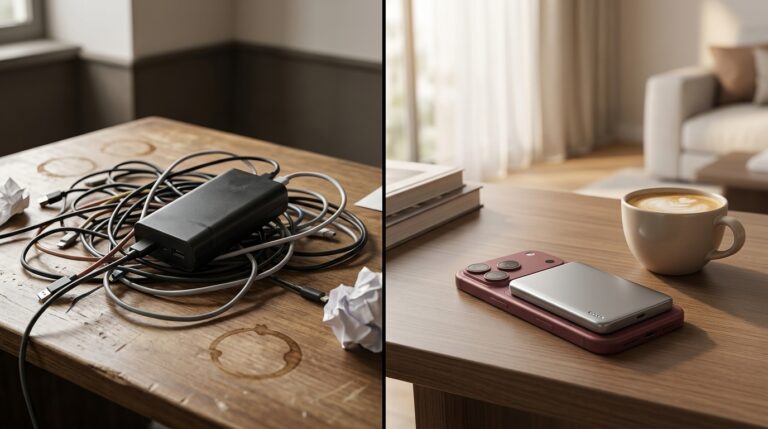
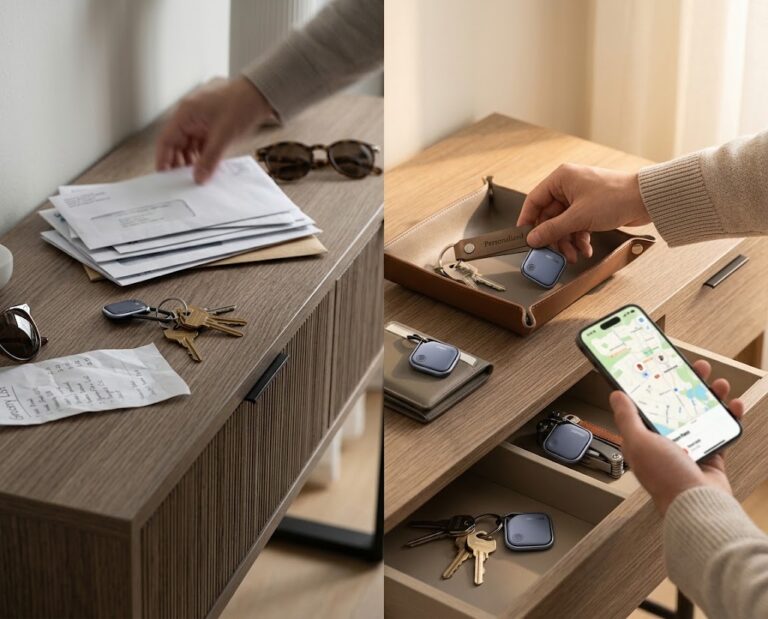
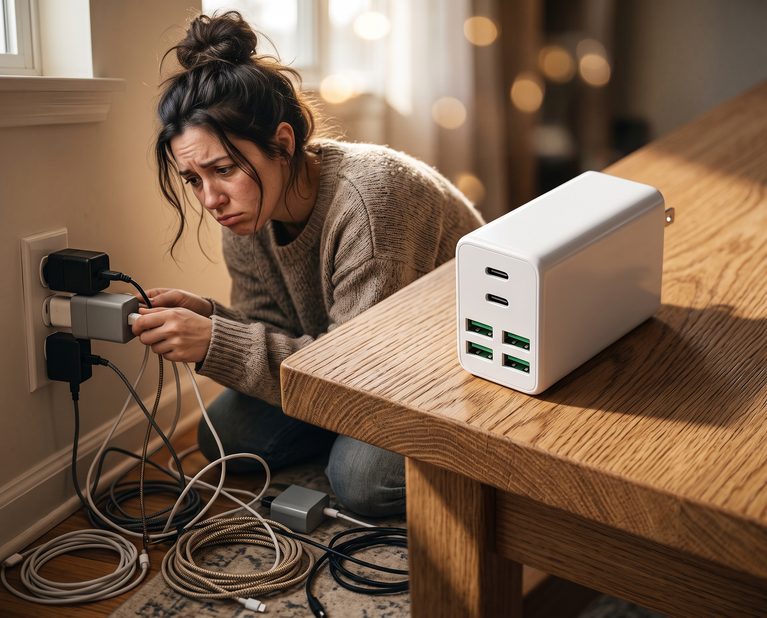
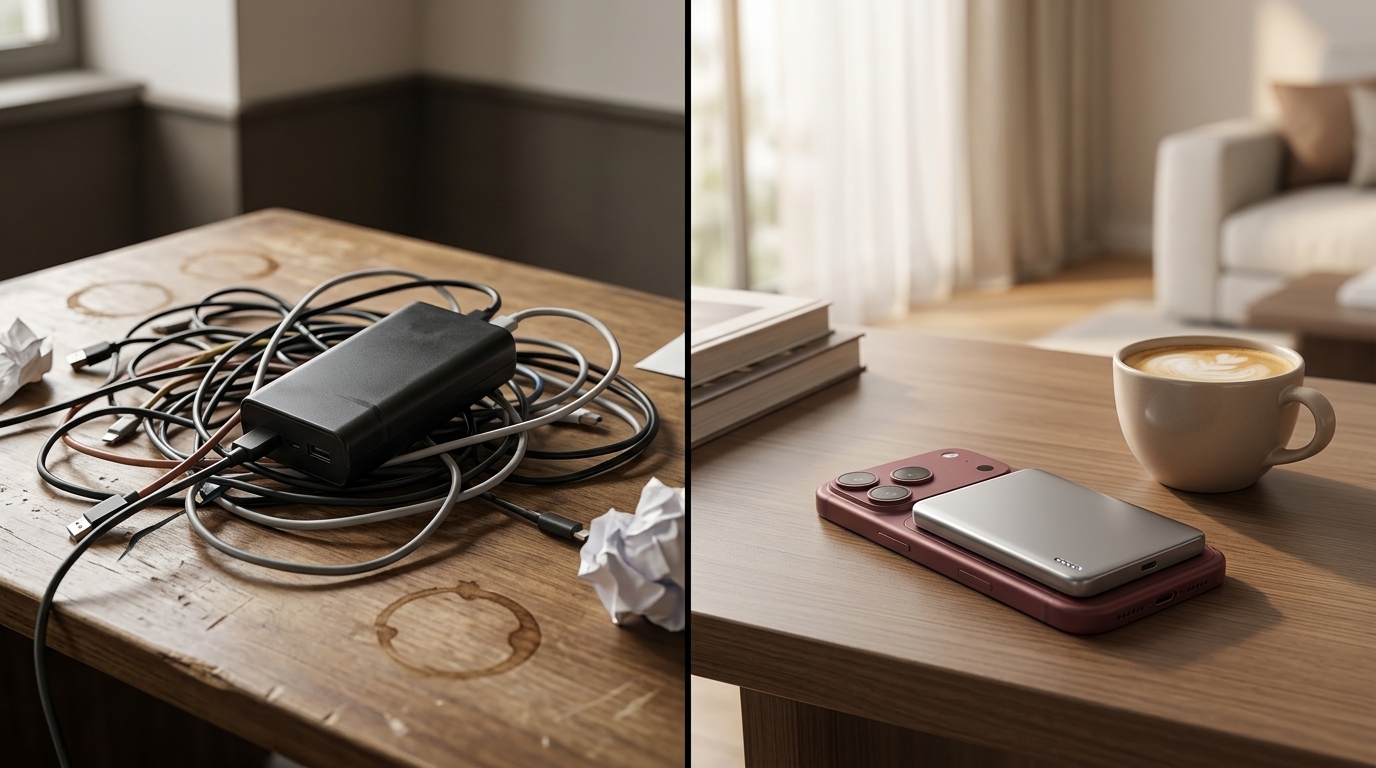
There used to be a clear distinction between people who carried battery packs and people who didn’t. The former planned for long days, anticipated dead zones, or worked jobs that kept them away from outlets. The latter recharged at desks, in cars, at coffee shops. Carrying a battery pack was a choice that signaled something about how you used your phone.
That line has blurred. Magnetic power banks with built-in cables have become everyday carry for people who never previously thought about backup power. Not because phones die more often, but because the friction of carrying a battery pack has dropped low enough that the question shifted from “do I need this?” to “why not bring it?”
The magnet changes the behavior. A battery pack that snaps directly onto the back of an iPhone doesn’t require a cable, a pocket search, or a decision about when to start charging. It attaches mid-commute, during a walk, in a meeting. The phone keeps working. The battery fills in the background. There’s no interruption, which makes charging feel less like a task and more like something that just happens.
The built-in cable matters for a different reason. Previous battery packs required users to remember a charging cable—usually USB-C, sometimes Lightning, often the wrong one. If the cable was forgotten, the battery pack became useless weight. A built-in cable eliminates that failure mode. The pack charges itself when plugged into a wall. It charges the phone when magnetically attached. It charges other devices—AirPods, an iPad, a second phone—using the cable that’s permanently tethered to it. There’s nothing to forget.
People describe a shift in how they think about daily battery percentage. Instead of monitoring the iPhone’s charge throughout the day and making decisions about when to find an outlet, they let it drain naturally and attach the battery pack when convenient. The phone’s internal battery becomes less precious. The external battery becomes the real reserve.
Commuters have started leaving charging cables at home. The battery pack in a jacket pocket handles the phone during the day. At night, the pack itself plugs in to recharge, and the cycle repeats. The phone never connects directly to a wall outlet anymore—it only connects to the pack. The infrastructure has inverted.
Some users mention a secondary effect: they’ve stopped asking strangers, coworkers, or coffee shop staff for charging access. The social friction of needing power in public spaces has disappeared, not because phones last longer, but because the solution is already attached to the phone.
Listings for magnetic battery packs with integrated cables currently reflect a reduction of roughly 20 percent compared with earlier availability.
"Note: Readers like you help support The Apple Tech. We may receive a affiliate commission when you purchase products mentioned on our website."