
Apple has spent decades refining the trackpad, and by most measures, succeeded. The gestures are intuitive, the surface is responsive, and for many tasks, it’s genuinely faster than a mouse. But speed and comfort aren’t always the same thing, and somewhere in the gap between them, a habit formed.
The trackpad works beautifully for most tasks, but there’s a specific kind of precision work where muscle memory still reaches for something else. Selecting text across multiple paragraphs. Adjusting anchor points in a design file. Navigating a spreadsheet for longer than a few minutes. These aren’t edge cases—they’re the ordinary friction points where the trackpad’s elegance gives way to fatigue.
What’s notable is how long many users resisted this. Carrying a mouse felt like a regression, an admission that Apple’s solution wasn’t sufficient. The MacBook’s design language has always suggested completeness, a device that doesn’t require supplementation. Adding a peripheral violated that implicit contract.
But bodies are specific. Hand position, wrist angle, the micro-adjustments required to hold a gesture versus resting a palm on a mouse—these details accumulate over hours of use. Some people never notice. Others feel it by lunchtime.
The iPad complicated this further. As Apple positioned it as a laptop alternative, the same question resurfaced: can a touchscreen replace a pointing device entirely? For some workflows, yes. For others, the answer revealed itself after the third time someone tried to precisely select text on a glass surface and reached for something that wasn’t there.
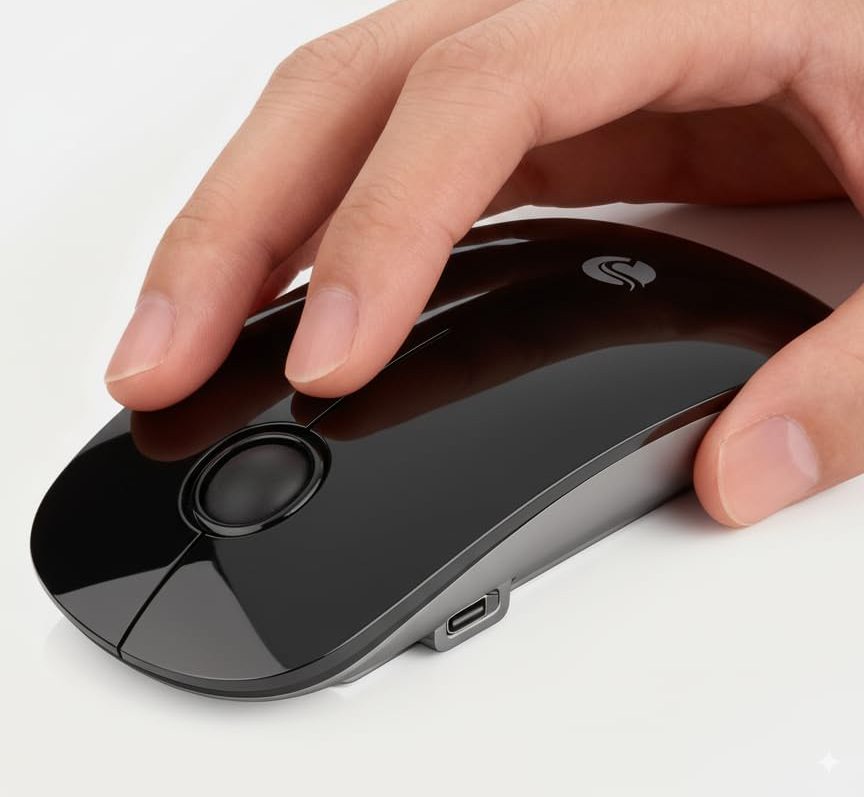
The shift wasn’t ideological. It was practical, quiet, and slightly embarrassing for people who’d internalized Apple’s vision of the trackpad as the definitive solution. But the mouse returned to bags and desks anyway, often in smaller, quieter forms that didn’t announce themselves as loudly as the peripherals of a decade ago.
Some listings currently reflect a reduction of roughly 10 percent compared with earlier availability. The more relevant metric, though, is how many hours someone spends with their hand hovering over a trackpad before deciding they’d rather rest it on something else. That threshold varies, but once crossed, it tends to be permanent.
"Note: Readers like you help support The Apple Tech. We may receive a affiliate commission when you purchase products mentioned on our website."