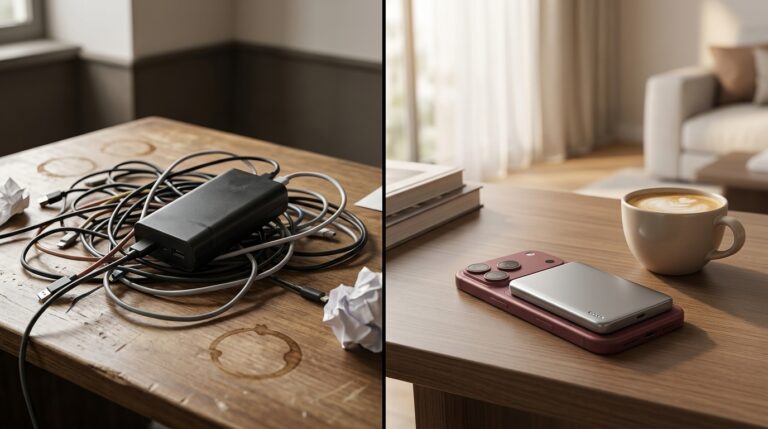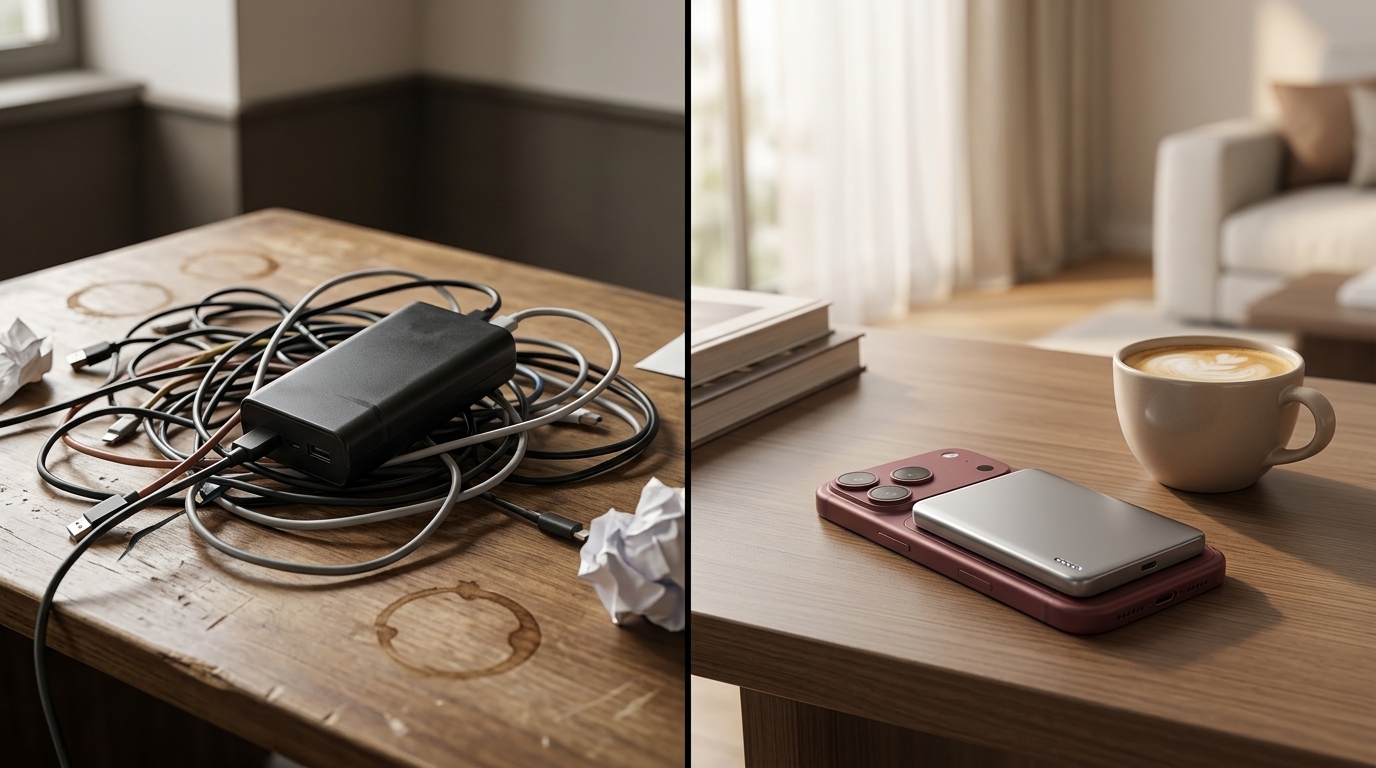

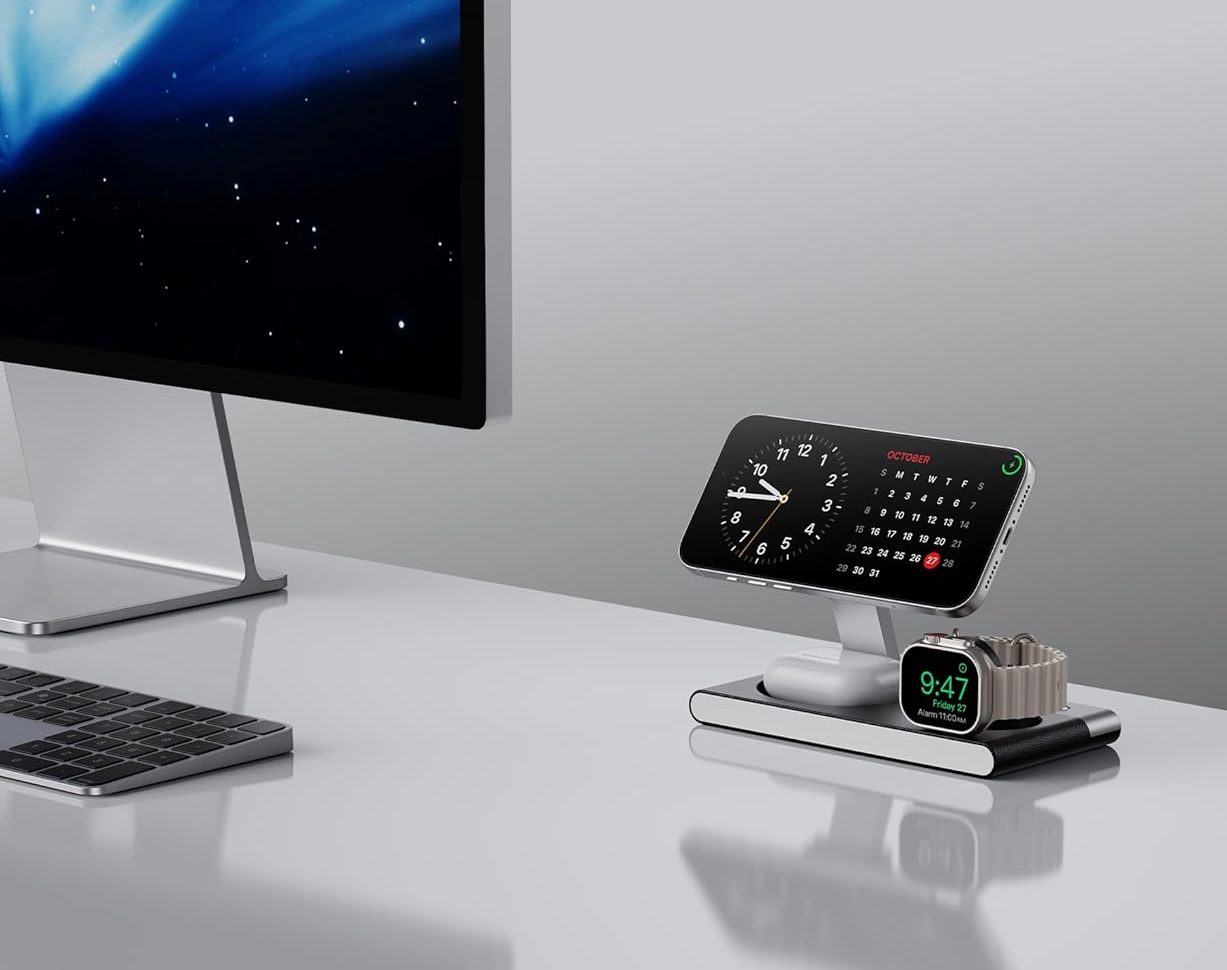
The modern Apple user’s nightstand follows a predictable pattern. An iPhone charging cable snakes across the surface. An Apple Watch puck sits nearby, often tangled with the phone cable. AirPods charge somewhere else—maybe the nightstand, maybe not, depending on outlet availability. None of this was planned. It accumulated device by device, each one adding another cable to the arrangement.
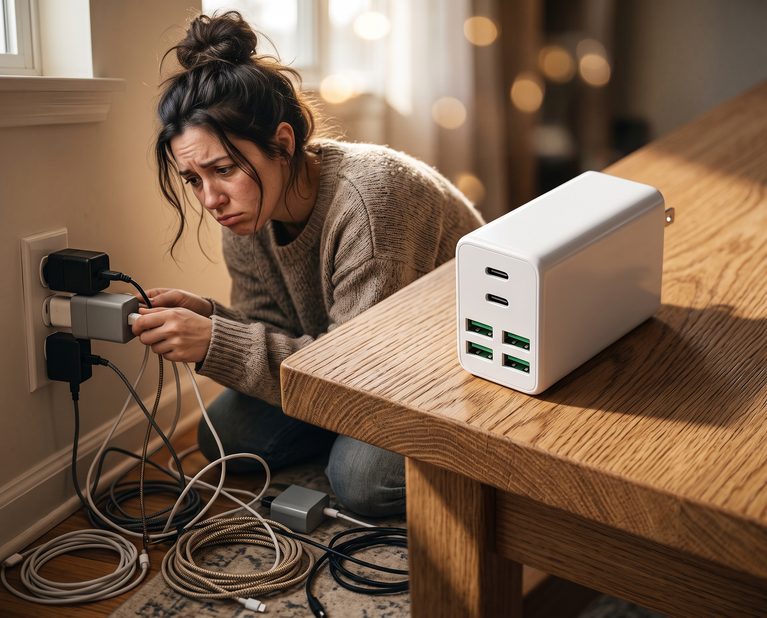
The cables didn’t bother anyone until they did—usually while fumbling in the dark to plug in a phone that had slipped off its charging pad for the third time that week. Or knocking the Watch charger onto the floor. Or realizing the AirPods case was dead because its cable had migrated to another room.
What’s striking is how long people tolerated this setup. Charging worked, technically. All three devices would be powered by morning. But the process required small, repeated attention—making sure each cable was accessible, each device properly aligned, each charging indicator actually lit. Low-stakes tasks, but performed twice daily, they became background friction.
MagSafe improved part of this. The iPhone snapped into place rather than requiring precise cable insertion. But that still left the Watch with its proprietary puck and the AirPods with their own port. Three different charging methods for three devices that lived in the same ecosystem, often within inches of each other.
The consolidation that followed wasn’t driven by enthusiasm for new technology. It came from fatigue with the existing system’s small failures. A unified charging surface didn’t add capability—it subtracted decisions. No more checking which cable goes where. No more adjusting positions in the dark. Just placement.
The nightstand real estate question matters more than it seems to. Bedside tables are small, and they already hold lamps, books, glasses, whatever someone empties from their pockets. Adding three separate charging zones consumed space in a way that felt increasingly unreasonable as the devices themselves became more integrated.
Some listings currently reflect a reduction of roughly 30 percent compared with earlier availability. The calculation, though, isn’t financial—it’s spatial and habitual. How much nightstand surface is currently dedicated to charging? How often does something fail to charge because it wasn’t positioned correctly? At a certain point, the existing system’s friction outweighs inertia.
"Note: Readers like you help support The Apple Tech. We may receive a affiliate commission when you purchase products mentioned on our website."