
The Apple Watch changed what it meant to wear a watch. It tracks health metrics, handles notifications, processes payments, and monitors sleep. But all of that capability runs on a battery that lasts roughly a day, which means charging became a daily obligation rather than a weekly or monthly one.
The Watch doesn’t die dramatically—it just reaches 10 percent at inconvenient moments, usually right before leaving the house. That created a specific pressure: the need to add charge quickly during small windows of time. Showering, making breakfast, getting ready for the day—these became potential charging windows, but only if the Watch could gain meaningful battery life in fifteen or twenty minutes.
Apple’s included charging solution works, but it operates on a timeline that assumes overnight charging. For people who wear their Watch to track sleep, that assumption breaks down. They can’t charge overnight because they’re wearing the device. They need to charge during the day, in fragments, whenever the Watch isn’t on their wrist.
This habit developed quietly. People didn’t announce they were changing their charging behavior—they just started leaving the Watch on its charger during morning routines, or plugging it in while working at a desk, or charging it during workouts they weren’t tracking. The goal was always the same: gain enough battery to make it through the next several hours without anxiety.
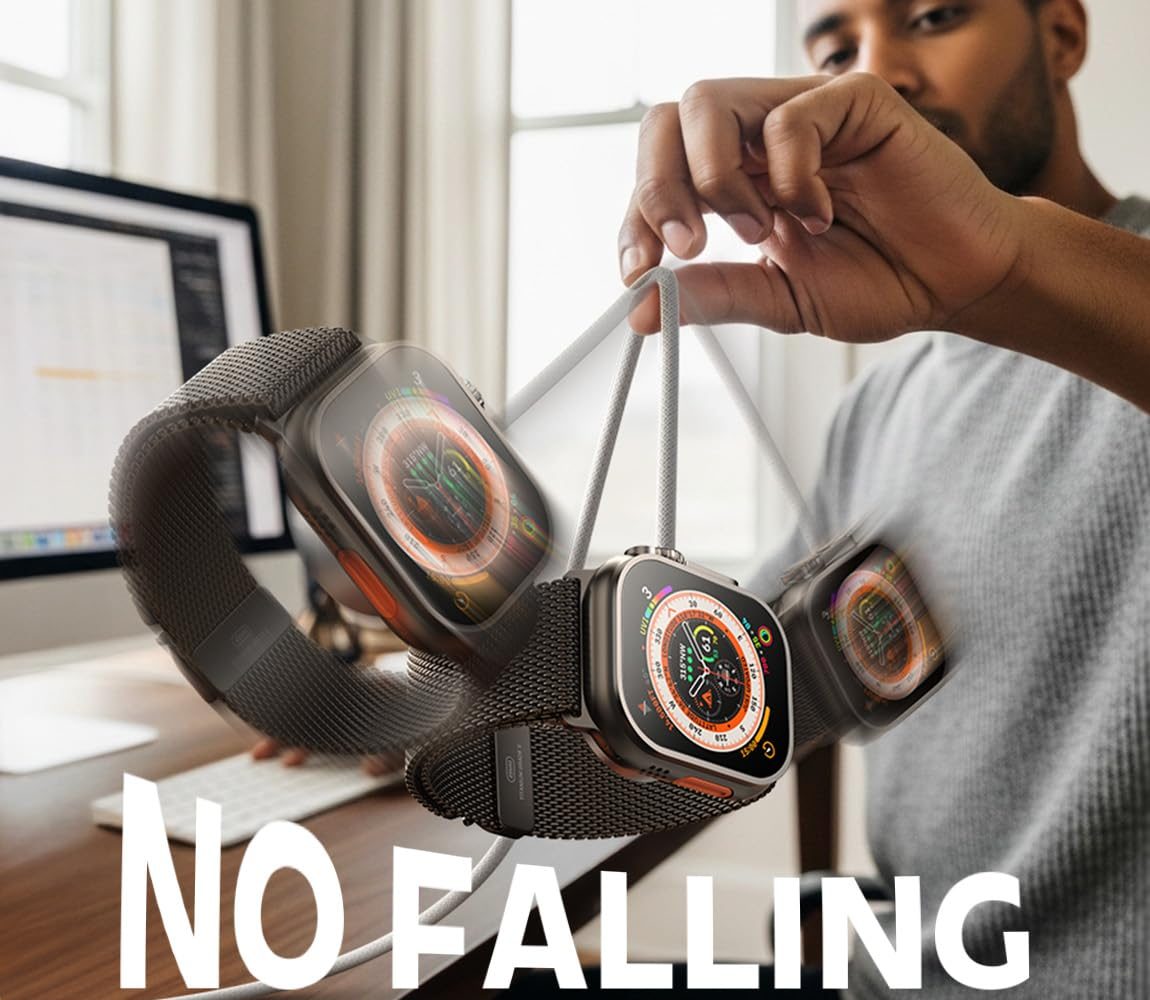
Speed became the variable that mattered most. A cable that charged the Watch to 80 percent in thirty minutes instead of an hour changed the calculus of when and where charging could happen. It made brief charging sessions viable, which reduced the planning overhead of owning a device that couldn’t last two full days.
What’s notable is how specific this friction became. iPhone charging speed improved over the years, but the urgency was different. A phone could sit on a charger for an hour without disrupting much. The Watch needed to be on a wrist, which meant every minute it spent charging was a minute it wasn’t being used for its intended purpose.
Some listings currently reflect a reduction of roughly 30 percent compared with earlier availability. But the more relevant measure is how often someone glances at their Watch, sees a low battery warning, and calculates whether they have enough time to bring it back to a usable level before they need to leave. Once that mental math becomes routine, faster charging stops feeling like an upgrade and starts feeling like a correction.
"Note: Readers like you help support The Apple Tech. We may receive a affiliate commission when you purchase products mentioned on our website."