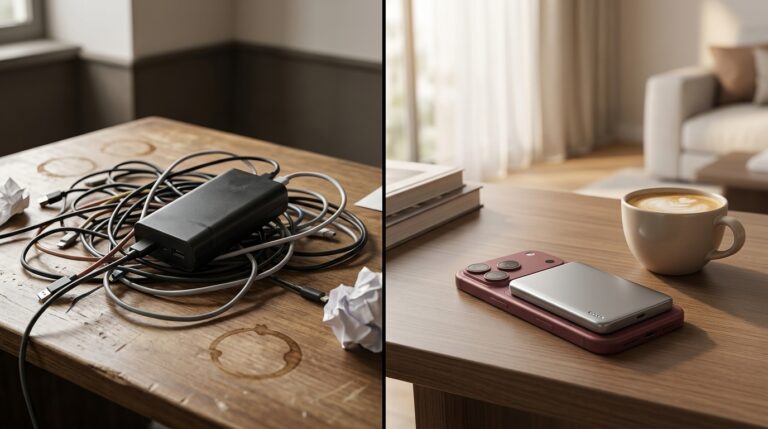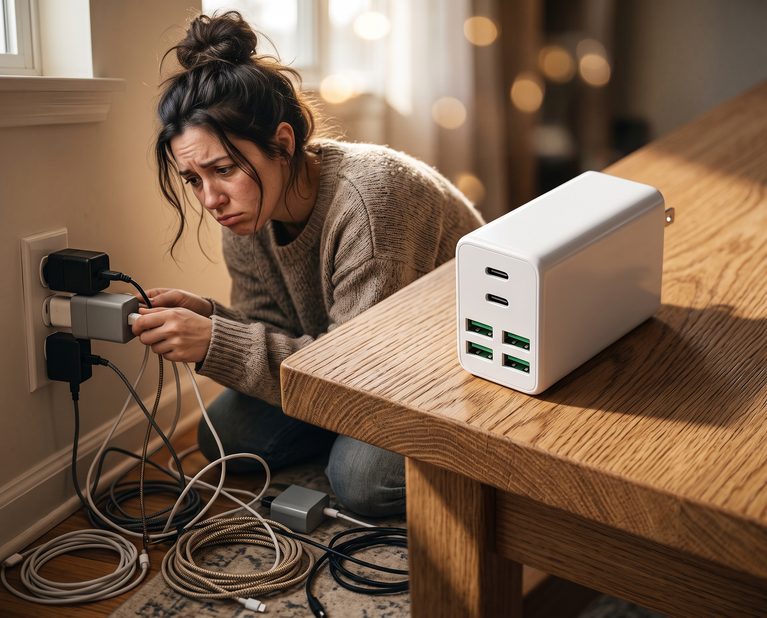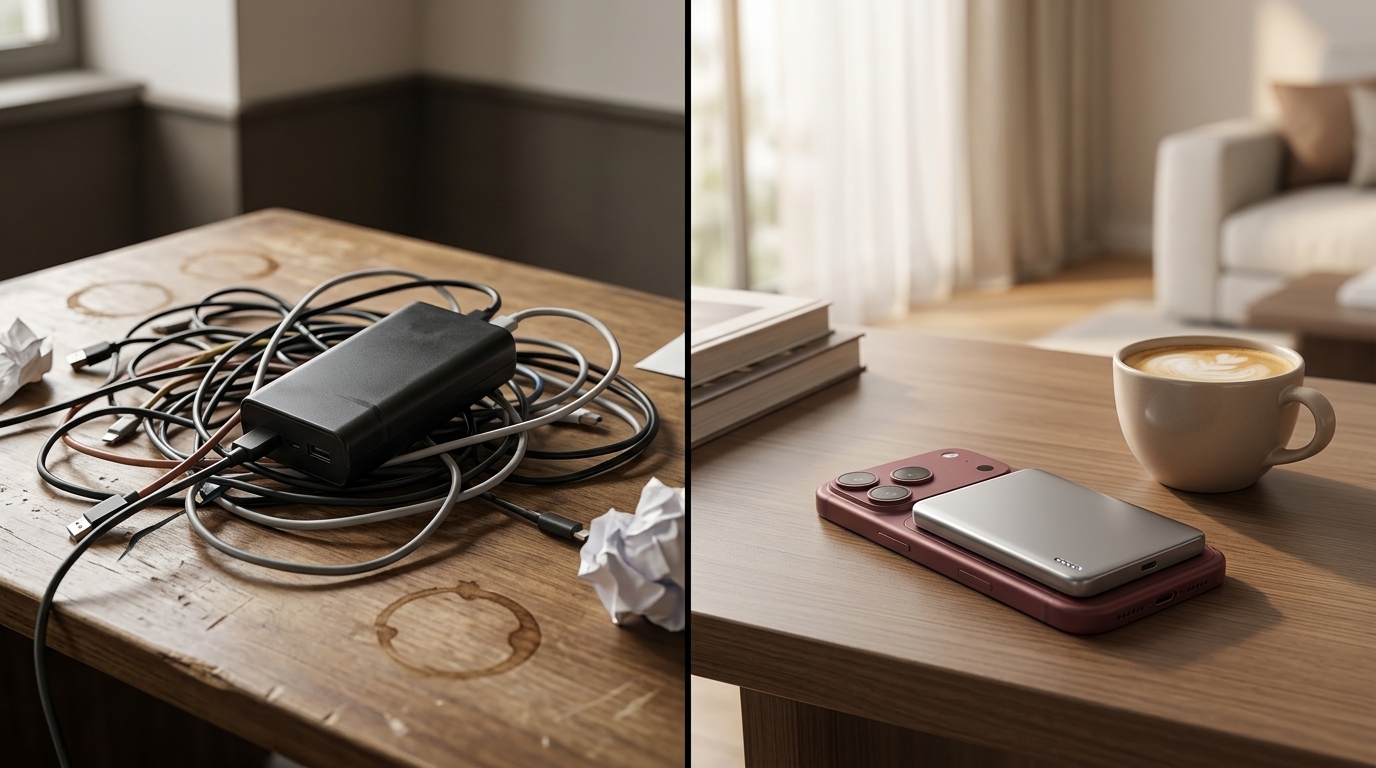

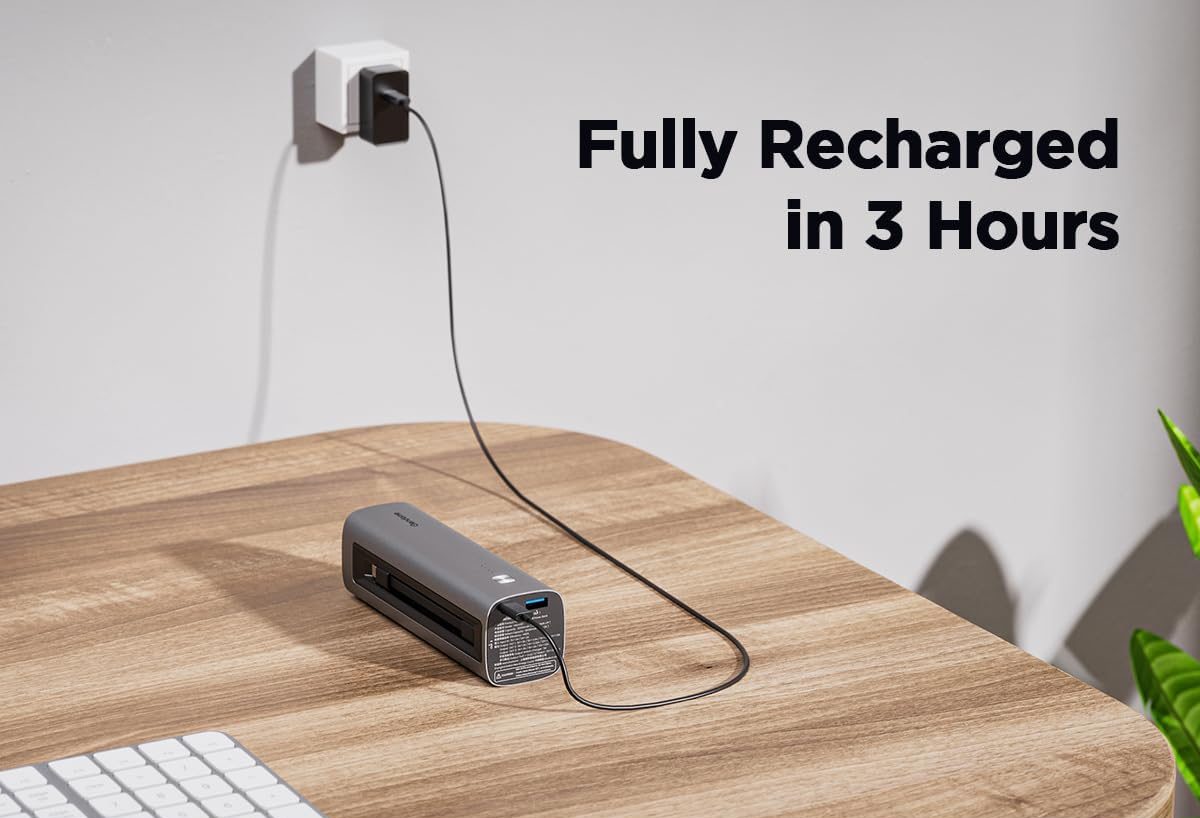
The iPhone’s battery health metric trains users to think about degradation. iOS displays a percentage showing maximum capacity, and over time, that number drops. People understand this. What they notice less often is that the portable chargers they rely on are degrading even faster, often without any indicator to show it happening.
The charger worked fine for six months, then started holding less charge, then became unreliable enough to replace—all while the iPhone it was supporting continued functioning normally. This cycle repeated itself invisibly for most users. They assumed portable chargers simply didn’t last long, rather than recognizing that the battery chemistry inside them was reaching end-of-life faster than necessary.
Lithium-ion batteries—the type in most portable chargers—degrade with each charge cycle. Heat accelerates the process. So does staying at full charge for extended periods. For someone who uses a portable charger regularly, particularly during travel when it might go through multiple charge cycles in a day, that degradation accumulates quickly. A charger that held 10,000mAh when new might only hold 7,000mAh after a year of moderate use.
The friction wasn’t dramatic. The charger didn’t stop working entirely—it just became less reliable. A full charge that used to revive an iPhone twice now only managed once. Or it would show full capacity but drain faster than expected. Small enough to ignore, annoying enough to eventually replace.
What most users didn’t realize is that battery chemistry options existed beyond standard lithium-ion. LiFePO4 batteries—lithium iron phosphate—handle charge cycles differently. They degrade more slowly, maintain capacity longer, and tolerate heat better. The trade-off is typically size and weight, but for something that already lives in a bag, that matters less than longevity.
The shift in awareness happened slowly. People who replaced portable chargers annually started questioning why a device meant to extend battery life couldn’t maintain its own capacity. The iPhone in their pocket would last three or four years before needing battery service, but the backup charger degraded in a fraction of that time.
Some listings currently reflect a reduction of roughly 13 percent compared with earlier availability. But the real calculation is how many portable chargers someone has cycled through relative to how many iPhones they’ve owned in the same period. For frequent users, that ratio reveals a pattern most hadn’t consciously registered until they considered it directly.
"Note: Readers like you help support The Apple Tech. We may receive a affiliate commission when you purchase products mentioned on our website."