
There’s a specific kind of iPhone user anxiety that doesn’t announce itself until it’s gone. It’s the mental math that happens around 3 PM, when you’re nowhere near an outlet and the battery icon dips below forty percent. You start rationing screen time. You skip the podcast. You don’t take the photo. It’s not dramatic, but it’s constant.
MagSafe introduced magnetic alignment as a feature, but what it really did was relocate the charging ritual. Instead of hunting for a cable in your bag or bending toward a wall outlet, you could snap a battery pack onto the back of your iPhone and keep moving. That’s the part most people remember. What they don’t always notice is how it changes the mental landscape around battery life entirely.
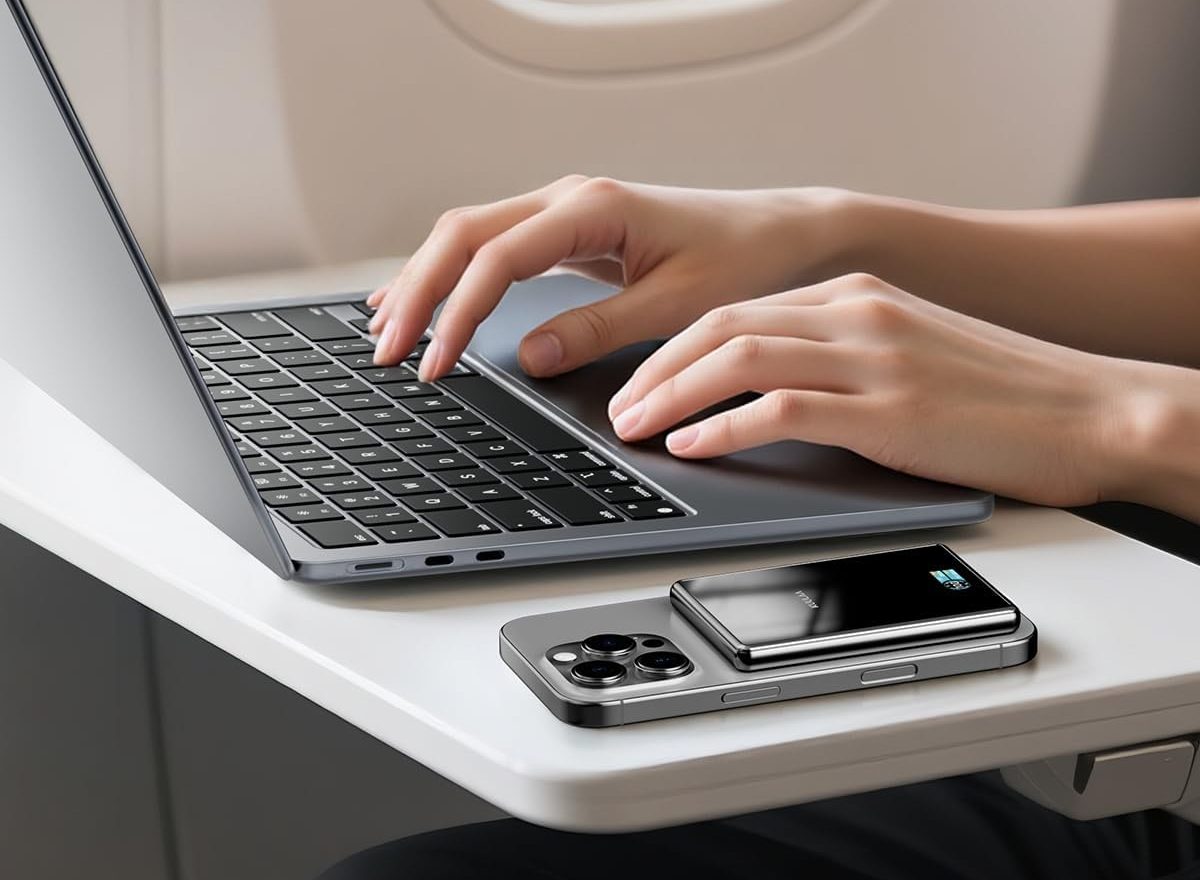
Wireless magnetic power banks have been available since MagSafe launched, but early versions were often too heavy or too slow to feel like a real solution. They sat in drawers. They worked, technically, but not in a way that integrated into anyone’s actual day. The newer generation—thin enough to slip into a coat pocket, powerful enough to charge while you’re still using the phone—has started to feel different. Not because the technology changed dramatically, but because the form factor finally matched the promise.
The difference isn’t in having power—it’s in forgetting to worry about needing it. iPhone users who carry these magnetic packs report a shift in behavior that has nothing to do with charging speed or capacity. They stop preemptively closing apps. They take more photos. They leave their phones face-up on tables instead of screen-down to “save battery.” It’s a small psychological release, but it compounds throughout the day.
What’s strange is how quickly this becomes the new baseline. After a week or two of carrying magnetic power, the old habit—of scanning every room for outlets, of sitting near walls in cafes—starts to feel archaic. It’s not that iPhone users were consciously suffering before. It’s that a low-level friction was so normalized it didn’t register as friction at all.
The 15W wireless output matters here, but not in the way spec sheets suggest. It’s fast enough that you don’t have to stop what you’re doing. You can keep the phone in your hand, keep scrolling, keep navigating, and the charge still climbs. The 20W USB-C port adds a backup option for when you do find a cable, but most people who use these magnetic packs report barely touching the wired connection. The snap-on convenience rewires the habit entirely.
There’s also something happening with phone placement. iPhone users who previously kept their devices face-down on desks or tucked into bags to avoid distraction now leave them flat and visible, knowing the battery won’t punish them for it. The magnetic pack stays attached during calls, during walks, during commutes. It doesn’t fix every friction point in the iPhone experience, but it removes one that was quietly shaping dozens of micro-decisions every day.
For those paying attention, a discount of around twenty percent is currently available, though the shift in daily behavior seems to matter more to most users than the upfront cost. What’s clear is that magnetic wireless power has moved from novelty to infrastructure for a certain subset of iPhone users—particularly those with iPhone 13 and newer models, where MagSafe alignment is most reliable. It’s not a revolution. It’s just the slow evaporation of a problem most people had stopped naming.
"Note: Readers like you help support The Apple Tech. We may receive a affiliate commission when you purchase products mentioned on our website."