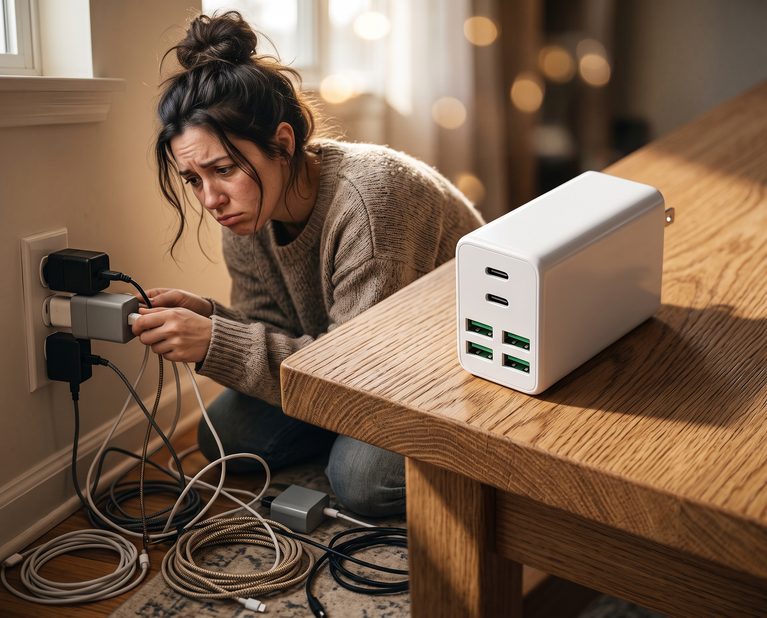

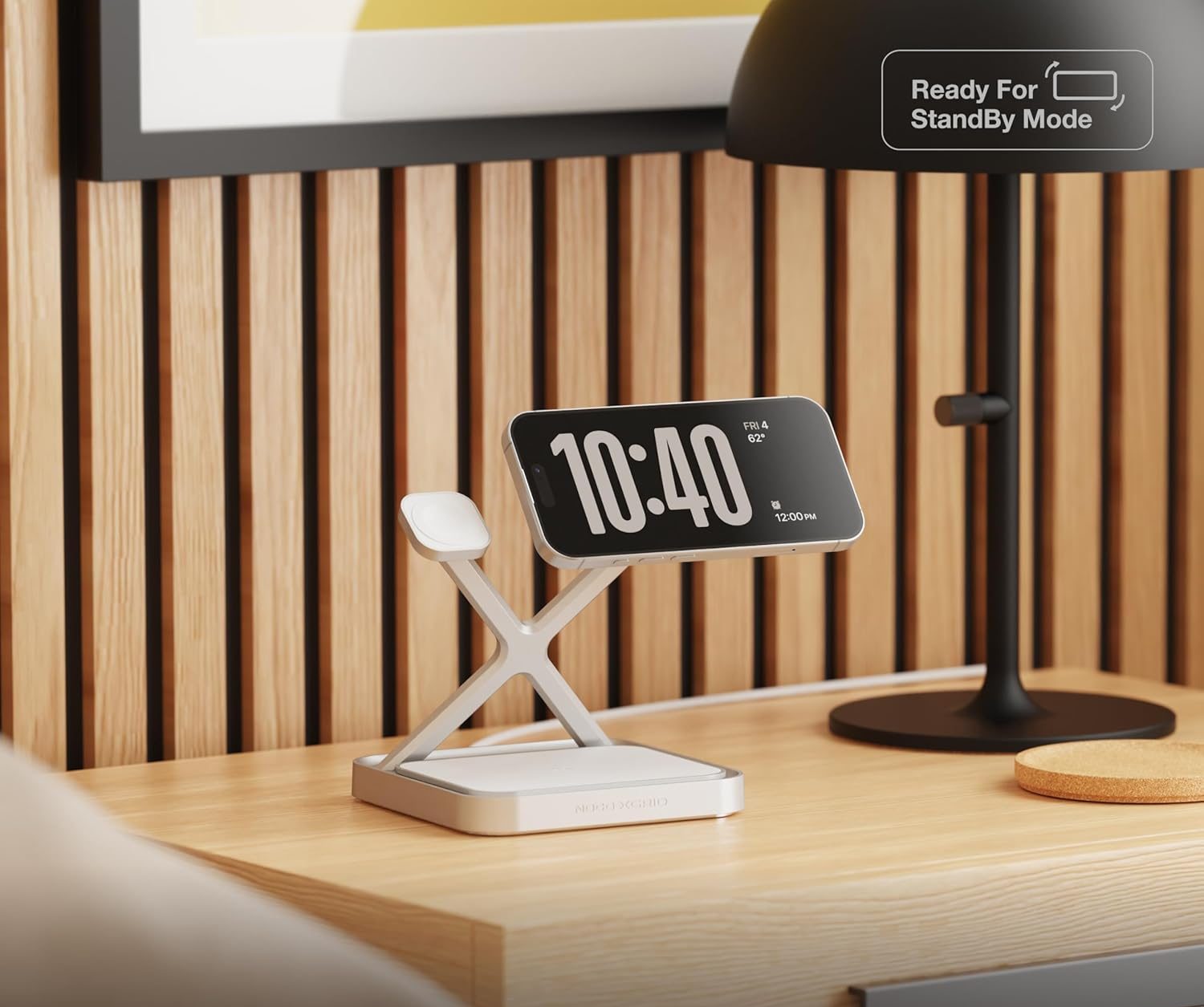
There’s a moment that happens in most Apple households around bedtime. You’re setting down your iPhone, and you notice the Apple Watch is at twelve percent. The AirPods case is somewhere in your bag, probably dead. You have three cables, but only two outlets near the bed, and one of them is behind the nightstand. You make a choice. Usually the phone wins. The watch charges tomorrow.
This isn’t a crisis. It’s just a low-level negotiation that repeats itself every night, and most people stopped noticing it years ago. The friction isn’t in any single device—it’s in the accumulation of them, and in the fact that Apple’s ecosystem grew faster than the infrastructure to support it. Three devices means three cables, three power bricks, three things to remember. It works, but it doesn’t feel solved.
Unified charging stands have existed for years, but earlier versions often required precise placement or didn’t work well with cases. Magnetic alignment through MagSafe changed that calculus. Now a charging stand can hold an iPhone vertically without fumbling, charge an Apple Watch on a dedicated puck, and power AirPods on a flat Qi pad—all from a single wall connection. It’s not revolutionary technology. It’s just the first time the pieces fit together without compromise.
What happens next is quieter than expected. iPhone users who switch to a unified stand report that the shift isn’t about speed or efficiency—it’s about forgetting to manage the process entirely. You walk into the bedroom, you set all three devices on the stand, and you leave. No cable selection. No mental checklist. The routine compresses into a single gesture, and the cognitive load that was never quite visible suddenly isn’t there anymore.
The realization isn’t about convenience—it’s about how much mental space was going toward remembering which device needed power. That space gets reclaimed, and it’s only in its absence that you notice it existed at all. People stop checking battery percentages before bed. They stop prioritizing which device gets the outlet. The evening wind-down becomes slightly less transactional.
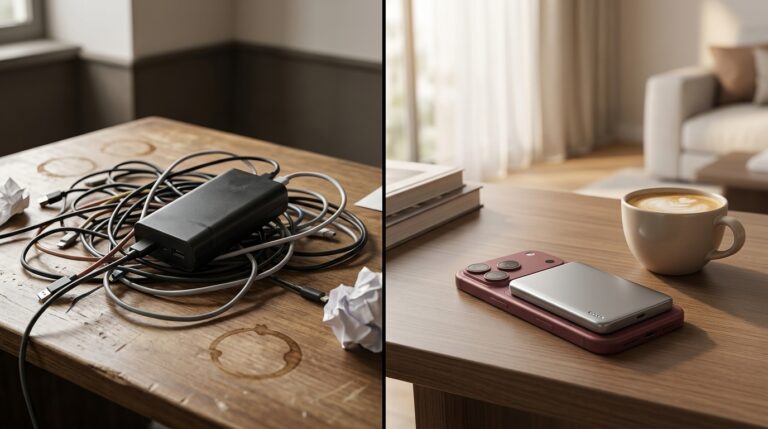
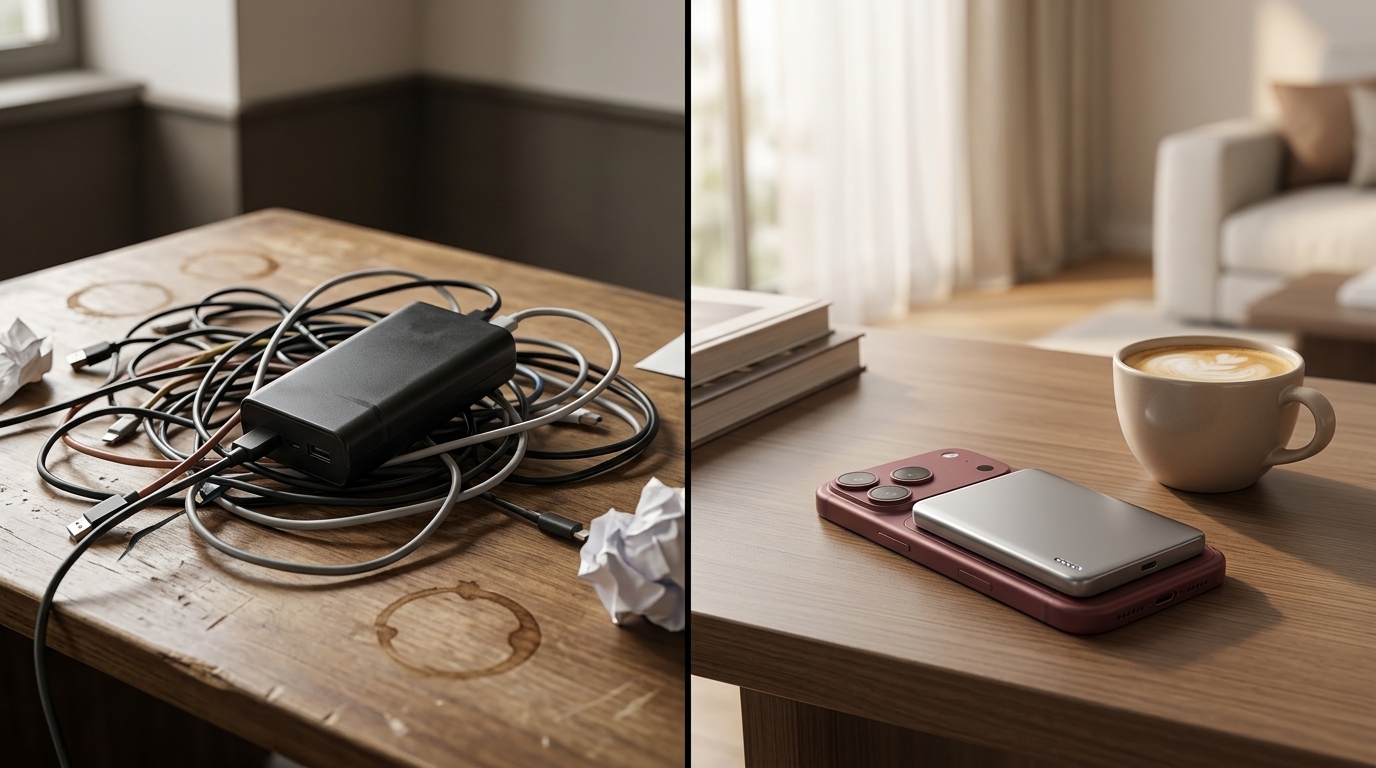
There’s also something happening with surface clutter. A nightstand or desk that previously held three snaking cables now holds one object. It’s a small visual shift, but it changes the feeling of the space. Apple users who value minimalism in their hardware often tolerate chaos in their charging setup, not out of preference but because no better option existed. When the tangle disappears, the aesthetic inconsistency becomes obvious in retrospect.
The inclusion of a 45W wall charger and a longer USB-C cable matters here, not because of the wattage but because it removes the scavenger hunt for compatible power adapters. Most Apple users have a drawer full of old bricks and cables, but finding the right combination for a new charging stand usually means testing three different setups before one works. Having the correct hardware bundled in eliminates that friction before it starts.
MagSafe compatibility and Qi2 certification mean the stand works reliably with iPhone 12 and newer models, and with most AirPods cases that support wireless charging. The Apple Watch charger is Apple-specific, which is the one piece that hasn’t been standardized across the industry. But for users already deep in the Apple ecosystem—who have all three devices and charge them all nightly—the stand doesn’t feel like an accessory. It feels like the solution that should have shipped with the devices in the first place.
What’s notable is how quickly this becomes the default. After a week, the old habit of managing three separate cables starts to feel archaic. It’s not that the problem was unbearable before. It’s that the friction was so evenly distributed across the routine that it never registered as a single solvable thing. Now it’s solved, and the evening feels slightly less like a task. CHECK PRODUCT
"Note: Readers like you help support The Apple Tech. We may receive a affiliate commission when you purchase products mentioned on our website."