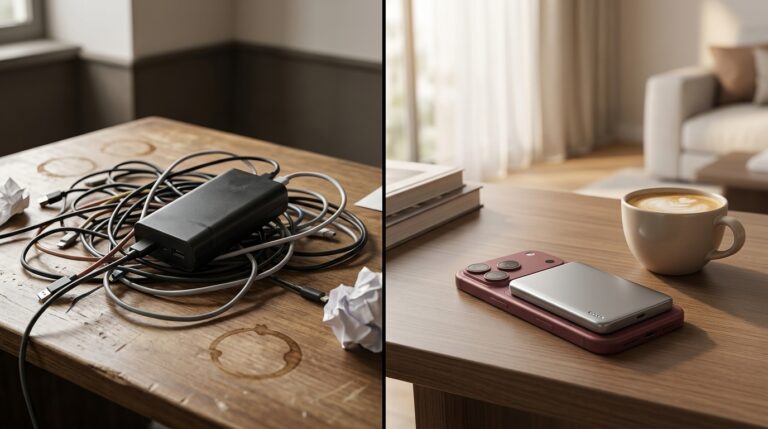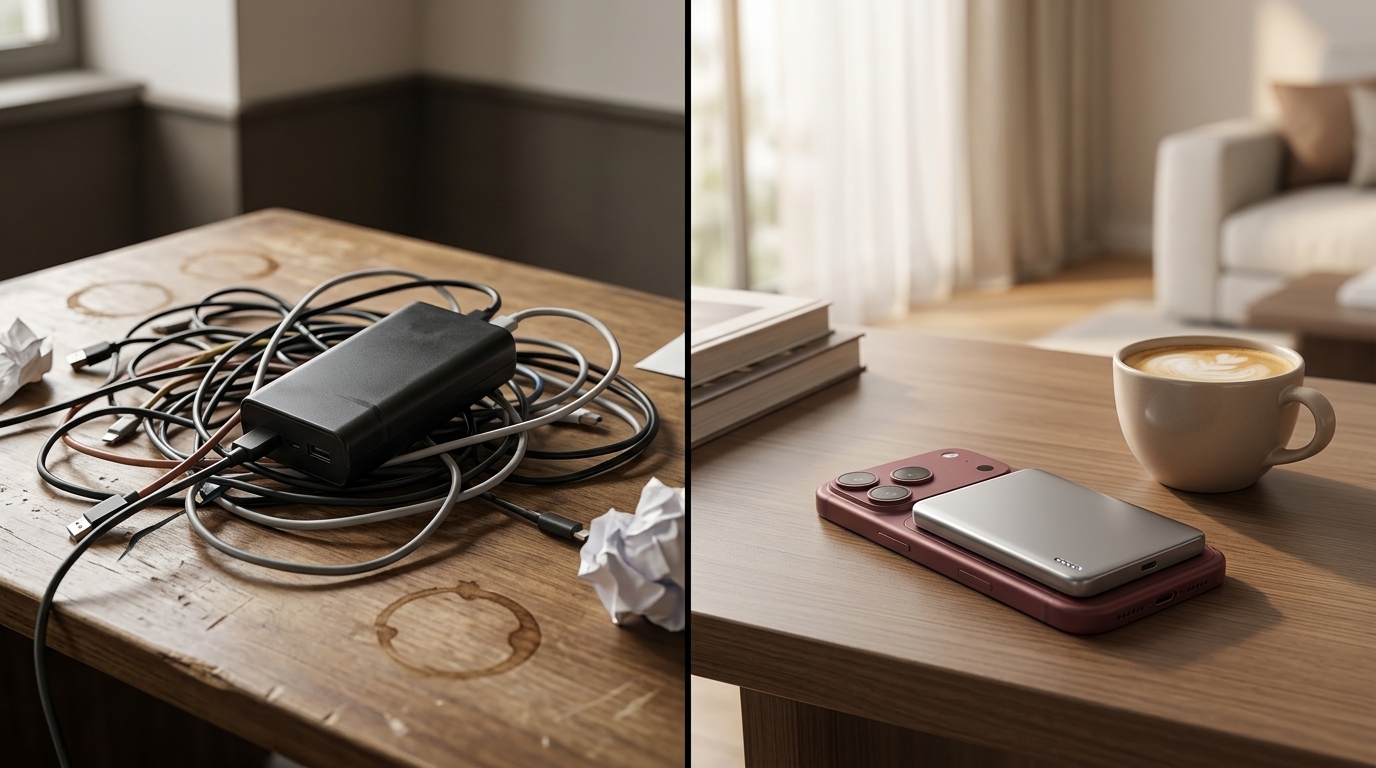

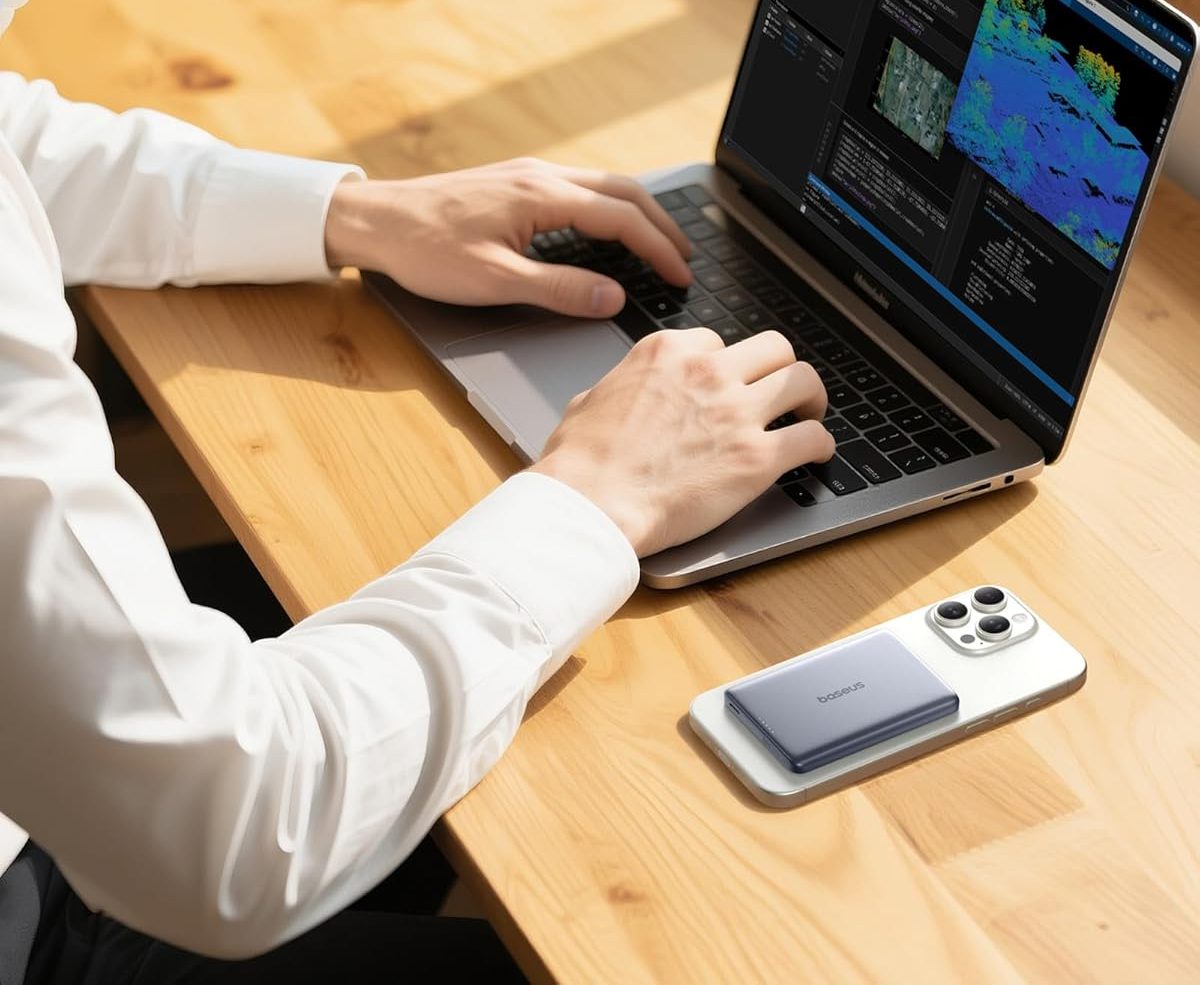
There’s a specific type of iPhone accessory that everyone owns but nobody uses. It’s the portable charger that lives in a drawer, or at the bottom of a backpack, theoretically ready for emergencies but practically inaccessible because it’s too bulky to carry without planning for it. The intention was always there. The follow-through wasn’t.
The problem was never capacity. Most portable chargers had enough power to refill an iPhone twice over. The problem was physical presence. A thick battery pack in your pocket announces itself with every step. It makes your coat sag. It doesn’t fit in a clutch or a small crossbody bag. So it stays home, and iPhone users continue to ration battery life the old-fashioned way: by dimming screens, closing apps, and quietly stressing about percentages.
Magnetic alignment through MagSafe made portable charging easier to attach, but it didn’t solve the carry problem. Early MagSafe battery packs were often just as thick as the wired ones that came before them. They worked well when you remembered to bring them. But remembering required the same kind of forward planning that portable charging was supposed to eliminate. The friction just moved from “finding a cable” to “deciding whether today is a battery pack day.”
What changed recently isn’t the technology—it’s the form factor. Ultra-thin magnetic power banks, some measuring half an inch thick, have started to cross a threshold where they stop feeling like an accessory and start feeling like an extension of the phone itself. They slip into jacket pockets without creating a bulge. They fit in small bags alongside a wallet and keys. They attach to the back of an iPhone and stay there through an entire commute without making the device feel cumbersome.
The shift wasn’t about needing more power—it was about forgetting you were carrying it at all. iPhone users who switch to these thinner packs report a change in behavior that has nothing to do with charging speed. They stop checking battery percentages in the morning. They don’t preemptively close background apps before leaving the house. They take more photos during the day because the mental math around remaining battery just isn’t happening anymore.
What’s strange is how much of this comes down to millimeters. A charger that’s three-quarters of an inch thick stays in the bag. A charger that’s half an inch thick goes in the pocket. That difference—imperceptible on a spec sheet—completely rewrites the usage pattern. It’s the gap between “something I bring when I remember” and “something I always have.”
The 15W wireless output and 27W wired charging via USB-C matter here, but not in the way product descriptions suggest. Most iPhone users aren’t benchmarking charge times. What they notice is that the phone charges fast enough that they don’t have to stop using it. The battery pack stays attached during calls, during navigation, during scrolling. It becomes part of the device, not a remedy applied when things go wrong.
There’s also something happening with anxiety reduction. iPhone users who carry these ultra-thin packs report feeling less tethered to locations. They stop scanning coffee shops for outlet access. They don’t avoid using their phone’s flashlight or camera because it might drain the battery. The device becomes more useful simply because the mental governor around power consumption is no longer active.
For those keeping track, a discount of nearly forty percent is currently available on certain models, which brings the cost closer to what many users previously paid for thicker, less-integrated options. But the price isn’t the story here. The story is that a specific physical constraint—thickness—was quietly preventing an entire category of accessory from being useful, and reducing it by a few millimeters unlocked the behavior the product was always supposed to enable. It’s not a revolution. It’s just a slow evaporation of the gap between intention and execution.
"Note: Readers like you help support The Apple Tech. We may receive a affiliate commission when you purchase products mentioned on our website."