
As Apple users increasingly integrate devices into every facet of daily life, the subtle choreography of keeping them powered has evolved, revealing new patterns of adaptation.
The quiet hum of the Apple ecosystem is often punctuated by the low-grade anxiety of a depleting battery. For years, the rituals surrounding device power have been an invisible ballet for many users, involving an array of cables, adapters, and power bricks. Whether it’s an iPhone tethered to a desk or an iPad becoming a travel companion, the pursuit of reliable power has consistently shaped routines and workflows. This ongoing negotiation between device autonomy and charging availability has led to a remarkable, often unnoticed, evolution in user behavior.
Consider the common scene: a backpack unzipped, an assortment of cables spilling out, each coiled or tangled, waiting to find its corresponding port. This routine, for a long time, was simply part of the Apple experience. Users adapted by dedicating specific pockets for chargers, learning to identify cables by feel, and mentally mapping out power outlets in cafes or airports. The friction was always present, a background hum of logistical planning that became normalized through sheer repetition.
The struggle wasn’t just about carrying the right cable; it was about the mental load of managing them. A charging session often meant locating a specific cord, unwinding it from a knot of others, plugging it in, and then repeating the process in reverse. On a crowded desk, this could mean an optical tangle that disrupted otherwise minimalist setups. During travel, the internal monologue often included a check for the “iPhone cable,” followed by the “iPad cable,” creating a small, persistent layer of minor inconvenience.
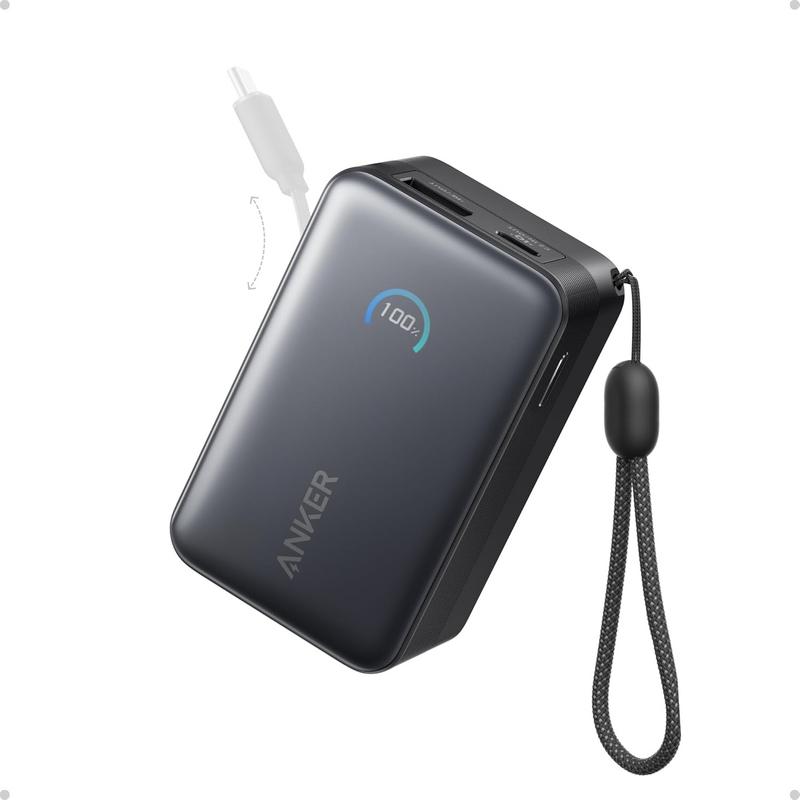
Yet, a subtle shift has been observed in how some Apple users approach this daily challenge. There’s a growing inclination towards self-contained solutions that minimize the components required for on-the-go power. The appearance of portable chargers that integrate their own necessary cables, particularly those with a retractable design, speaks to this evolving behavior. The product isn’t the story; rather, it’s the way individuals are adapting to a simpler physical interaction, reducing the steps required to achieve power.
Imagine the small, mundane moment of reaching for a charger in a dimly lit hotel room or deep inside a commuter bag. Instead of fumbling for a separate cable, then aligning it with a power brick, the action becomes a singular, confident motion. The absence of a loose cable to untangle or misplace is not a feature to be celebrated, but a piece of friction that has simply been removed. This quiet simplification allows a small corner of daily life to operate with less cognitive effort, blending more seamlessly into established routines.
This adaptation illustrates a broader trend within the Apple ecosystem: users are not just adopting new devices, but subtly reorganizing their habits around them. The dependency isn’t just on the device for its function, but on the entire infrastructure that supports its consistent operation. When a component like a charger becomes less intrusive, less demanding of attention, it facilitates a deeper, quieter integration of technology into personal space and workflow.
Ultimately, these small changes in behavior—the unconscious reach, the streamlined pack, the simplified desk—reflect a desire for an unburdened technological experience. It’s an observation about human nature’s continuous quest for flow, even in the most minute interactions with everyday objects. For many Apple users, the shift towards a more integrated charging reality is not about a product’s specifications, but about the quiet realization that one less cable means one less thought, contributing to an overall sense of calm within their connected lives.
Raw Amazon Product Headline:
This product is currently available on Amazon and has been drawing attention among Apple users interested in cleaner and more adaptable everyday setups.
Check availability and latest pricing here
Frequently Asked Questions
How does this portable charger integrate with existing Apple device charging protocols?
Modern Apple devices, including recent iPhone and iPad models, utilize USB-C for charging, aligning with the output capabilities of many portable power solutions. This allows for direct connection and power delivery without requiring additional adapters, fitting into established Apple charging patterns.
Can this type of portable charger affect MagSafe accessories or charging?
Portable chargers typically deliver power via a physical USB-C cable connection. While they can charge MagSafe-compatible iPhones, they do not inherently interfere with MagSafe accessories or the wireless charging functionality when the iPhone is not physically connected to the portable charger itself.
Is the retractable cable feature beneficial for long-term use with Apple devices?
The integrated retractable cable simplifies cable management, reducing tangles and wear from coiling. For Apple users who frequently transport their devices and chargers, this design can contribute to a more organized and less cumbersome charging routine, potentially extending the functional life of the cable itself.
What considerations should Apple users have regarding charger capacity and device compatibility?
When selecting a portable charger, Apple users often consider capacity relative to their device’s battery size. A 10,000mAh capacity typically offers multiple recharges for an iPhone or a significant charge for an iPad, ensuring compatibility with standard USB-C power input requirements for various Apple handheld devices.
Verdict
The evolution of how Apple users manage their device power is a quiet testament to a desire for simpler interactions. This category of integrated portable chargers, with features like retractable cables, subtly addresses a recurring friction point. It’s an observation not about the device itself, but about the user’s continuous adaptation, normalizing convenience into the everyday rhythm of life within the Apple ecosystem.
"Note: Readers like you help support The Apple Tech. We may receive a affiliate commission when you purchase products mentioned on our website."