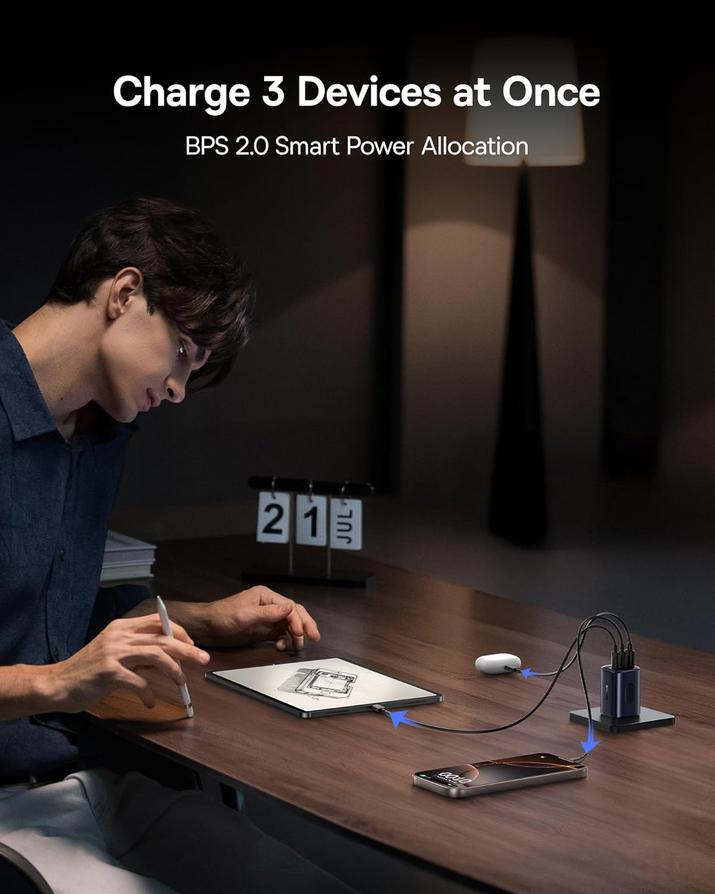
There is a quiet rhythm to our daily interactions with Apple devices, a choreography of power cables and battery percentages that often goes unnoticed until a minor inconvenience surfaces. We have all, at some point, found ourselves in the familiar dance of prioritizing which device gets the limited port on an airport lounge strip, or the solitary wall outlet in a hotel room. This isn’t about the devices themselves, but the human adaptations that evolve around their constant need for power.
Consider the morning ritual. The iPhone, having dutifully charged overnight, is unplugged first. Then perhaps the Apple Watch, lifted from its magnetic disc. But what about the MacBook Air or the iPad Pro, often requiring a different, more powerful brick? This often necessitates a rotation of charging blocks, each carefully selected from a drawer or travel pouch, creating a small, recurring friction that accumulates over weeks and months.
Travel exacerbates these habits. The decision of which power adapter to pack becomes a miniature strategic exercise. Do you bring one for the iPhone, another for the iPad, and a third, larger one for the MacBook? Or do you gamble on finding a single solution that might service all, often at the cost of slower charging for one device, or worse, leaving a critical device uncharged when an unexpected need arises? This quiet calculus informs everything from carry-on weight to the available space on a bedside table in an unfamiliar room.
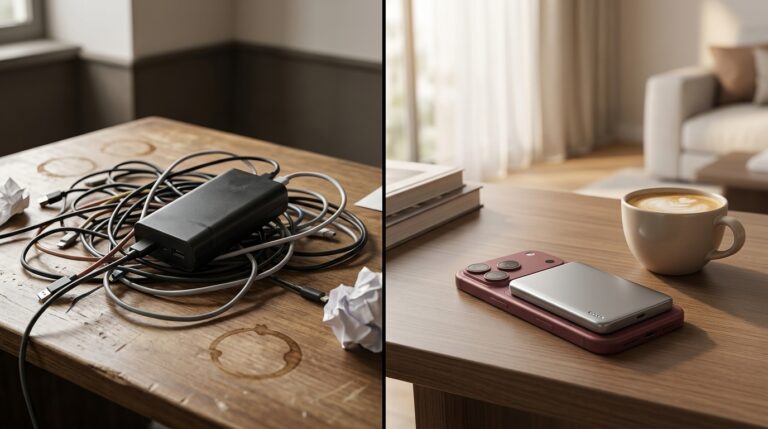
The desk, too, reveals these invisible workflows. Cables are routed, sometimes with meticulous care, sometimes in a tangled heap, each leading back to a power source. A new peripheral, or a forgotten charger, can disrupt this delicate balance, forcing a rearrangement of the entire digital ecosystem. The act of reaching for the correct cable in the dark, fumbling for the right connector, is a small but persistent reminder of our quiet dependence on these devices and the infrastructure that powers them.
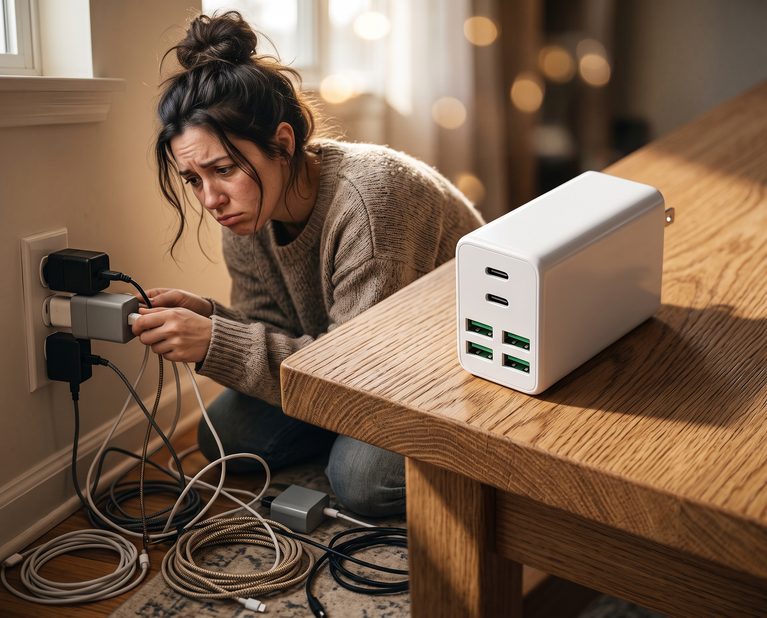
For years, the multi-port charging block has been a response to this ambient inconvenience, though often they came with their own compromises: bulk, heat, or inconsistent power delivery. The drive for smaller, more efficient gallium nitride (GaN) chargers reflects a collective desire for simplicity. It allows for a single, unassuming brick to potentially replace two or three, reducing the mental overhead of packing and the physical footprint in a bag or on a nightstand.
This isn’t a revolution, but an evolution of convenience. It frees up outlets, simplifies cable management, and subtly reduces the minor anxieties associated with keeping multiple Apple devices powered throughout the day. The focus shifts from managing the physical charging apparatus to simply using the devices themselves, an almost invisible normalization of technology into the background of daily life.
The quiet adoption of more compact and versatile charging solutions speaks to a broader trend: how readily we adapt our micro-behaviors to alleviate even the smallest points of friction within our personal tech ecosystems. These behavioral adjustments are rarely consciously decided; they simply emerge from repeated engagement with the tools that define our modern routines. Recent listings reflect reductions compared with earlier availability, making these compact solutions more accessible to those seeking to streamline their charging habits.
This product has recently appeared more often in conversations around portable Apple setups and everyday charging routines.
Check current availability here
Can a single USB-C charger power both an iPhone and a MacBook simultaneously?
Many modern USB-C power adapters are designed with multiple ports and sufficient wattage to deliver power to various Apple devices concurrently, allocating power dynamically based on the connected device’s needs.
How does a smaller charger impact my daily Apple device routine?
A more compact charger can reduce clutter on your desk or nightstand, simplify travel packing, and potentially alleviate the need for multiple power bricks, streamlining your charging habits across your iPhone, iPad, and MacBook.
Is USB-C charging for iPhone different from MagSafe?
USB-C charging connects directly to the iPhone’s port for wired power delivery, while MagSafe offers wireless charging through magnetic alignment on the back of compatible iPhone models. Both are distinct charging methods.
Do these compact chargers affect battery longevity for Apple devices?
When using certified or reputable chargers that adhere to industry standards like USB Power Delivery (PD), the charging process is managed by the Apple device’s internal battery management system to ensure safe and efficient power delivery, which protects battery longevity.
Verdict
Our quiet dependence on Apple devices inevitably shapes a series of minor, often unconscious, daily adjustments. The emergence of more capable and compact charging solutions reflects a collective desire to simplify the recurring inconveniences of powering multiple gadgets. It’s not merely about the hardware itself, but the subtle psychological relief that comes from reducing cable clutter and travel bulk. These small shifts in how we approach charging underscore a continuous human adaptation to the technological ecosystems we inhabit, making our digital routines just a little less cumbersome without us ever quite noticing the change.
"Note: Readers like you help support The Apple Tech. We may receive a affiliate commission when you purchase products mentioned on our website."