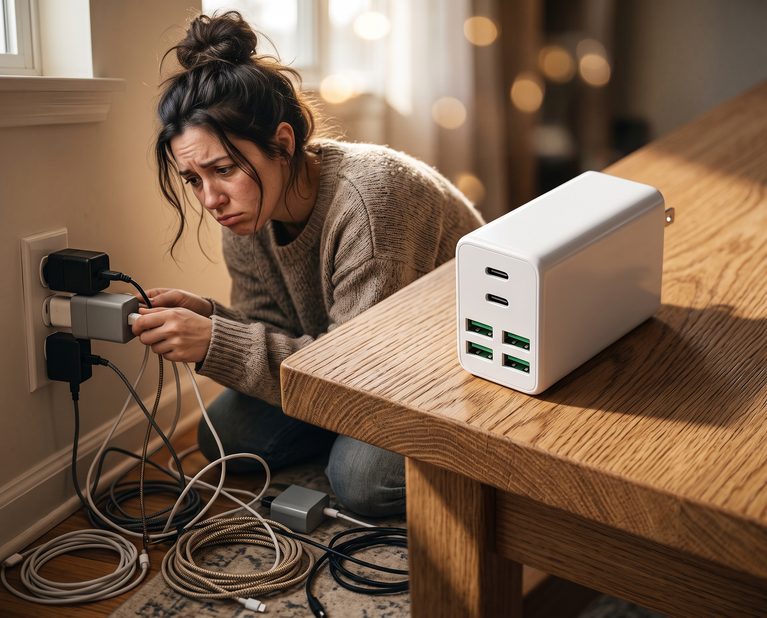
In many Apple-centric workflows, the simple act of connecting a device to power can become a low-level preoccupation. What begins as an afterthought—locating the cable, aligning the connector—slowly morphs into a defined routine. Each morning, the hum of a MacBook and the glow of an iPhone lock screen mark the start of a quiet negotiation between battery percentages and day-long expectations.
On a cluttered desk, the intersection of screen glare and cable length is more than aesthetic—it’s a workflow concern. A six-foot USB-C cable drapes across polished wood, offering just enough slack to pivot a MacBook on its stand. Yet even this extra length can coil into a subtle obstacle, tangling next to a docking station or grazing the edge of a keyboard. The desire for reach without entanglement quietly informs which charger one reaches for each morning.
Before sleep, the ritual unfolds: half-lit room, finger brushing past bundled cords, searching for the cable slotted behind the nightstand. The textured weave of insulation meets the palm; a gentle tug unveils the connector. Here, a six-foot span can mean avoiding a pinch between bedpost and smartphone, a moment of calm in the soft glow of the screen. Over time, these microdecisions—tucking wires versus stretching them—cement what feels like an ideal evening charge.
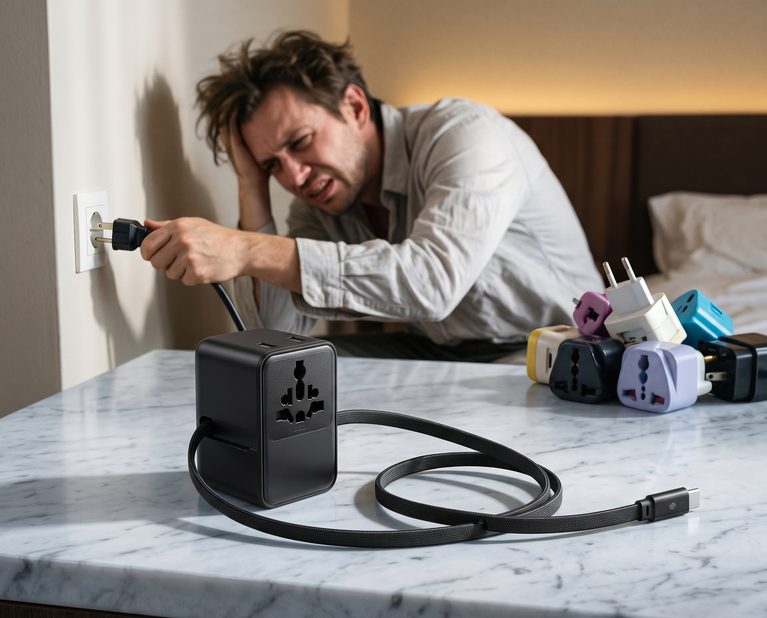
On the road, the choreography shifts. A backpack is unpacked on a train tray table, AirPods nestled in a pocket, a power bank stashed at the bottom. The elongated USB-C lead threads through a zippered compartment, then loops around a laptop. It’s a balancing act: minimizing friction while retaining flexibility if outlets are scattered. Such tiny adjustments underscore the wider dependency on portable power—an invisible tether to outlets mapped on hotel-room walls or cafe pillars.
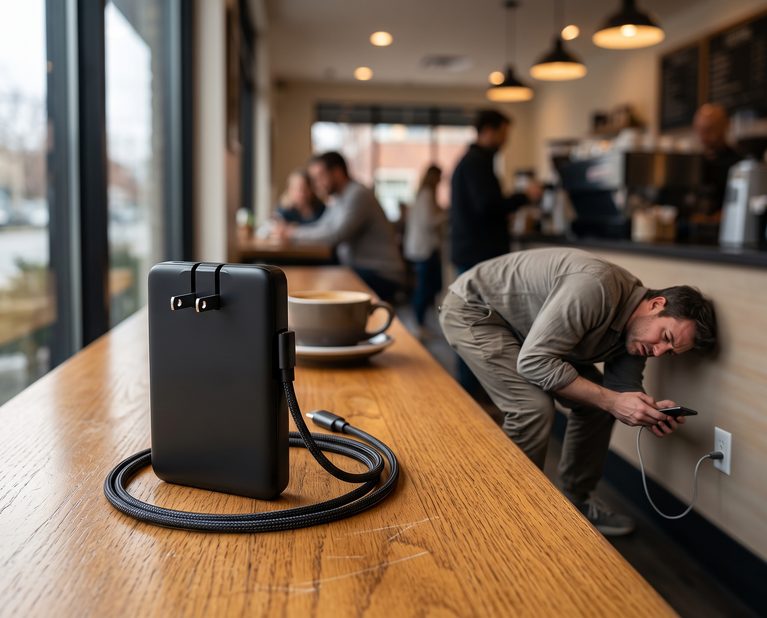
At a coffee shop table, an iPhone and a MacBook Air both demand a boost. A single cable becomes the silent mediator between devices, alternately inserted and withdrawn. The six-foot length ensures neither device monopolizes the single outlet; one device rests closer, the other extends downward. This nominal extension alleviates the tug-of-war over sockets, a quiet negotiation unfolding under the table’s polished surface.
Battery icons have become cultural touchstones—a way to gauge one’s digital peace of mind. A glance at the top corner of an iPhone or the menu bar of a MacBook sparks a familiar mix of reassurance and anxiety. Here, cable choices and charger wattages convert into behavioral signifiers: a 45W brick may sit idle until moments of dread push it into view. It is in these shadows of icons that ecosystem dependencies sleep, only to surface in low-battery crises.
Products, in this sense, are merely actors in a broader play of adaptation. Recent listings reflect reductions of up to 43% compared with earlier availability, a nod to shifting supply chains and retailer adjustments rather than consumer longing. The six-foot USB-C charger, paired with a compact charger block, exists as a functional object within evolving habits—its presence understated until friction demands its recall.
Ultimately, charging becomes less about raw voltage and more about ritualized interactions. The brushed metal of a MacBook lid, the smooth glass of an iPhone back, the braided sheath of a cable—they converge in moments both mundane and telling. These threads of behavior weave into a fabric of expectation: that power will arrive with minimal fuss, even as routines subtly adapt to the contours of our daily lives.
This product is available on Amazon.
Check current availability here
Are USB-C chargers compatible with older iPhone models?
Most current iPhone models support fast charging via USB-C to Lightning cables. Older devices require a USB-C to Lightning cable or adapter for compatibility.
How does cable length affect charging routines?
Cable length influences reach and flexibility. Longer cables reduce the need to stay near outlets but can introduce clutter if not managed carefully.
Can USB-C chargers power both iPad and MacBook?
Many USB-C chargers can deliver sufficient wattage for iPads and some laptops. Charging speed depends on the charger’s output and the device’s requirements.
What behaviors contribute to battery anxiety in Apple devices?
Frequent low-battery alerts, irregular charging schedules, and lack of easily accessible outlets can heighten device anxiety. Establishing predictable routines often alleviates these concerns.
Verdict
Across countless desks and dwellings, the ritual of plugging in has transcended mere utility. It signifies a subtle contract between our devices and our expectations, one that unfolds through cable choices, outlet negotiations and half-light searches. Rather than heralding a new gadget, it underscores how small behavioral shifts—favoring longer leads or compact charger blocks—quietly reconfigure our day-to-day. In that reconfiguration lies a broader testament to the ways the Apple ecosystem shapes not just workflows, but the very cadence of our routines.
"Note: Readers like you help support The Apple Tech. We may receive a affiliate commission when you purchase products mentioned on our website."