
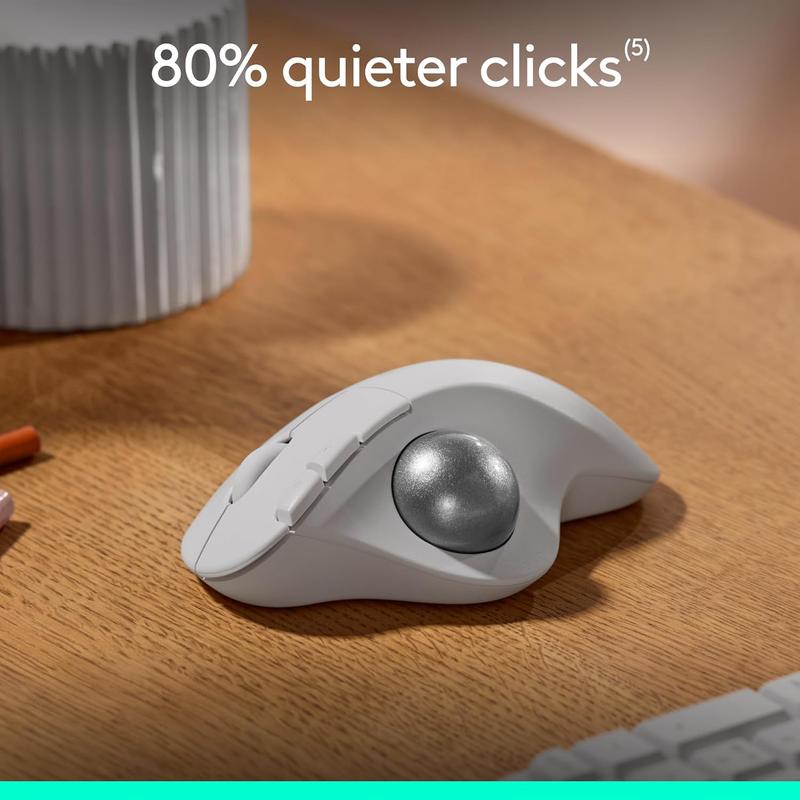
In many Apple-centered workspaces, the choice to introduce an external mouse feels less like a performance upgrade and more like a small truce with recurring desk clutter. For years, fingertip gestures on a MacBook trackpad sufficed, even thrived. Yet, as keyboards and cables jostle for real estate, the thumb-operated track ball emerges as a subtle concession to spatial constraints and hand posture.
Across morning routines, some users shift from the trackpad’s smooth expanse to a compact wireless puck positioned beside a leather pad. The mouse’s squat profile tucks discreetly alongside AirPods and a charging puck, its USB receiver nesting in a drawer. Though the change seems trivial, it marks a pause in habitual finger lifts—a low-level friction dissolved by a thumb roll.
There’s a particular moment that underlines this shift: reaching beneath the desk to recover the mouse, thumb poised above the scroll wheel. The knurled texture greets skin before fingertip, and in those silent seconds the mind gauges distance, pressure and alignment. It’s an unremarkable gesture, yet it reframes the boundary between hand and tool.
On a shared desk, a MacBook Pro leans open, an iPad lying flat beside it in notes mode. The mouse sits just beyond the keyboard’s edge, its contours barely noticeable until the thumb engages. Users slide the device into a precise arc, fingers curling around its shell, thumb nudging content through long documents. Each motion carves out a new rhythm in workflows that once relied solely on multitouch swipes.
When packing for a café session or a weekend away, preferences surface in the items that make the cut. The thumb-tracking mouse folds into a small compartment of a messenger bag, avoiding the bulk of cable coils. Without a tethered cord to wrap, the ritual of unplugging transforms into a simpler act of lift-and-go—a tiny economy of effort that resonates on busy days.
Over time, the gradual layering of these gestures—thumb scrolls, one-handed grips and shuttle-like navigation—reveals how peripheral choices seep into broader Apple routines. The interplay between MacBook, iPad and even Apple Watch notifications shifts slightly, as users lean on the mouse for extended reading or photo culling instead of incessant trackpad pokes.
In observing this quiet migration, the peripheral itself recedes into the background. What remains is a refined choreography of hand movements and desk arrangements, an everyday calibration of tools and habits. The thumb-driven scroll ball is not an overhaul, but a subtle nod to friction reduced.
This product is available on Amazon.
Check current availability here
How does this mouse pair with MacBook or iPad?
It supports both Bluetooth Low Energy and a USB receiver, allowing connections to MacBook or iPad without additional software.
What battery system does the mouse use?
The mouse runs on a single AA battery, with an auto-sleep feature that extends battery life to several months under typical use.
Does it require a USB-C adapter for MacBook?
The wireless receiver is USB-A; it can plug into a MacBook via a USB-C adapter or connect directly over Bluetooth LE.
Can this mouse maintain responsiveness across Apple workflows?
The thumb-operated track ball provides stable pointer control in macOS applications, from text editing to image browsing, without driver installations.
Verdict
In the quiet realignment of workspace routines, adopting a thumb-operated mouse illuminates how minimal shifts can reshape digital workflows. By repurposing the hand’s subtle motions, Apple users navigate documents with a different cadence, one that sidesteps repeated finger lifts and desk clutter. This recurring adjustment speaks less to ergonomic trends and more to the friction users smooth over time. The understated migration from trackpad to thumb-tracking device reveals a broader tendency: we continually refine our habits toward low-profile efficiency.
"Note: Readers like you help support The Apple Tech. We may receive a affiliate commission when you purchase products mentioned on our website."