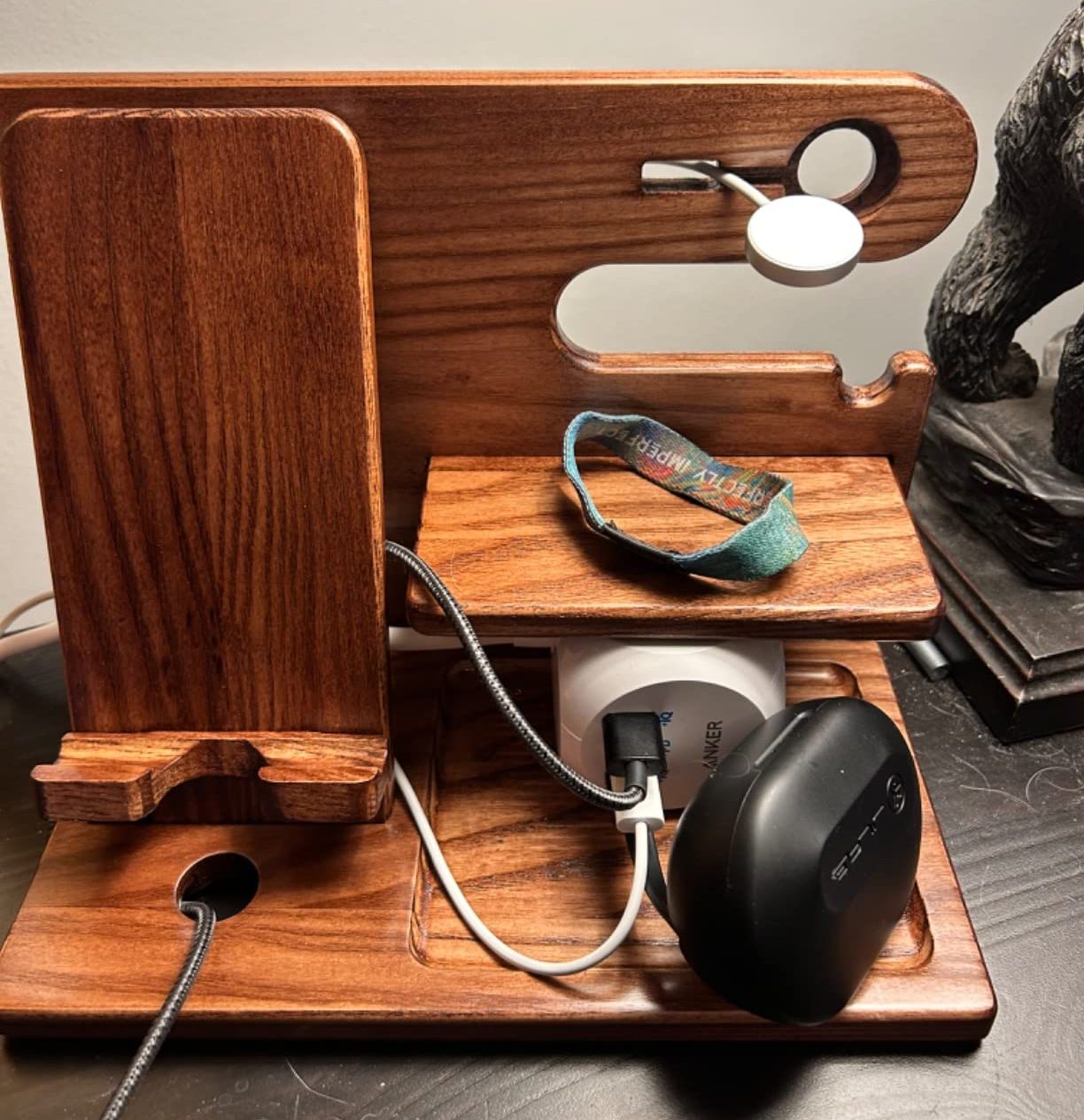
Nightstands evolved from holding books and water glasses to serving as charging infrastructure for multiple devices simultaneously. This functional shift reshaped bedroom spatial dynamics.
Evening routines now include a device placement sequence. iPhone in the front slot, watch on its charger, AirPods case to the side, maybe keys and wallet in the peripheral compartments. This choreography happens half-consciously, muscle memory built through repetition. Miss a step—forget to plug in the watch, misalign the phone—and you wake to dead batteries and disrupted morning plans.
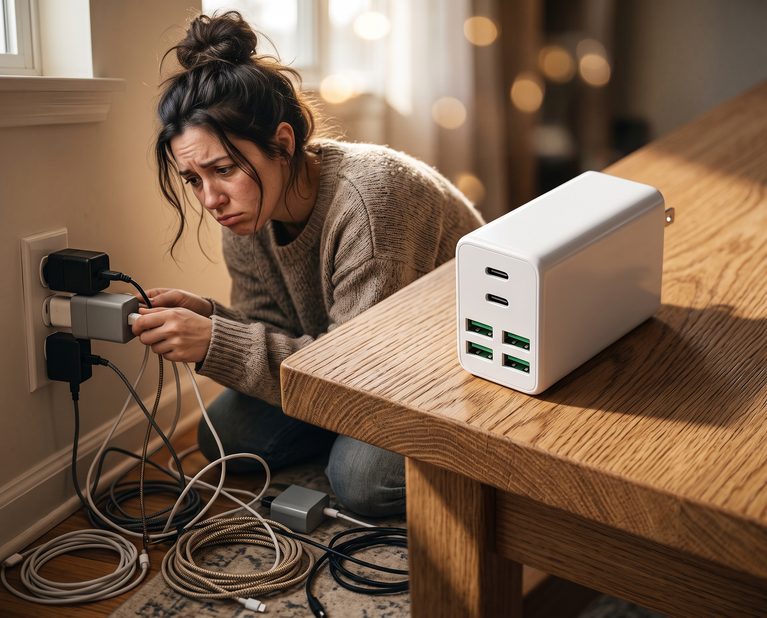
The organizational promise is seductive: everything has its place, every cable hidden, the entire system self-contained. Reality diverges. Cables still need to route from the docking station to wall outlets. Multiple chargers mean multiple plugs competing for outlet access. The visual cleanliness on top of the nightstand just redirects the mess to behind and below it.
Material choice—wood—positions these organizers as furniture rather than tech accessories. This categorization matters. Tech accessories feel disposable, subject to replacement with each device generation. Furniture implies permanence, investment, considered purchase. The wood says this isn’t a temporary solution but a lasting infrastructure piece that will accommodate whatever devices come next.
Gift positioning is telling. Marketed toward “Dad” and “Mom” suggests these are purchased by others who observe the recipient’s device chaos from outside. The buyer sees scattered charging cables and a phone balancing on a stack of books. They see the solution. The recipient receives it with mild appreciation and the silent understanding that this gift is as much about the giver’s comfort as the recipient’s utility.
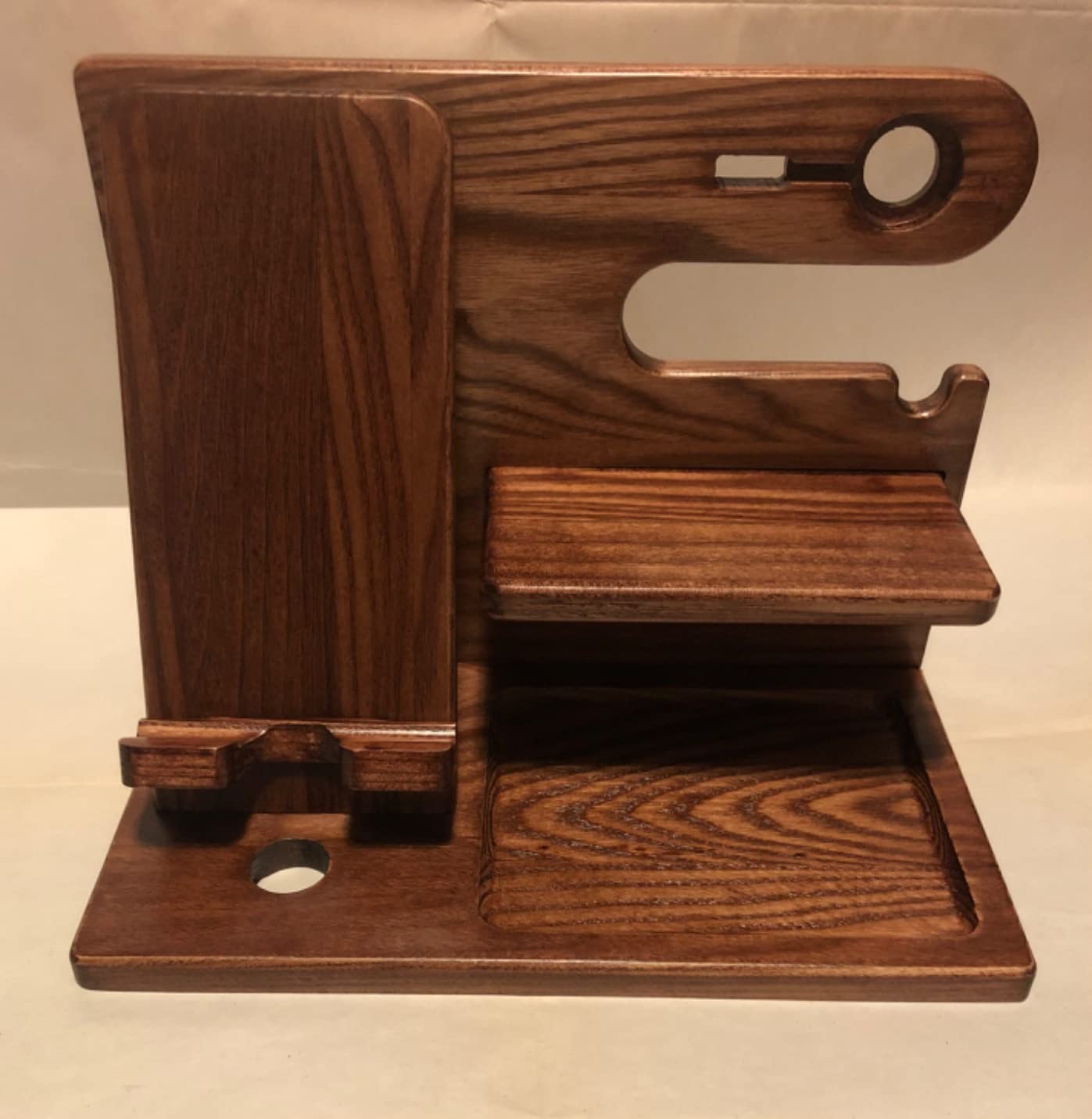
Phone docking specifically means the organizer was designed during a period when phones leaned rather than laid flat. MagSafe changed this. Now iPhones charge flat on magnetic pads, which means traditional docking grooves are geometrically wrong. The organizer still works—you can set the phone in the slot—but it’s not optimized for current charging methods. The product’s design has a timestamp.
Black finish addresses the wear problem that natural wood creates but introduces its own issues. Dust and fingerprints show dramatically against dark surfaces. What starts as sleek becomes grimy after a week without cleaning. The finish also makes the organizer less furniture-like, more obviously a tech accessory, which undermines the permanence signal that wood grain typically provides.
Drawer absence is a deliberate choice that limits functionality. A single shallow drawer could hold charging cables, old phone cases, spare AirPods tips—all the small debris that accumulates around daily-use devices. Without it, those items migrate to other locations or pile beside the organizer, recreating the clutter it was meant to eliminate. The organizer becomes an island of order surrounded by entropy. Previously listed at $20, current listings show comparable pricing.
"Note: Readers like you help support The Apple Tech. We may receive a affiliate commission when you purchase products mentioned on our website."