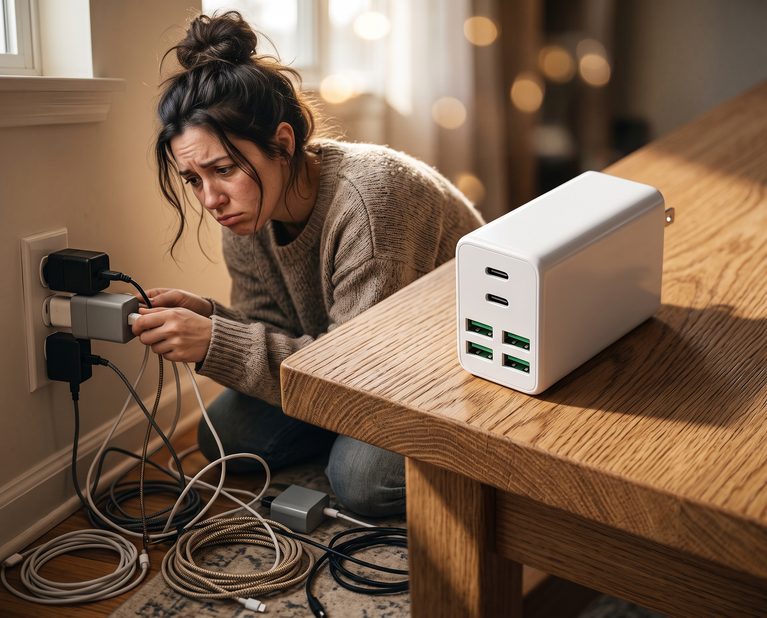

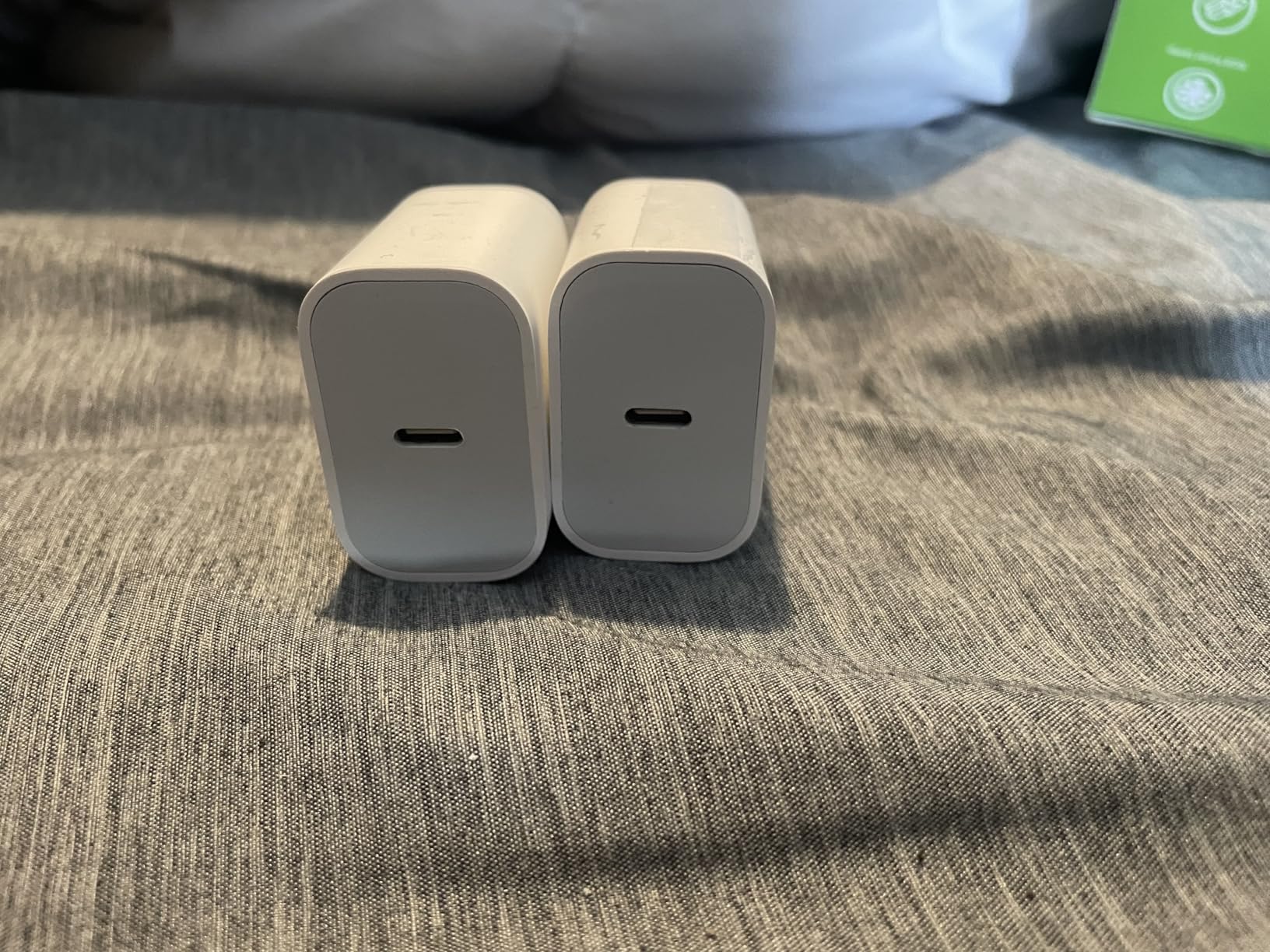
The shift to USB-C across iPhones, iPads, and accessories was meant to simplify charging, but it’s increased the number of devices competing for the same ports and outlets simultaneously.
The bedroom outlet has two sockets. One has been occupied by a lamp for years. The other used to charge the iPhone overnight. Now it also needs to charge the iPad, the AirPods, the Apple Watch, and occasionally a MacBook. The USB-C cable that used to be sufficient for one device now represents a standard that every device shares, which means they’re all competing for the same infrastructure at the same time.
Apple’s move to USB-C across its product line unified the connector, which eliminated the need to keep separate Lightning cables and USB-C cables for different devices. But it didn’t reduce the number of devices that need charging. If anything, the ecosystem has expanded. The Apple Watch still requires its own magnetic charger. The AirPods case charges via USB-C. The iPhone charges via USB-C. The iPad charges via USB-C. The iPhone, the iPad, the AirPods case, the Apple Watch charger—they all need power at the end of the day, and they all need it from the same limited set of outlets.
Multi-port wall adapters address this by expanding a single outlet into multiple USB-C ports, allowing several devices to charge simultaneously without requiring multiple physical sockets. The adapter plugs into the wall, and everything else plugs into the adapter. This consolidates the charging infrastructure at the outlet level, but it also introduces a single point of failure. If the adapter malfunctions, multiple devices stop charging at once.
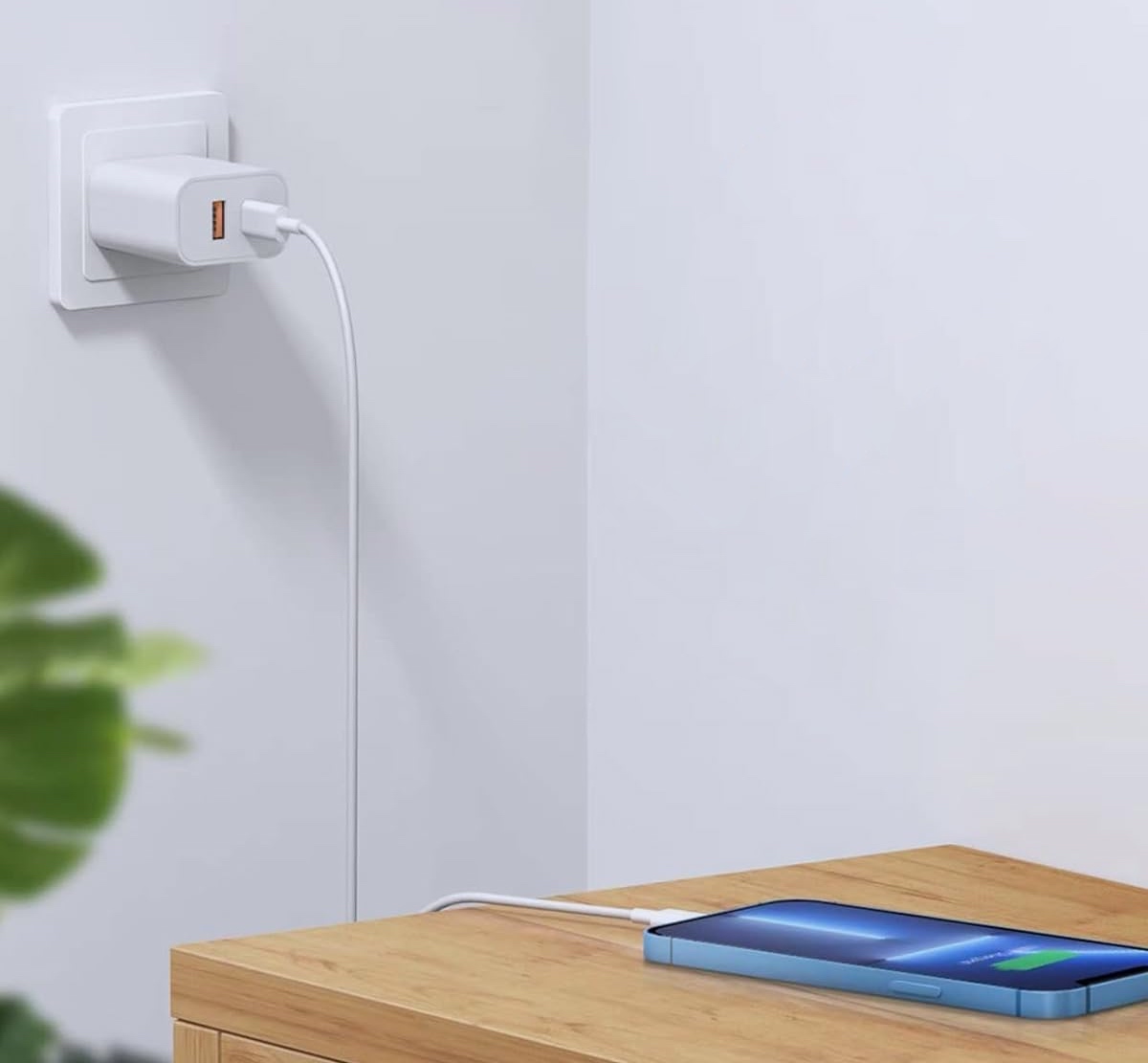
Power distribution becomes the new constraint. A 20-watt USB-C port can fast-charge an iPhone or charge an iPad at moderate speed. If you plug in three devices, the total wattage gets divided, and each device charges more slowly unless the adapter is designed to deliver full power to each port independently. This isn’t always clear from the adapter’s labeling, which means users sometimes discover through experience that their devices aren’t charging as quickly as expected when multiple things are plugged in.
The need for multiple adapters across different locations—bedroom, office, travel bag—has created a secondary market for adapter bundles. One adapter isn’t enough if you’re managing charging infrastructure in several places. You need one by the bed, one at the desk, one in the car, one in the travel bag. The ecosystem’s portability depends on having charging access wherever you go, which means distributing adapters throughout your physical environment.
Apple’s decision to stop including charging adapters with iPhones shifted the responsibility for power delivery entirely to the user. The iPhone ships with a USB-C cable, but you’re expected to already have an adapter. If you don’t, or if you need more than one, you acquire them separately. This has normalized the practice of buying adapters in bulk—three, five, even ten at a time—to ensure coverage across all the places where charging might be needed.
The dual-port configuration has become a practical minimum. One port isn’t enough for most people’s needs, and four ports is often more than a single outlet can support without overloading. Two ports strike a balance, allowing the iPhone and one other device to charge simultaneously without requiring a power strip or a more complex setup. The simplicity of two ports makes the adapter easy to use without overthinking which device gets priority.
Previously listed at $29, current listings hover around $12 (CODE F32WH9HQ) for three-pack bundles that distribute charging infrastructure across multiple locations. The pricing reflects the shift from viewing adapters as accessories that come with devices to viewing them as consumable infrastructure that users stockpile and deploy wherever charging needs arise. The iPhone’s transition to USB-C unified the connector, but it intensified the competition for outlets and adapters, turning charging from a simple nightly ritual into a logistical challenge that requires planning and hardware distribution across physical space.
"Note: Readers like you help support The Apple Tech. We may receive a affiliate commission when you purchase products mentioned on our website."