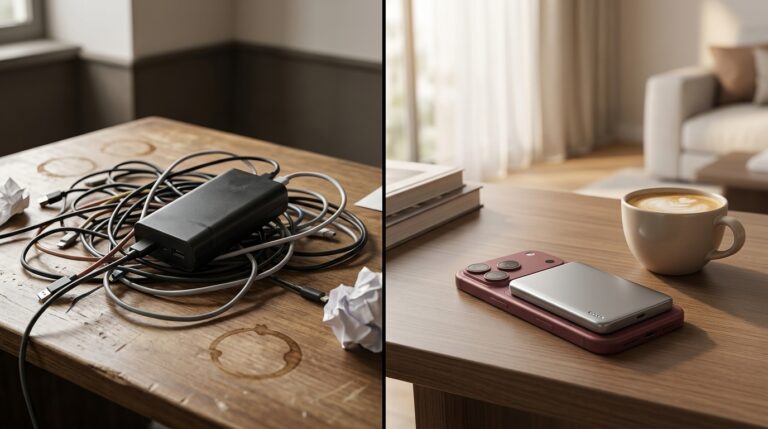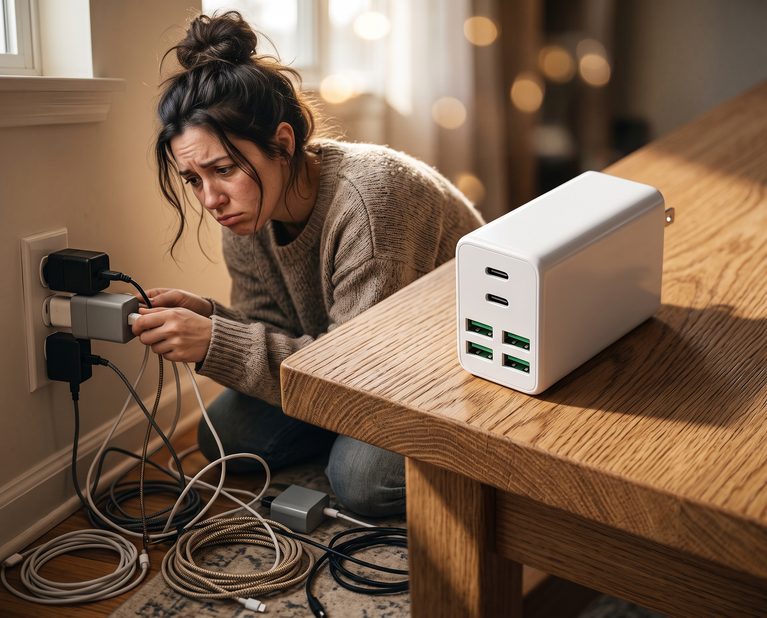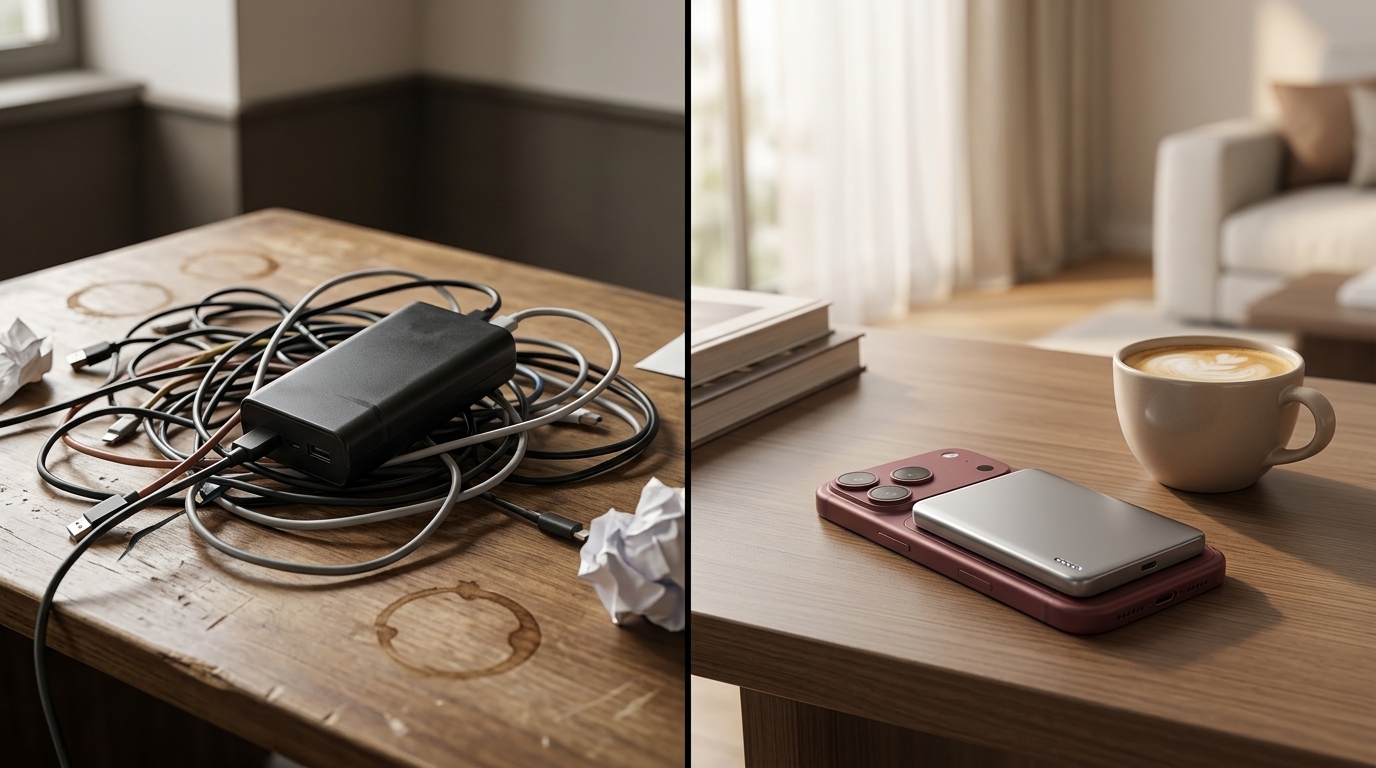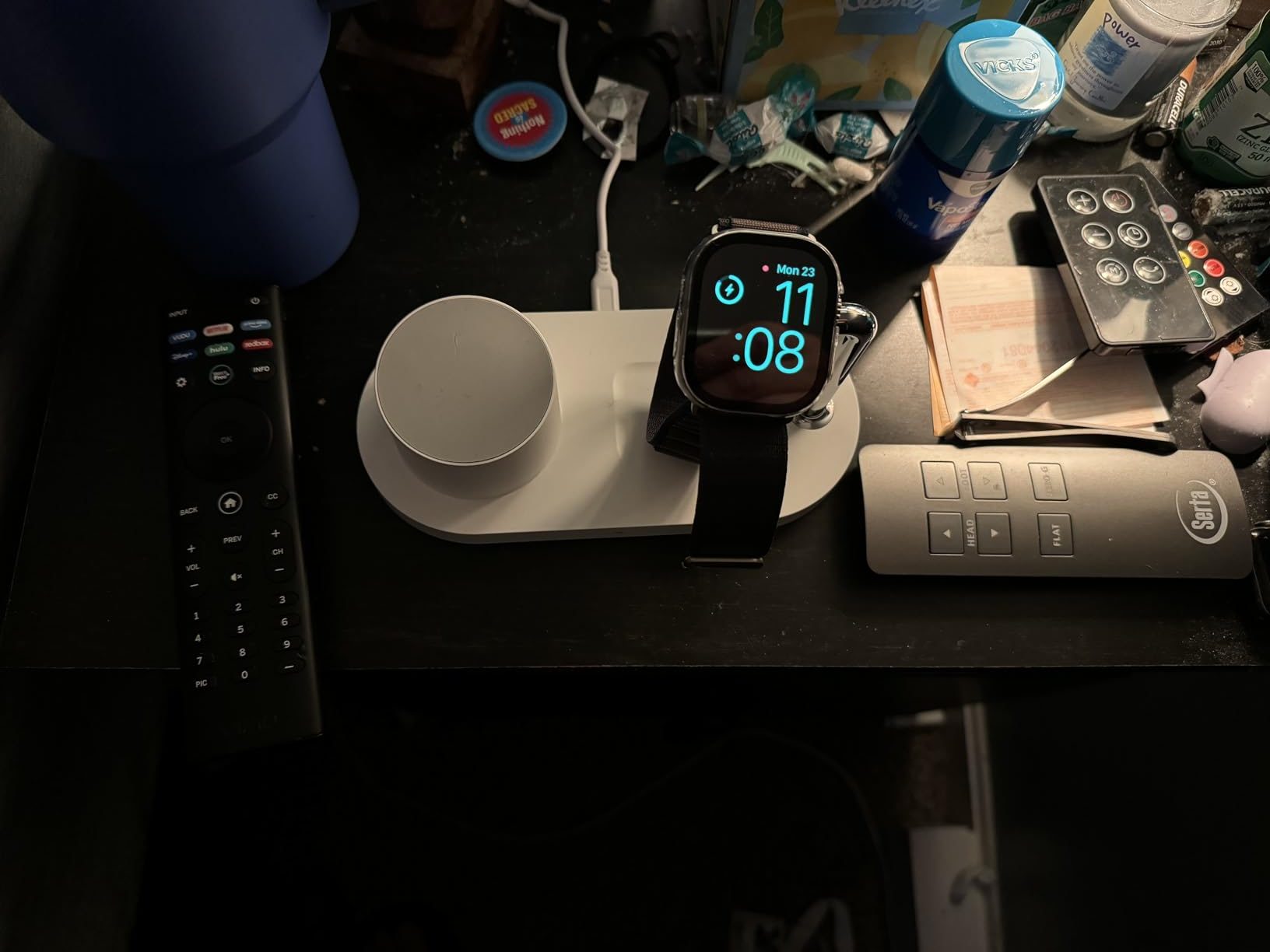
Magnetic charging promised to eliminate fumbling with cables in the dark. Instead, it introduced a new skill: finding the exact spot where magnets engage strongly enough to maintain connection overnight.
The magnet click provides satisfying feedback, but satisfaction doesn’t guarantee a successful charge. Misalignment by a few millimeters means the phone thinks it’s charging when it’s actually draining battery faster than the trickle current can replenish. You wake to 47% battery despite the phone sitting on the charger for seven hours. The failure is silent.
Three-device stations multiply the alignment challenge. The iPhone section usually works reliably because MagSafe’s ring magnets are well-defined. The Apple Watch charger requires precise centering—too far off, and it won’t charge at all. The AirPods section typically uses a flat Qi pad without magnetic guidance, meaning placement is purely visual. One device charges perfectly, one charges intermittently, one doesn’t charge unless you adjust it before bed.
Case thickness introduces variables. An iPhone with no case snaps into perfect alignment. Add a MagSafe-compatible case, and the magnetic force weakens slightly. Add a non-MagSafe case, and the magnets might not engage at all, or the phone slips off the charger during the night when a notification vibrates the device. The charging station doesn’t know about your case situation—it just silently fails.
The 18W rating applies to the entire station, not per device. Charge three devices simultaneously, and they share that 18W budget. The power distribution algorithm prioritizes, but not always predictably. Sometimes the iPhone gets most of the power. Sometimes the Watch charges first. The result is that “fast” charging becomes sequential rather than parallel—fast for one device at a time, slower overall than using three separate chargers.
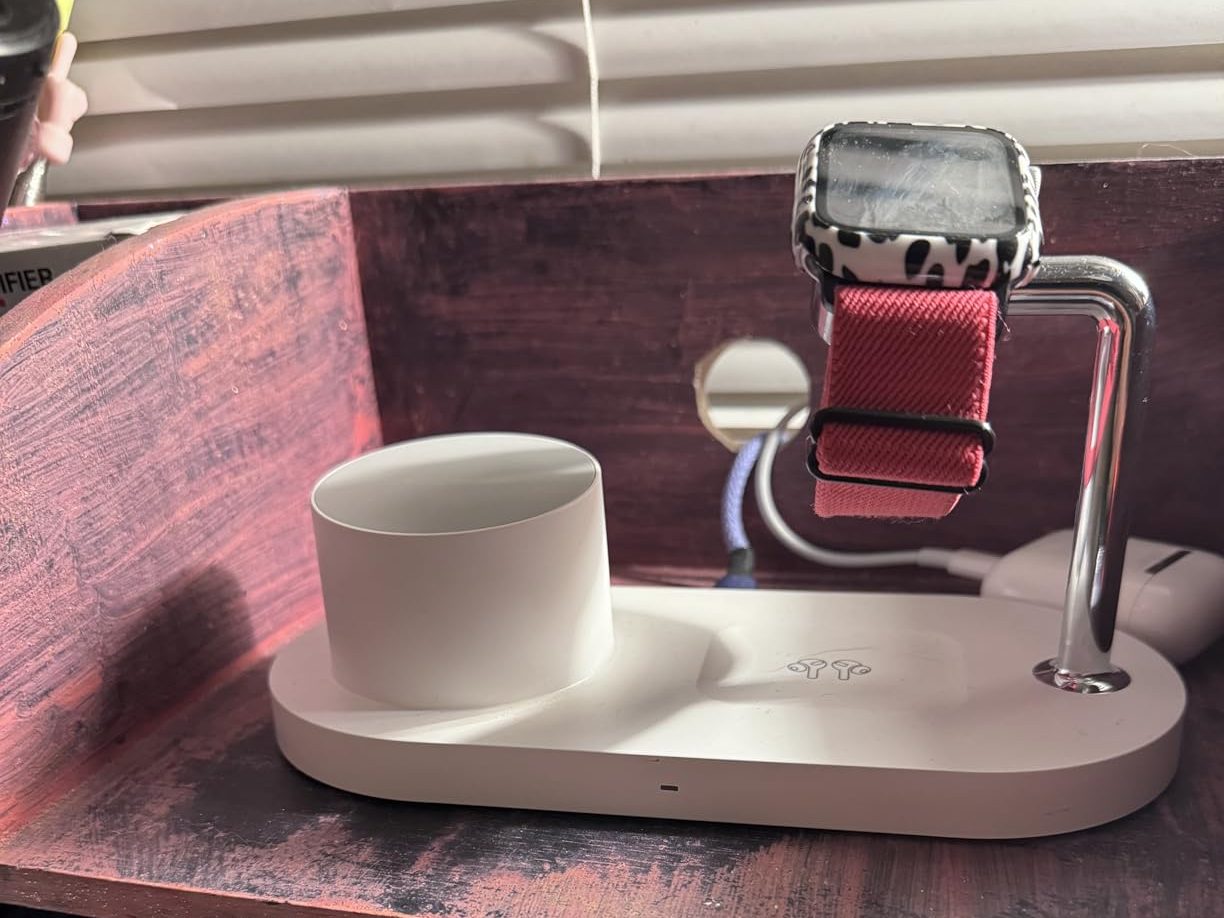
Placement on the nightstand creates new constraints. The charging station needs to be close enough to reach from bed but positioned so its LED indicators don’t illuminate the room at night. Some stations have blindingly bright LEDs that serve no purpose after you’ve confirmed the devices are charging. Others have no indicators at all, leaving you to trust that alignment was successful. Neither extreme feels optimal.
Furniture compatibility matters more than expected. Nightstands with outlets built into drawers or rear panels create cable routing challenges. The charging station needs power, but the cable shouldn’t dangle visibly if the aesthetic goal is reducing clutter. Some users drill holes through furniture. Others accept the visible cable as a compromise. A few rearrange entire bedroom layouts to hide the power source.
Software considerations get overlooked until they create problems. Wireless charging generates more heat than wired charging, which can trigger iOS thermal management that slows charging or pauses it entirely. On hot summer nights, the phone might charge to 80% and stop, waiting for the battery to cool. You wake up to a partially charged phone despite perfect magnetic alignment. The station did its job—iOS just decided to intervene. Previously listed at $26, current listings show similar pricing.
"Note: Readers like you help support The Apple Tech. We may receive a affiliate commission when you purchase products mentioned on our website."