As households integrate more screens for work, entertainment, and communication, the distinction between consumer televisions and commercial displays is quietly dissolving in residential spaces.
The living room screen used to have one job. You watched shows on it, maybe played a game console, and that was the extent of its utility. It sat dormant most of the day, came alive in the evening, and returned to being a black rectangle on the wall by bedtime.
That rhythm has fractured. The same screen now cycles through half a dozen roles before lunch. It’s the Zoom backdrop for a work call at nine. It’s the AirPlay target for an iPhone photo slideshow at ten-thirty when relatives visit. By noon, it’s displaying a recipe video from the iPad while someone preps lunch. The screen isn’t decoration anymore—it’s infrastructure, expected to serve whatever purpose the room demands at any given hour.
Commercial displays—the kind you see in hotel lobbies or retail stores—operate under a different set of assumptions than consumer TVs. They’re built to run continuously, not in four-hour evening blocks. They handle input switching without the lag that comes from smart TV operating systems trying to load apps or negotiate HDMI handshakes. They don’t push firmware updates that rearrange menus or introduce ads into the home screen. They turn on, display a signal, and stay out of the way.
Apple TV has made this kind of display more viable in homes. The device handles the “smart” part—apps, streaming services, AirPlay, HomeKit integration—while the screen itself remains functionally neutral. You’re not locked into a manufacturer’s ecosystem or subjected to interface changes every six months. The display becomes a vessel for whatever input you send it, whether that’s a MacBook for work or an iPhone for casual browsing on a larger canvas.

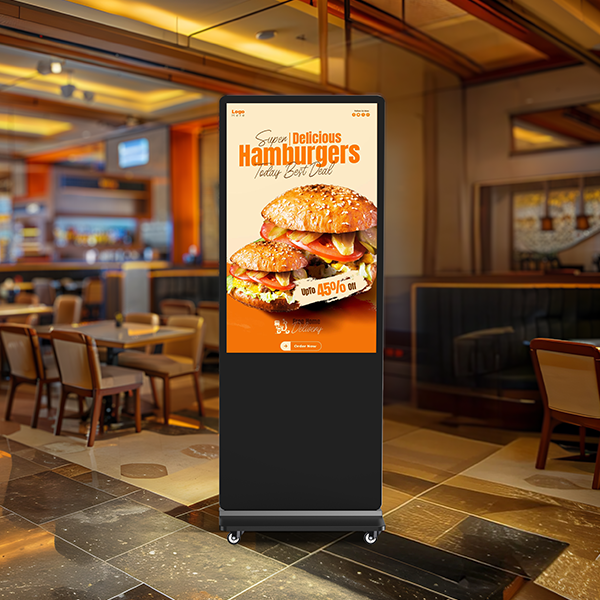
Floor-standing configurations have started appearing in spaces that aren’t quite living rooms and aren’t quite offices. The in-between areas where people work from home but also need to pivot to a video call, or where a family might gather to look at something together without committing to a full couch-and-TV setup. The portability matters when rooms serve multiple, conflicting purposes throughout the day.
Touch interactivity remains optional, which is telling. Most people don’t want to walk up to a 55-inch screen and tap it like an oversized iPad. They want to control it from their phone, from the couch, from across the room. The screen is a receiver, not an interface. That distinction has become more important as Apple’s ecosystem has made remote control—via Siri, via Control Center, via the Apple TV remote app—the default interaction model.
There’s also a shift in how people think about screen longevity. Consumer TVs get replaced when they break, or when a new feature becomes essential, or when the manufacturer stops supporting the software. Commercial displays are expected to last longer because they’re not tied to a single technological moment. They display a signal. That signal can come from a device released this year or five years from now. Previously listed at $1,289, current listings hover around $645 (code GQH5NJ6X) for mid-size panels that prioritize function over features. The appeal isn’t novelty—it’s the promise that the screen won’t become obsolete the moment Apple announces a new codec or streaming format.
"Note: Readers like you help support The Apple Tech. We may receive a affiliate commission when you purchase products mentioned on our website."