Apple Watch launched with a clear charging rhythm: wear it all day, charge it overnight on your nightstand. The pattern was simple, predictable, and aligned with how people already thought about wearables—jewelry you take off before bed. But Apple’s addition of sleep tracking in watchOS 7 disrupted that rhythm entirely, asking users to wear the Watch 24/7 while still only providing 18 hours of battery life.
The math doesn’t close. If you wear the Watch to bed for sleep tracking, it needs to charge at some other point in the day. Morning showers became the default window—thirty minutes while you’re getting ready, enough to top off from 40% to 70%. But that requires planning. You have to remember to take it off. You have to place it on the charger. You have to put it back on before leaving. Any disruption to that routine—a rushed morning, a forgotten charger, an early meeting—means the Watch dies mid-afternoon.
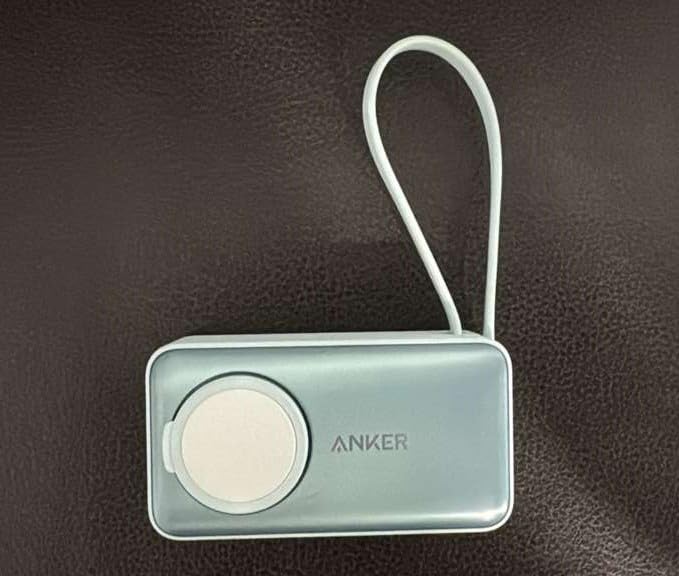
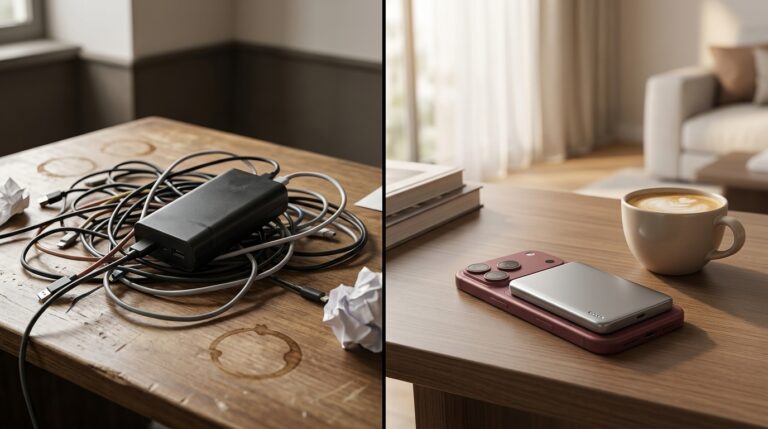
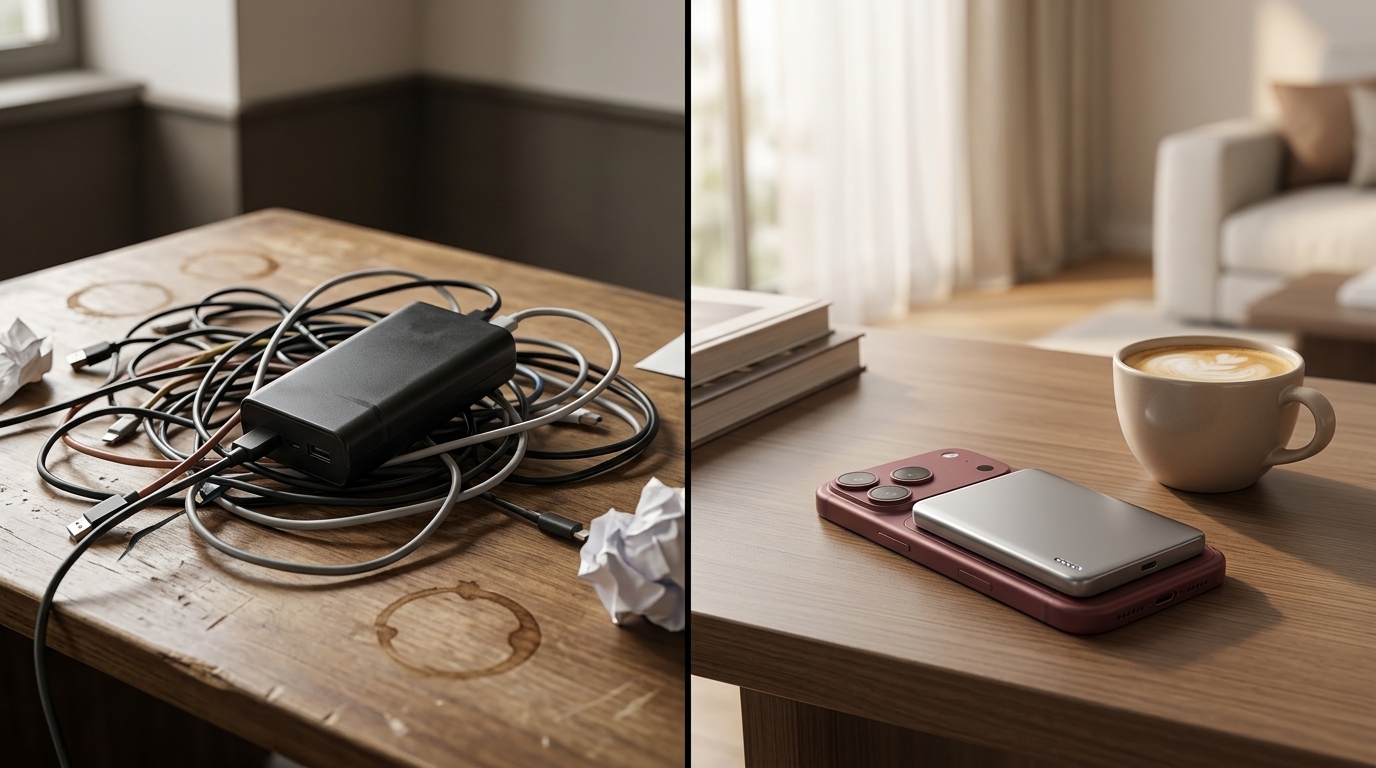
The Watch-specific power bank emerged as the workaround. It’s not a general-purpose battery pack that happens to charge the Watch—it’s purpose-built for wrist-level charging, with a magnetic puck that snaps onto the Watch’s back while you’re wearing it or carrying it in a bag. The charging happens opportunistically: during a commute, during a lunch break, during any window where the Watch can sit unused for twenty minutes while still remaining accessible.
What makes this setup notable is how it acknowledges that Apple’s vision for the Watch—constant wear, continuous health monitoring—conflicts with the device’s actual battery endurance. The company designed the Watch to be worn all day, then added features that require wearing it all night, but never extended the battery to accommodate both. Users adapted by creating micro-charging windows throughout the day, and the power bank enables those windows to happen anywhere, not just near an outlet.
SIMILAR
iPhone and MacBook users are compensating for a port problem Apple created
iPhone users are eliminating the tangled cable from every car charging session
iPhone users are transforming nightstands into silent charging infrastructure
The 10,000mAh capacity is revealing. That’s enough to charge the Watch multiple times, but the power bank also handles iPhone, AirPods, and other USB-C devices via its built-in cable. It’s not a Watch-only accessory—it’s a multi-device solution where the Watch is the primary beneficiary but not the sole user. This reflects how people actually move through the ecosystem: carrying multiple devices, all needing power at unpredictable intervals, with the Watch being the one most likely to die at an inconvenient moment because its charging rhythm was disrupted by sleep tracking.
The built-in USB-C cable is practical in ways Apple’s own accessories rarely are. You don’t need to carry a separate Watch charging puck. You don’t need to remember multiple cables. The power bank is self-contained—one object that handles Watch charging magnetically and everything else via the integrated cable. It’s the kind of utilitarian design Apple would never make, yet it’s exactly what users need when they’re managing multiple devices across contexts where outlet access is inconsistent.
What’s interesting is how this accessory exists because Apple encouraged a behavior change without updating the hardware to support it. The Watch was always meant to be charged overnight. Sleep tracking changed that expectation but not the battery life. The gap between what Apple asks users to do and what the Watch can actually sustain has created an entire category of accessories designed to let people charge the Watch while still wearing it, or at least while it’s within arm’s reach during the day.
Previously listed at $89.99, current listings hover around $62.99. That pricing reflects the power bank’s role as specialized infrastructure—expensive compared to generic battery packs, but essential for users who’ve committed to 24/7 Watch wear and discovered the charging rhythm Apple designed no longer works.
The power bank becomes a mobile charging station for a device that was never supposed to leave your wrist, solving a problem Apple created by encouraging constant wear without extending battery life to match. It’s not a graceful solution—carrying a power bank specifically for your Watch reveals the ecosystem’s failure to align its software ambitions with its hardware limitations—but for users navigating the gap between all-day battery and all-day-plus-all-night expectations, it’s become the only way to keep the Watch operational without restructuring their entire daily routine around a thirty-minute charging window.
"Note: Readers like you help support The Apple Tech. We may receive a affiliate commission when you purchase products mentioned on our website."