The emergence of Qi2 as an open standard based on Apple’s magnetic charging technology has created a parallel accessory market. iPhone owners now choose between official MagSafe branding and functionally identical alternatives at significantly lower price points.
MagSafe launched as Apple’s proprietary magnetic charging solution, promising perfect alignment and optimized power delivery for iPhone 12 and later models. The ecosystem grew rapidly—charging pads, car mounts, wallets, battery packs—all leveraging the magnetic connection. Then the Wireless Power Consortium adopted the technology as Qi2, opening the standard to any manufacturer. The practical result is that “MagSafe-compatible” accessories now flood the market at prices Apple never intended.
For users, the distinction between official MagSafe and Qi2 alternatives is nearly invisible during actual use. Both use the same magnetic ring specification, both deliver up to 15W charging to compatible iPhones, and both maintain the alignment precision that makes wireless charging reliable instead of frustrating. The difference emerges in branding, packaging, and price—Qi2 accessories often cost 40-60% less than MagSafe equivalents.

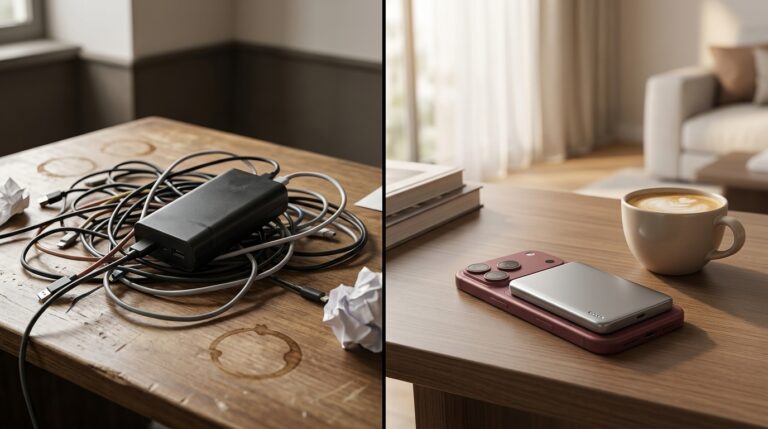
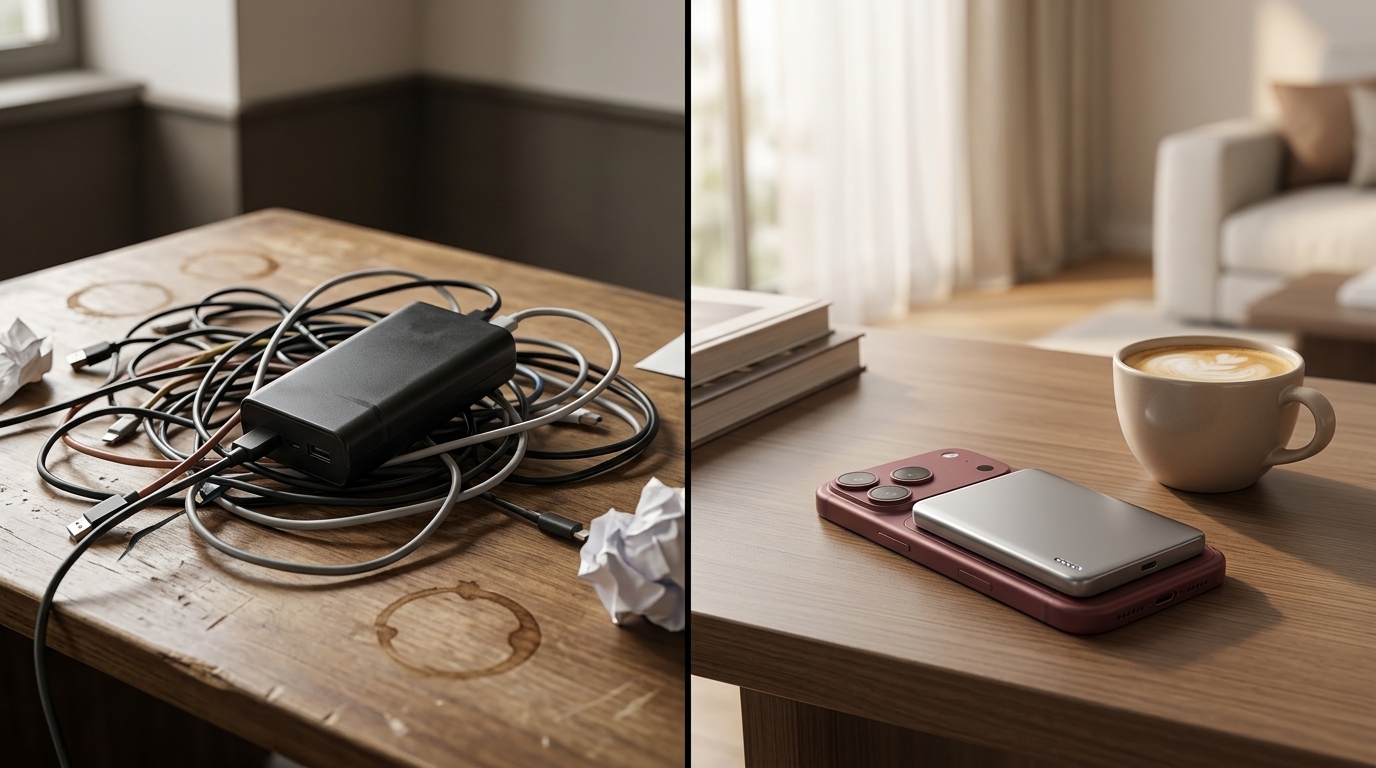
The ultra-thin form factor addresses a specific complaint about Apple’s own MagSafe charger: it’s substantial enough to feel intrusive on a nightstand or desk. Thinner charging pads disappear more completely into existing spaces, reducing the visual footprint of charging infrastructure. For people who’ve invested in minimalist desk setups or carefully curated bedside aesthetics, that reduction matters more than technical specifications.
The two-pack pricing model reflects an understanding of actual usage patterns. Most iPhone owners need charging access in at least two locations—bedroom and office being the most common pairing. Selling chargers in pairs at a discounted rate acknowledges that reality and eliminates the mental friction of calculating whether buying two individually makes sense.
SIMILAR
How iPhone owners navigate the reality that gaming peripherals treat Apple devices as secondary platforms
How iPad Pro photographers created workarounds for a fundamental file transfer limitation Apple never quite solved
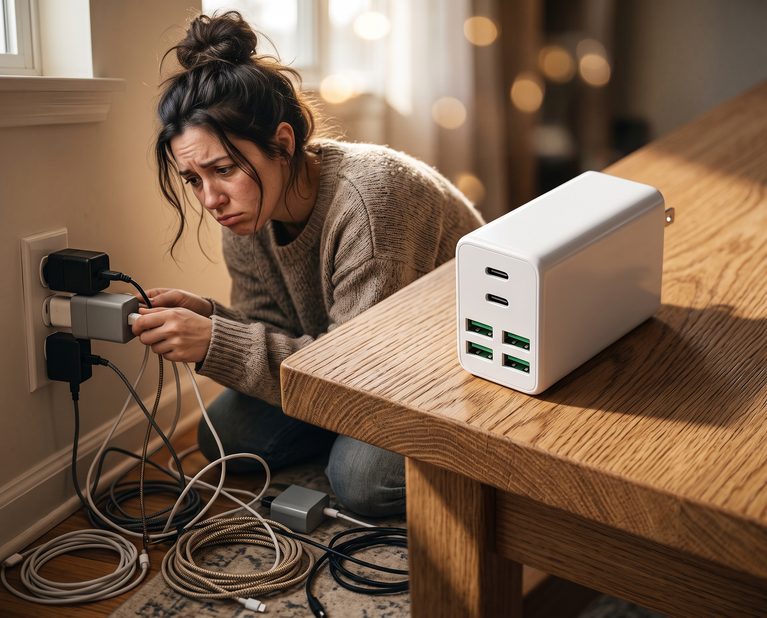
How iPhone users negotiate the nightly ritual of charging five devices from a single nightstand footprint
Magnet strength variation is where Qi2 accessories sometimes diverge from the MagSafe experience. The specification defines minimum magnetic force, but it doesn’t mandate the holding power that Apple’s first-party accessories provide. Some third-party pads maintain connection reliably during normal use but fail if the phone is nudged or if a thick case reduces magnetic coupling. The result is intermittent charging that’s hard to diagnose—the phone appears to be charging but doesn’t actually gain power overnight.
The fast charging capability at 25W applies to specific iPhone models and charging scenarios, but the real-world impact is marginal for most overnight charging patterns. The difference between charging at 15W and 25W matters primarily when you need a quick top-up before leaving—the extra speed can mean 30% battery in 20 minutes instead of 20%. For users who charge overnight, the phone reaches 100% regardless of wattage.
Desktop and bedside placement creates different charging behavior patterns. A desk charger gets used opportunistically—phone placed down during focused work, picked up for calls or messages, replaced repeatedly throughout the day. A bedside charger follows a more ritualistic pattern—phone placed at night, retrieved in the morning. The magnetic connection needs to be reliable enough to handle both usage styles without requiring conscious adjustment.
Pricing for Qi2 magnetic charging pads has compressed rapidly since the standard launched. Two-packs that initially appeared near $60 current listings hover around $49.98(CODE GHQDGMGC), reflecting both manufacturing scale and aggressive competition among accessory makers who see iPhone charging as a high-volume, low-margin opportunity.
"Note: Readers like you help support The Apple Tech. We may receive a affiliate commission when you purchase products mentioned on our website."