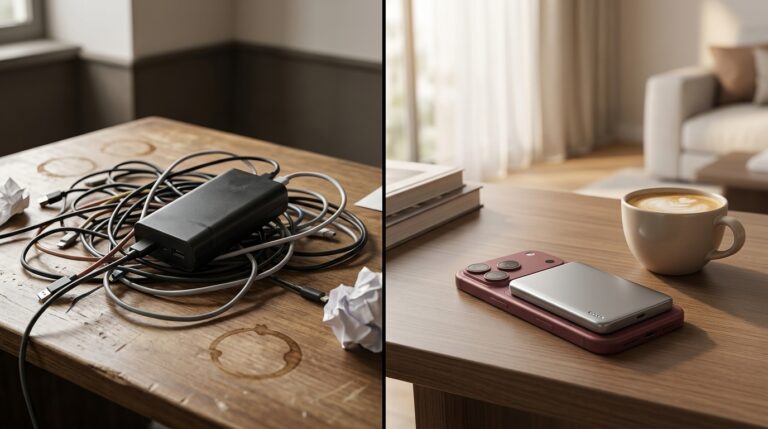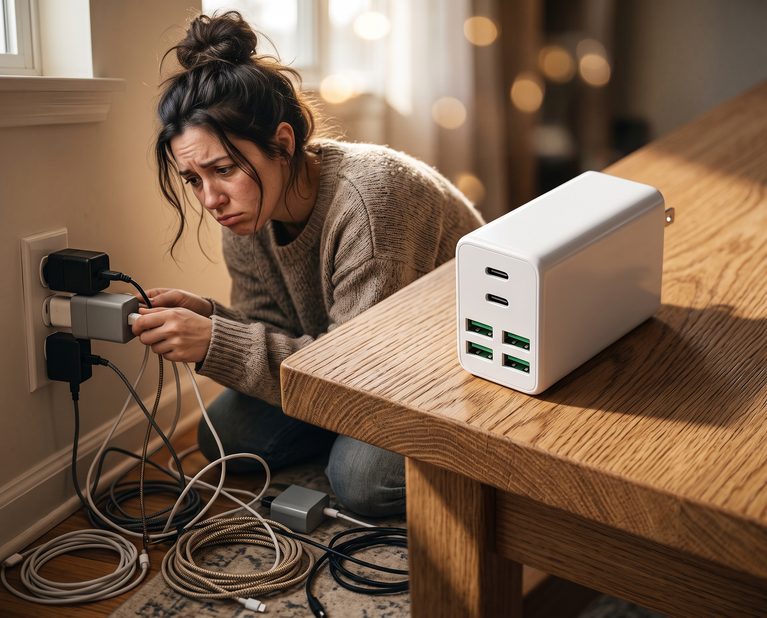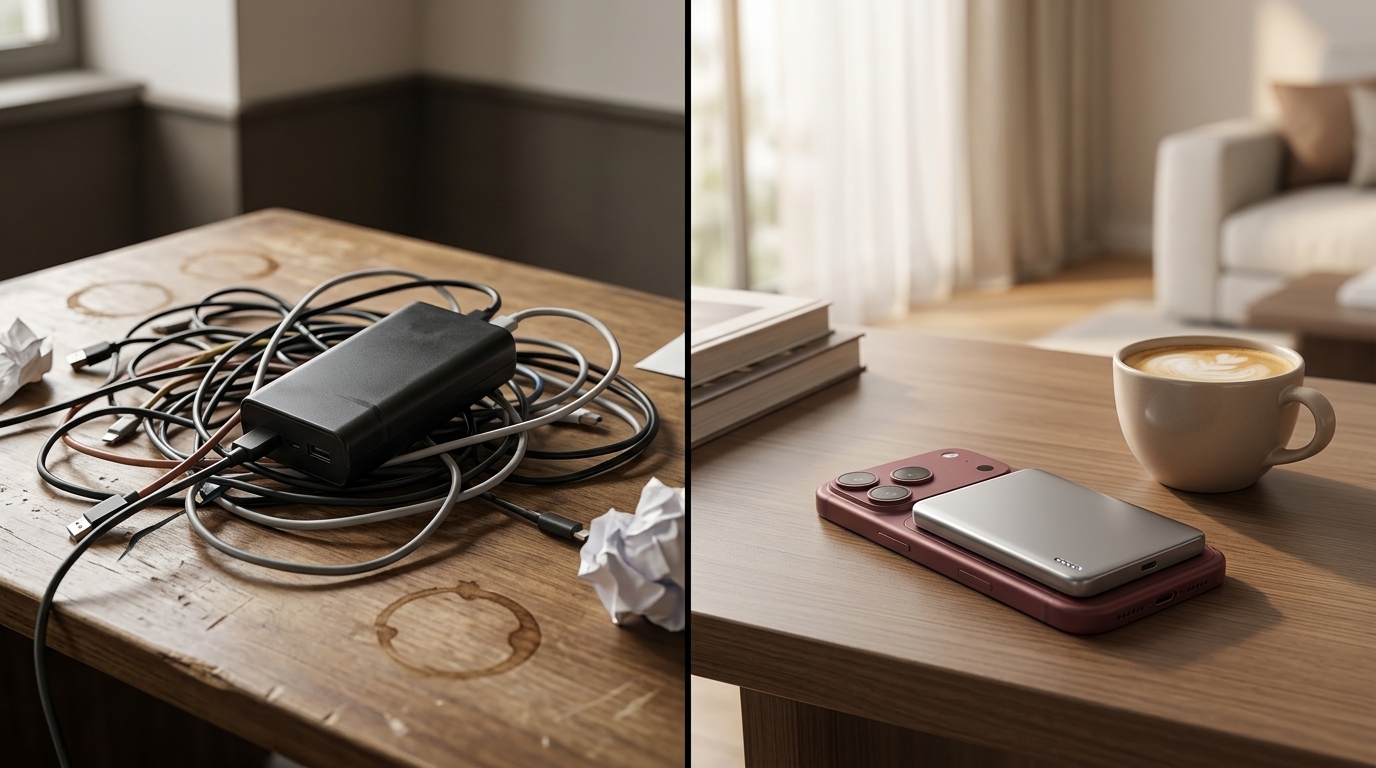


The normalization of two-pack charger pricing reflects an acknowledgment that most households need simultaneous charging access in multiple locations. Single-charger thinking no longer matches how people actually live with Apple devices.
Apple stopped including charging blocks with iPhones in 2020, forcing users to supply their own power infrastructure. The assumption was that people already owned suitable chargers from previous devices. But the transition to USB-C across iPhone, iPad, and MacBook created a different problem: the chargers people owned used the wrong ports. Instead of reusing old Lightning adapters, users needed to buy entirely new USB-C blocks.
The two-pack pricing model emerged to address that replacement cycle. Instead of forcing people to make separate purchases for bedroom and office charging locations, manufacturers began bundling pairs at discounted rates. The packaging acknowledges that charging happens in multiple places simultaneously—not because people own more devices than before, but because those devices charge at different times in different contexts.

The 65W output per charger is calibrated to handle MacBook Air charging while leaving enough headroom for additional ports. A three-port configuration means you can charge a laptop at near-full speed while also powering an iPhone and iPad without any device throttling due to insufficient wattage. That flexibility eliminates the mental overhead of calculating whether your charger can handle what’s plugged in.
The foldable plug design addresses a problem that’s rarely discussed but universally experienced: rigid charging prongs damage other items in bags and drawers. Screens get scratched, cases get punctured, and cables get tangled around protruding prongs. A plug that folds flat eliminates that specific friction point, which matters more for the charger you travel with than the one that lives permanently on a desk.
SIMILAR
How iPhone owners navigate the reality that gaming peripherals treat Apple devices as secondary platforms
How iPad Pro photographers created workarounds for a fundamental file transfer limitation Apple never quite solved
How iPhone users negotiate the nightly ritual of charging five devices from a single nightstand footprint
What’s notable is how two-pack pricing has shifted from promotional tactic to category standard. Early adopters of this model positioned it as a limited-time offer. Now it’s the default packaging assumption—buying a single charger often feels like paying a premium for incomplete infrastructure. The shift suggests manufacturers have accepted that their customer base needs redundancy built into the purchase.
The compact form factor reflects advances in GaN technology that allow smaller thermal envelopes without sacrificing power output. A 65W charger that would have required brick-sized housing five years ago now occupies roughly the same footprint as Apple’s old 20W single-port adapter. For people managing multiple charging blocks across different locations, that size reduction compounds—two small chargers take up less cumulative space than one older large charger would.
The compatibility range spanning MacBook, iPad, iPhone, and Galaxy devices signals an attempt to capture households that mix ecosystems. Many families include both iOS and Android users, and a charger that handles both eliminates arguments about whose devices get priority access to charging infrastructure. The universal compatibility is pragmatic rather than ideological.
Pricing for two-pack 65W USB-C charger sets has compressed as the category has matured. Bundles that launched near $50 current listings hover around $27(CODE FYRRUUQR), reflecting both manufacturing efficiency and the recognition that charging blocks have become commodity infrastructure rather than premium accessories—their value comes from enabling device usage, not from the hardware itself.
"Note: Readers like you help support The Apple Tech. We may receive a affiliate commission when you purchase products mentioned on our website."