
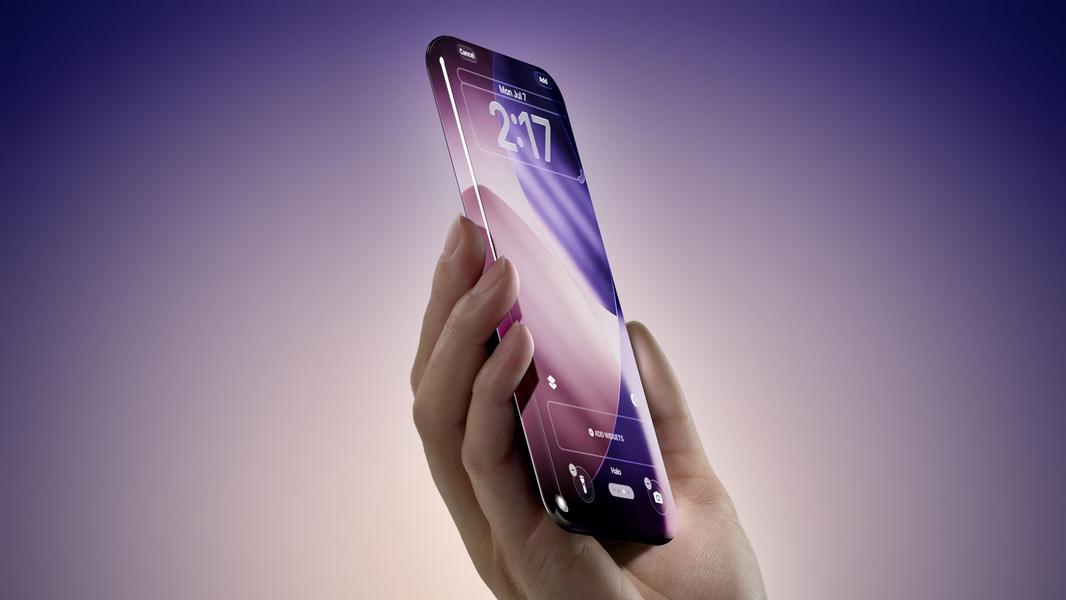
On a familiar wooden desk, a flat-edged iPhone rests beside a MagSafe charger and a stack of notebooks. The screen’s squared corners have long defined how we grip and place the device. Now, whispers of a fully curved display suggest every fingertip slide and tabletop alignment could feel different. For many, this prospect is less about optics than about the subtle recalibrations of touch and balance that punctuate daily routines.
In the pocket, where denim and fabric weave around the phone’s frame, users often glide a hand down the edge to secure its grip. Curved glass may ease this slide, yet it also invites uncertainty—will the device rotate or slip before fingers clamp down? These low-level hesitations crop up without fanfare, but they mark an intimate negotiation between hand, fabric, and glass.
On kitchen counters and bedside tables, the iPhone’s straight sides reliably align with MagSafe rings and charging mats. A gentle nudge snaps the device into place. With a curved silhouette, that same gesture might require a second adjustment: a subtle shimmy to center the coil. The act of charging, once unconscious, could become a moment of attention, a brief pause in the flow of cooking or pre-sleep scrolling.
Late at night, when the bedroom light is dim, the routine of lifting a phone from its stand gains new texture. Fingers hover, hesitating at the curve’s apex, then wrap around the screen’s contour. Such a small shift in grip can register more strongly over weeks of nightly use, reorienting muscle memory in ways only noticed when a misaligned press sends the device sliding instead of lifting.
Travel behavior also stands poised for change. Slim sleeves and pockets in messenger bags have been tailored to flat devices for years. A curved edge reshapes the interior dimension of a case, coaxing photographers and note-takers to reconfigure compartments. Backpack routines—where phones share space with battery packs, cables, and wallets—face a new choreography. Each insertion and retrieval becomes a negotiated move, a dance partners must conserve.
Compatibility conversations are already underway in online forums, not about specs, but about daily habits: whether a curved screen will better seal against moisture, how it handles in gloves, and if on-screen gestures will feel more fluid or fugitive. These discussions underscore a simple truth: that design evolutions matter less as headlines than as incremental shifts in the rituals we rarely notice until they change.
FAQs
Will a curved iPhone screen affect MagSafe charger alignment?
The curved edges may require a slight repositioning on a MagSafe charger, but magnetic alignment should remain functional and secure for typical use.
How might cases adapt to support a fully curved display?
Case designs will likely evolve with flexible materials and reinforced edges to cradle the curvature while preserving grip and protective coverage.
Could touch gestures feel different on a curved screen?
Some users may notice altered swipe dynamics at the edges, as the glass follows a continuous arc rather than a flat plane.
Will screen protectors designed for flat iPhones still work?
Flat protectors may not adhere uniformly to curved glass. New protector types with flexible adhesives are generally required for full-coverage edge protection.
Verdict
As whispers of a curved iPhone 20 display ripple through Apple communities, they highlight more than just aesthetic evolution. They surface quiet calculations—sliding devices into snug pockets, tapping screens at new angles, aligning chargers with greater care. These subtle recalibrations reveal how even imperceptible design choices ripple through our daily interactions. Rather than fueling hype, the prospect of curvature underscores a simple truth: that our device habits are as malleable as our tools, reshaped by every contour and angle.
"Note: Readers like you help support The Apple Tech. We may receive a affiliate commission when you purchase products mentioned on our website."