

Each incremental iOS release, like the recent 26.4 Release Candidate, tends to arrive not with a fanfare, but with the quiet hum of background activity. For many, the update process itself is a familiar, almost ritualistic occurrence: connect to power, tap “Download and Install,” and set the device aside. What often goes unnoticed, however, are the subtle, cascading effects these software shifts have on the daily routines built around the iPhone. The product itself merely exists as a vessel for these evolving digital habits, a constant companion whose underlying logic is frequently refined in ways we rarely articulate.
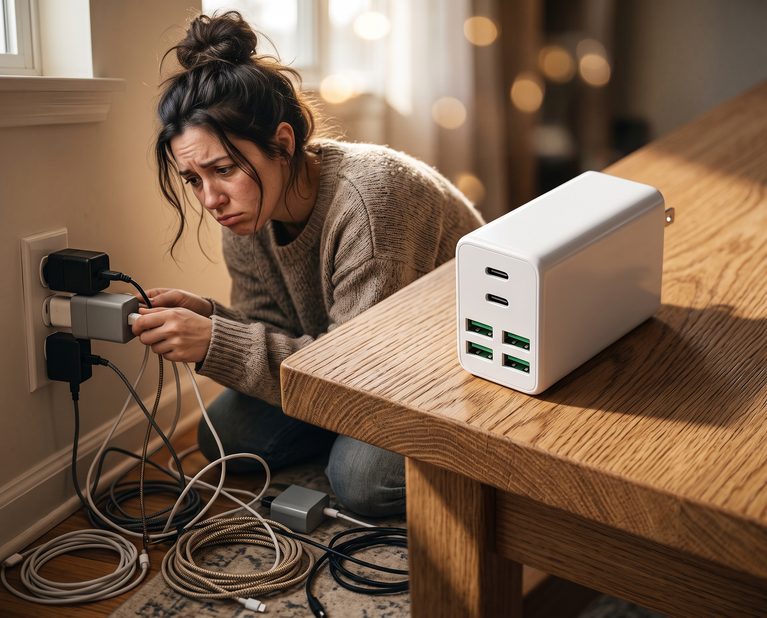
Consider the enduring dance with battery life. While a point release might promise optimizations, the human response often defaults to an ingrained prudence. The glance at the battery percentage, a micro-habit honed over years, persists. Has this update subtly altered the discharge curve? Is the evening charge, once a confident overnight affair, now occasionally punctuated by a midday top-up? These are not dramatic shifts, but rather a quiet tightening or loosening of the psychological leash to the nearest power source. The anticipation of new software, even without explicit claims, can subtly recalibrate one’s relationship with the device’s power reserves.
Beyond the battery, an update often introduces small modifications to system processes, background app refresh protocols, or notification delivery. These aren’t features to be lauded in keynotes but are the invisible threads that weave through daily workflows. The timing of a message alert, the responsiveness of a Haptic Touch gesture, or the slightly altered speed at which an application launches — each is a fractional adjustment. Individually, they are negligible. Collectively, they constitute a normalized experience, one where the user’s muscle memory adapts almost unconsciously to the system’s new rhythm, cementing new technological habits without explicit instruction.
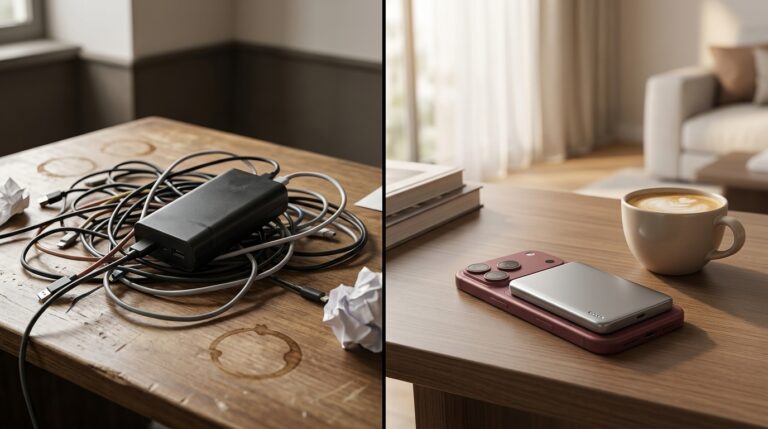
The low light of a bedroom often reveals these ingrained adaptations most clearly. Reaching for the iPhone on the nightstand, a hand instinctively seeks the familiar port or aligns the device with the magnetic field of a MagSafe puck. There is a specific tactile memory associated with the slight click of a Lightning cable or the subtle resistance of a USB-C connection, a physical grammar understood without thought. As new power standards emerge or charging optimizations are introduced via software, these moments of physical interaction become quietly re-calibrated. The angle, the pressure, the placement – all are minor variables that shift in response to an unseen digital update, folding into the larger tapestry of daily human interaction.
The iPhone, after all, rarely operates in isolation. Its update is often an unspoken directive to the broader Apple ecosystem. The seamless Handoff between a MacBook and an iPad, the automatic connection of AirPods, the synchronized activity metrics flowing to an Apple Watch – these interdependencies mean an iOS update on the primary device often ripples through the entire personal network. Users adapt not just to a single device’s new software, but to a subtly recalibrated interaction across their entire suite of Apple hardware, creating a unified, yet constantly evolving, environment of quiet dependence.
Sometimes, these shifts manifest as a low-level friction. Perhaps a frequently used shortcut behaves slightly differently, or a particular menu item requires an extra tap. These are not bugs, typically, but rather the small, unavoidable consequences of an evolving interface. The initial micro-frustration quickly gives way to a new learned pathway, an adaptive pivot that, over days and weeks, becomes the new normal. The device doesn’t change; the user’s interaction with it quietly does, building new neural pathways for familiar tasks.
Ultimately, each iOS update, including the modest 26.4, contributes to a continuous process of behavioral refinement. The iPhone remains physically the same, but the unspoken contract between user and device is subtly rewritten. It is a quiet dependence, reinforced daily by routines that feel less like conscious choices and more like instinct. We rarely consider the underlying software when we reach for our devices, but it is precisely this invisible framework that shapes the very texture of our digital lives, one small, adaptive habit at a time.
How might an iOS update affect my iPhone’s battery performance?
While iOS updates often include underlying optimizations for battery management, individual user experience can vary. Observing your device’s charge retention over a few days post-update can help discern any subtle shifts in performance, influencing when and how frequently you choose to charge.
Do iOS updates influence how other Apple devices interact with my iPhone?
Yes, system-wide updates on iPhone frequently include enhancements to Continuity features like Handoff, AirDrop, and iCloud synchronization. These refinements can subtly alter the fluidity of workflows between your iPhone, iPad, Apple Watch, and Mac, encouraging slight behavioral adjustments in how you switch between devices.
Is there a noticeable change in charging routines after a system update?
Often, changes are subtle and emerge through user observation. An update might fine-tune battery charging algorithms, potentially leading to users subtly adjusting their habits, such as when they connect their device for an overnight charge or opt for a quick top-up during the day, based on perceived power consumption.
How does MagSafe usage fit into iOS update cycles?
iOS updates can include firmware adjustments for MagSafe accessories, potentially optimizing charging efficiency or improving the magnetic alignment experience. These background refinements might lead to a more reliable or slightly faster charging routine, reinforcing the convenience of MagSafe within daily device interaction.
Verdict
The persistent evolution of iOS continues to reshape our quiet dependencies on Apple devices, often without explicit instruction. Each update, regardless of its touted features, subtly encourages a recalibration of habits – from the timing of a charge to the seamless handoff between devices. This ongoing adaptation speaks to a deeper truth: technology doesn’t just offer new capabilities; it quietly normalizes new behaviors, gradually embedding itself further into the unnoticed rhythms of daily life, transforming friction into routine.
"Note: Readers like you help support The Apple Tech. We may receive a affiliate commission when you purchase products mentioned on our website."