

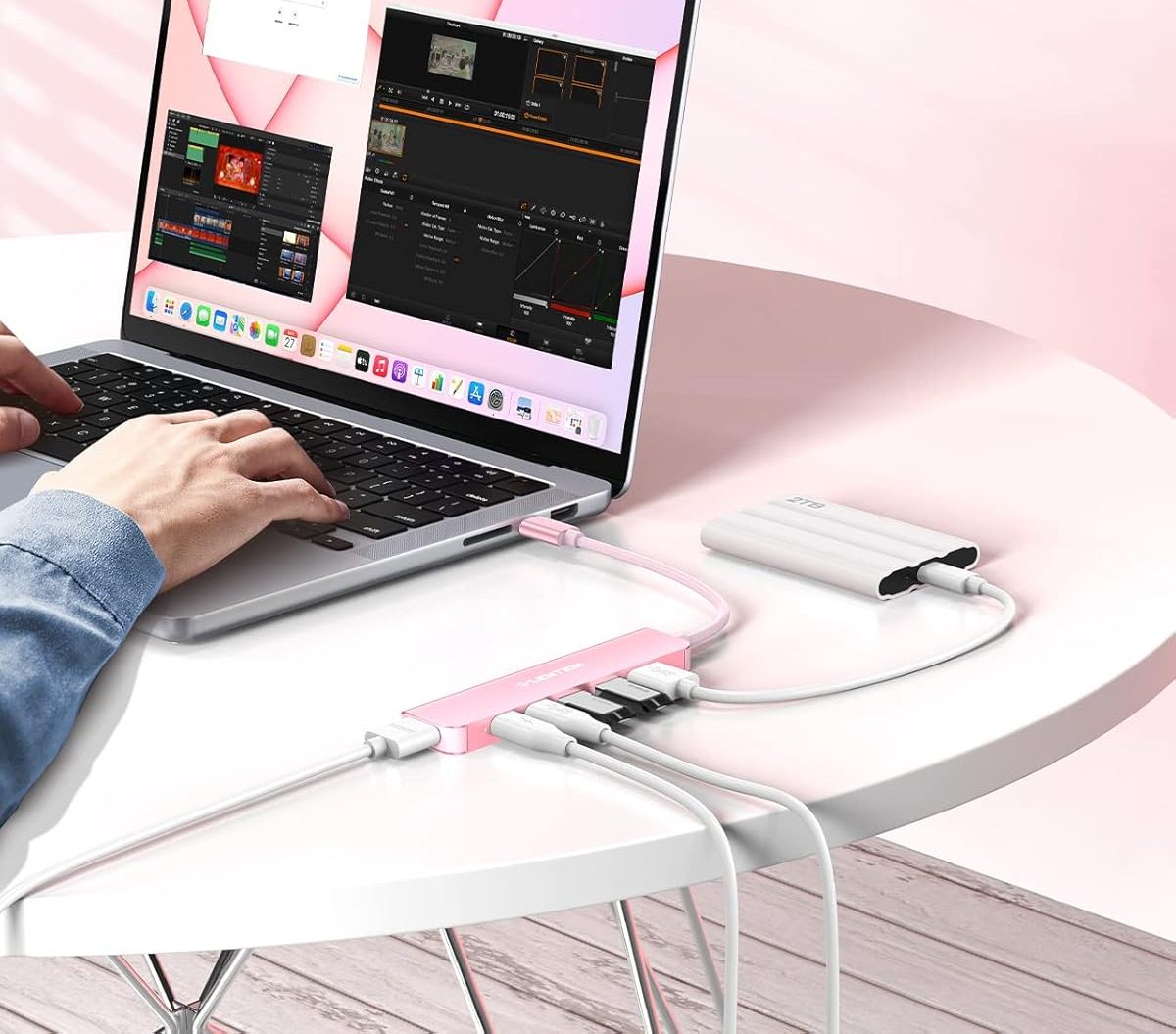
There’s a specific type of purchase regret that happens not when you buy the wrong laptop, but when you realize the laptop you bought correctly requires an entire ecosystem of additional hardware to function the way your previous one did out of the box. The MacBook didn’t get worse. It got thinner, lighter, more elegant. But somewhere in that evolution, the assumption shifted from “the computer has what you need” to “you’ll figure out what you need.”
USB-C was supposed to simplify everything. One port type for power, data, video, and peripherals. The promise was elegant: any port could do anything. The reality is that when every port can do everything, you’re constantly making choices about what each port is doing right now, and whether unplugging one thing to plug in another is worth the interruption. You don’t appreciate dedicated ports until you’re choosing between charging your laptop and connecting to a monitor.
The hub market exists because Apple made a calculation about what most users need most of the time, and then optimized for that statistical majority. But “most of the time” leaves gaps. The photographer who needs multiple card readers. The developer running two external displays. The presenter who shows up to conference rooms still equipped with HDMI cables. These aren’t edge cases—they’re normal professional workflows that now require advance planning and accessory budgets.
Rose gold as a hub color is peculiar until you consider what it signals. It’s not trying to disappear like space gray or black. It’s not making a statement like bright colors do. It’s matching, specifically, certain MacBook finishes that Apple has offered over various generations. The color choice reveals something: these hubs aren’t temporary solutions people tolerate. They’re permanent fixtures people want to coordinate with their aesthetic choices. The hub has become part of the laptop’s identity.
The 100-watt power delivery specification sounds technical, but it represents something simpler: the ability to charge a MacBook Pro at full speed while simultaneously using the hub’s other ports. Without it, you’re trading charging speed for connectivity, watching the battery percentage creep upward slowly while you work. With it, the hub becomes transparent—power flows through as if it weren’t there. That transparency is what people are actually buying.
Three USB-A ports in 2025 might seem like legacy accommodation, but they’re reality accommodation. The world has not fully transitioned to USB-C. Printers, external drives, keyboards, mice, security keys, microphones, cameras—the list of devices that still ship with USB-A connections is long and expensive to replace all at once. The hub becomes a bridge between Apple’s vision of the future and the mixed-standard present everyone actually inhabits.
The 4K HDMI port addresses a particular kind of meeting room anxiety. You walk in with your MacBook, someone hands you a cable, and the question is whether you can connect without explaining that you need a different cable or pulling out an adapter. The hub in your bag means you can. The confidence that creates is difficult to quantify but easy to recognize when it’s absent. Professional competence increasingly includes having the right dongles.
What’s strange is that the hub often stays plugged in permanently, essentially becoming a docking station for a laptop that was designed to be perfectly complete on its own. The MacBook connects to a single cable, and that cable branches out to power, displays, peripherals, and ethernet. The elegance of one cable is real, but it’s elegance that required purchasing a separate device to achieve. The laptop got simpler. The overall system got more complex.
The desk setup calculus has inverted. It used to be: buy a laptop, use the laptop. Now it’s: buy a laptop, research hubs, compare port configurations, read reviews about power delivery consistency, check compatibility lists, order the hub, wait for delivery, test whether your specific display works at full resolution. The laptop is an incomplete system that you complete through research and additional purchases. For some users, that’s acceptable. For others, it’s a frustration that arrives months after the initial purchase excitement has faded.
The 21% discount matters because hubs exist in a category of grudge purchases—things you buy not because you want them but because you need them to make something else work properly. Price becomes the primary differentiator when the functionality is essentially identical across brands. What you’re really paying for is port count, power delivery wattage, and the hope that this particular hub won’t introduce the weird display flickering issues that three Amazon reviews mentioned. The cheaper it is, the less painful the experiment feels if it doesn’t work out.
"Note: Readers like you help support The Apple Tech. We may receive a affiliate commission when you purchase products mentioned on our website."