

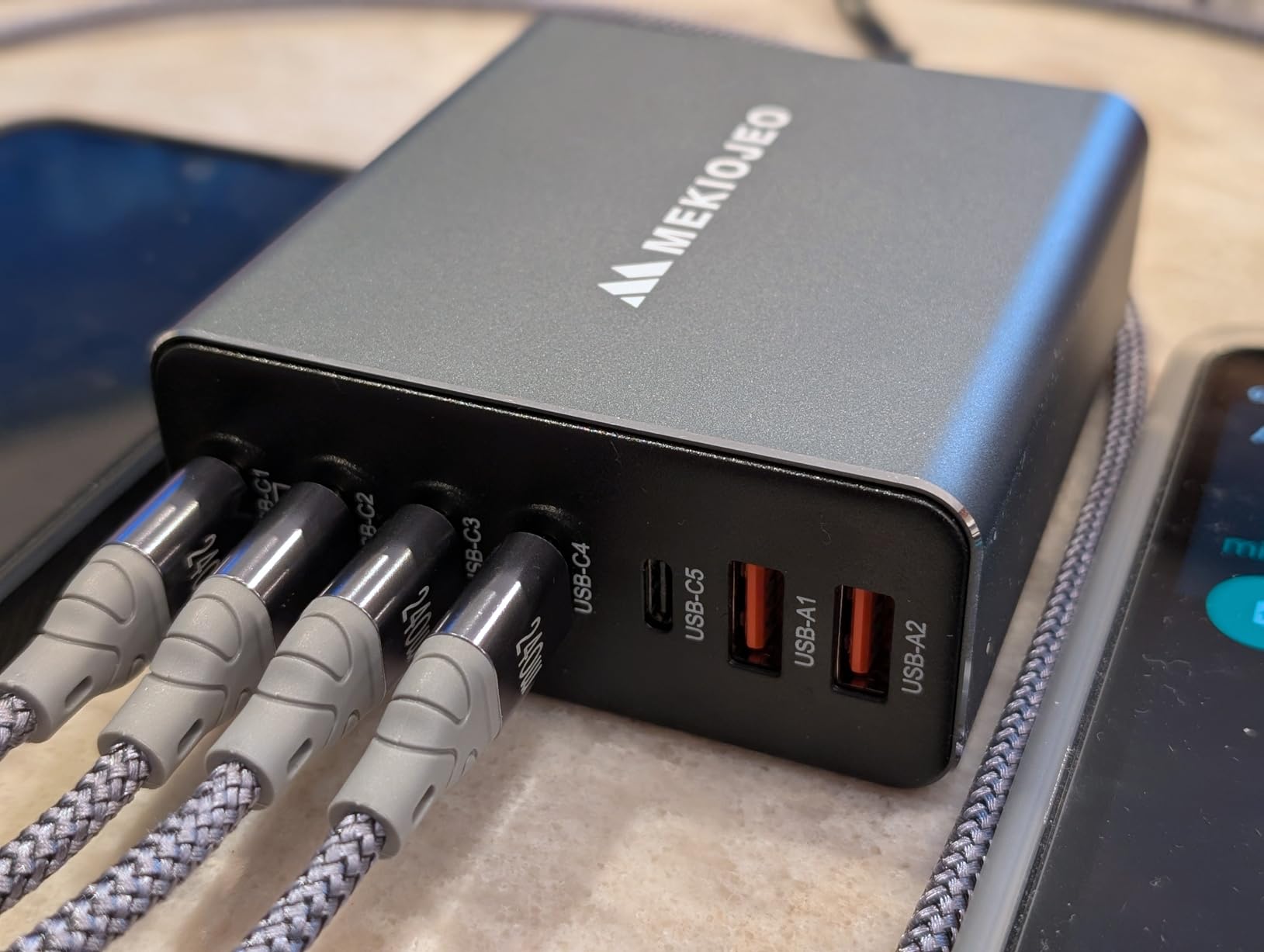
Desktop charging used to be a negotiation. The laptop got priority because it was essential for work. The phone charged overnight. The iPad waited until something else was unplugged. The AirPods case sat uncharged for days until someone noticed. A multi-port hub didn’t just add capacity—it removed the need to make those small, repetitive decisions.
Seven ports sounds excessive until someone lists their devices. A MacBook Pro, an iPhone, an iPad, AirPods, an Apple Watch, maybe a Kindle or a secondary set of headphones. Suddenly seven ports is barely enough. The hub became a single point of contact for an ecosystem that had quietly expanded beyond what a typical power strip could handle.

GaN technology made these hubs physically possible. Older chargers that handled this much wattage would have been large and heavy, prone to overheating. Gallium nitride components allowed higher power delivery in a smaller form factor. The technology itself was invisible to most users, but the result—a compact hub that didn’t get alarmingly hot—was noticeable.
The aluminum finish signaled something about intended use. Plastic hubs felt temporary, like something to use until a better solution appeared. Metal hubs felt permanent, like infrastructure. People who bought aluminum versions often placed them prominently on desks, treating them as part of the workspace setup rather than hidden behind monitors. The material choice was aesthetic, but it also affected how the object was perceived and used.
SIMILAR
iPhone and MacBook users are compensating for a port problem Apple created
iPhone users are eliminating the tangled cable from every car charging session
iPhone users are transforming nightstands into silent charging infrastructure
Laptop charging through the hub created a new cable management pattern. Instead of the MacBook’s power adapter sitting on the floor or snaking across the desk, everything routed through the hub. That centralization looked cleaner, but it also created a single point of failure. If the hub malfunctioned, every device lost its charging source. Some users kept a backup adapter for the laptop just in case, which undermined the simplicity the hub was supposed to provide.
The 65W laptop charging capacity worked for MacBook Air and smaller MacBook Pro models, but it was insufficient for larger MacBook Pros under heavy load. Those machines could draw more power than the hub provided, which meant the battery would drain slowly even while plugged in during intensive tasks. People who edited video or ran demanding software sometimes had to plug the laptop directly into its original adapter, bypassing the hub entirely.
Pricing positioned these hubs as desk infrastructure rather than disposable accessories. Previously listed at $29.99, current listings hover around $23.19. That’s inexpensive enough to be accessible but substantial enough that people thought carefully about placement and cable routing. The hub became part of a desk setup, not something casually moved between rooms.
The behavioral change was organizational as much as functional. People stopped thinking about charging as something that happened sporadically throughout the day and started thinking about it as something that happened in one place. The desk became a docking point. Devices left that space fully charged. The hub didn’t change how fast things charged, but it changed how people structured their relationship to power, turning it from an ad-hoc activity into a predictable routine.
"Note: Readers like you help support The Apple Tech. We may receive a affiliate commission when you purchase products mentioned on our website."