The charging station stopped being hidden infrastructure and became something you’d actually show someone during a desk tour. For years, charging multiple Apple devices meant multiple cables, multiple adapters, multiple points of contact with power strips. It was functional but visually chaotic, the kind of setup you’d tuck behind a monitor or beneath a desk.
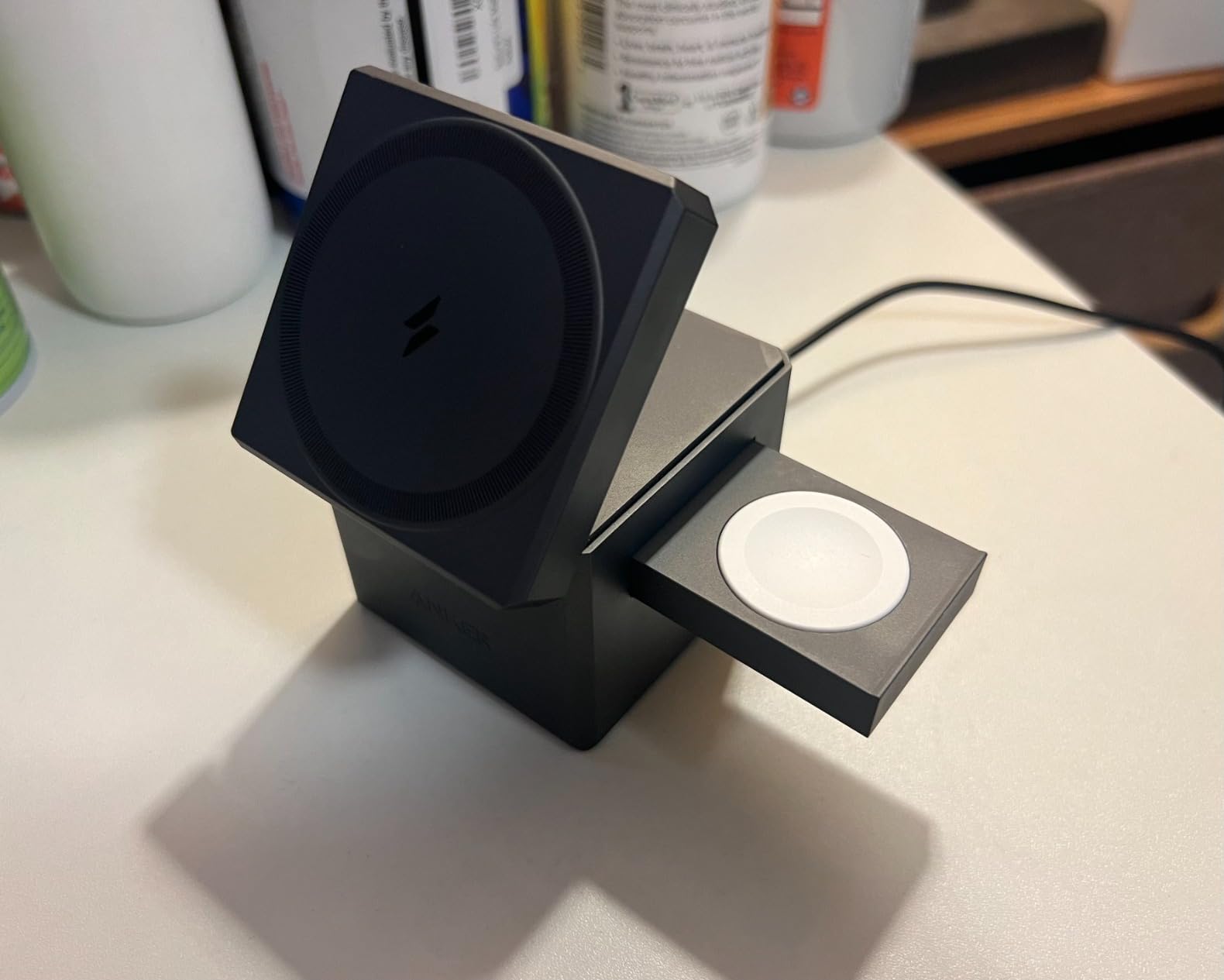
Three-in-one MagSafe charging cubes changed the aesthetic equation. A single object, often foldable and geometrically precise, handles iPhone, Apple Watch, and AirPods from designated surfaces. The cables disappear. The clutter resolves into a single form. For people who care about how their workspace looks—and an increasing number do—this consolidation feels significant.

But the appeal goes beyond tidiness. These stands signal something about the user’s relationship to the Apple ecosystem. Owning an iPhone, an Apple Watch, and AirPods is common. Investing in a premium three-in-one charger suggests you’ve committed not just to the devices, but to a particular vision of how they should coexist in your environment.
This has made certain charging stands aspirational in a way that’s unusual for power accessories. They appear in carefully curated desk setups on social media. They’re given as gifts to mark job changes or new apartments. They occupy the same psychological space as a nice pen or a well-designed lamp—objects that elevate a functional space into something more considered.
Yet there’s friction in the foldability. These stands are designed to collapse for travel, which makes them technically portable. But most users leave them in one place. The portability becomes theoretical, a feature that justifies the price but rarely gets used. The stand lives on the nightstand or the desk, and it stays there.
What’s interesting is how this affects device placement. When charging is consolidated into a single, aesthetically pleasing object, users become more deliberate about where that object lives. It’s not just “somewhere with an outlet.” It’s “the spot where my devices live when they’re not in use.” That location becomes a kind of home base, a designated zone for technology at rest.
Previously listed at $149.95, current listings hover around $97.49. The price remains high relative to basic charging pads, but it reflects the design ambition: these aren’t just chargers. They’re furniture.
"Note: Readers like you help support The Apple Tech. We may receive a affiliate commission when you purchase products mentioned on our website."