iPhone users who film themselves talking to the camera—whether for social posts, video messages, or work presentations—share a common frustration that rarely gets articulated. The lighting looks fine to the human eye, but on playback, something feels off. Faces appear washed out or unevenly lit. Background elements pull focus. The overall image lacks the polish that other creators seem to achieve effortlessly.
The problem isn’t that scenes are too dark—the iPhone compensates for that automatically—but that light hits from the wrong angle, creating shadows the computational system can’t eliminate. Overhead fixtures cast unflattering downward shadows. Window light works beautifully for an hour, then shifts as the sun moves. Desk lamps provide point sources that create harsh contrasts. Users learn to work around these constraints by filming at specific times of day or in particular rooms, which limits when and where content gets made.
This created a workflow friction that iPhone users rarely named explicitly. The device itself works perfectly. The limitation is environmental, not technical. But the friction persisted—users would film a take, watch it back, notice the lighting felt wrong, then reposition themselves or adjust nearby fixtures before trying again. The iterative process became part of the routine.
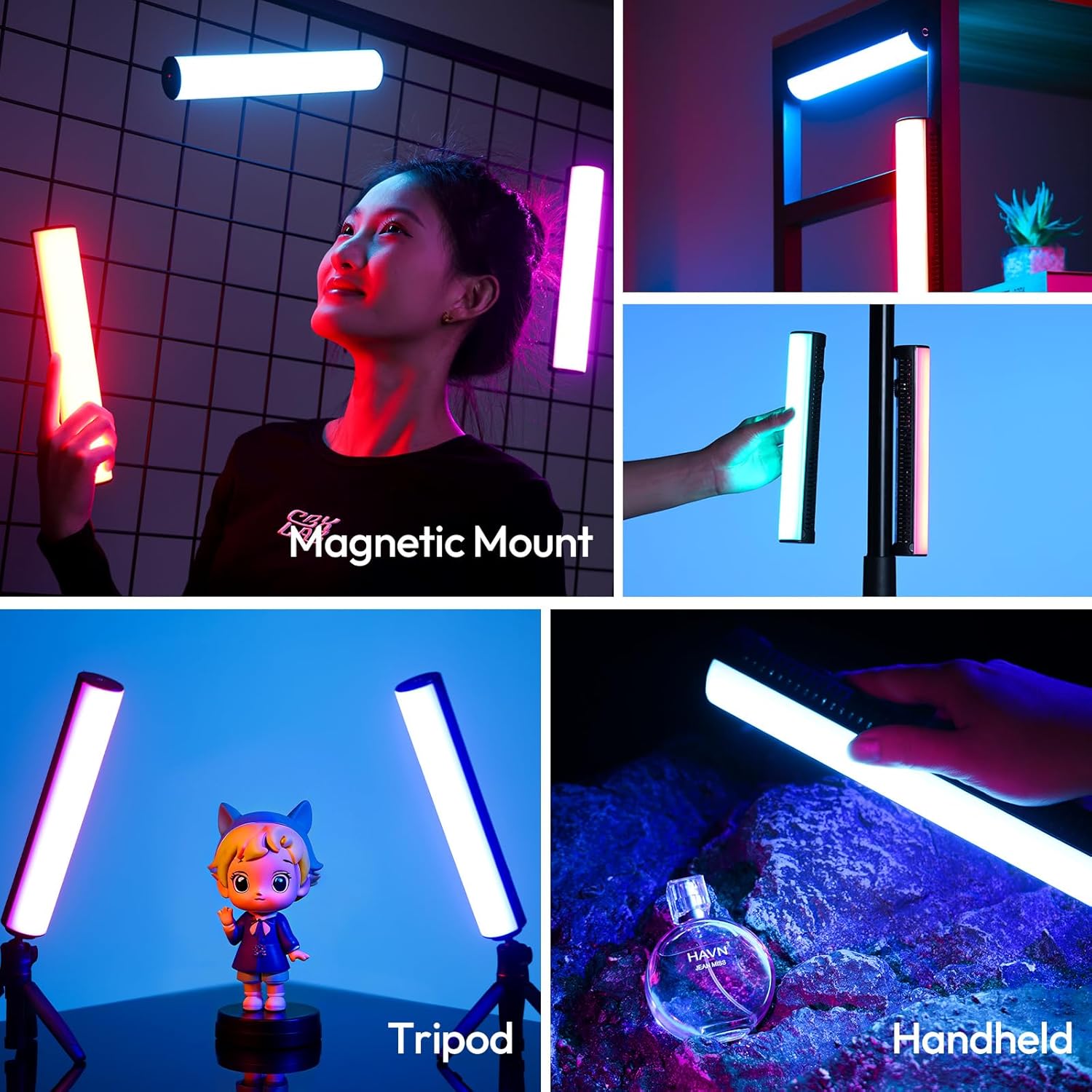
What’s shifted in recent months is the normalization of directional lighting tools among casual creators. Not fixed ring lights or studio panels, but portable LED tubes that can be held, positioned, or magnetically attached to surfaces. These provide a controllable light source that moves with the shot rather than requiring the shot to move toward existing light.
For iPhone users accustomed to the device handling exposure automatically, adding manual lighting control feels simultaneously intuitive and overly technical. The iPhone still manages the sensor and processing—the added light simply gives the computational system better input to work with. It’s not learning cinematography; it’s reducing a recurring annoyance that had become invisible through repetition.
The behavior change happens quietly. Users don’t describe it as upgrading their production quality. They simply stop noticing uneven shadows or repositioning themselves mid-recording. The iPhone captures what they intended to show, rather than what the room’s existing lighting happened to provide.
The adoption feels gradual rather than deliberate. Someone watches their own footage, notices the lighting inconsistency, adds a supplemental source, and then stops thinking about it. The friction disappears without announcement. Listings for compact LED lighting tubes designed for mobile content creation currently reflect a reduction of roughly 10 percent compared with earlier availability.
"Note: Readers like you help support The Apple Tech. We may receive a affiliate commission when you purchase products mentioned on our website."