
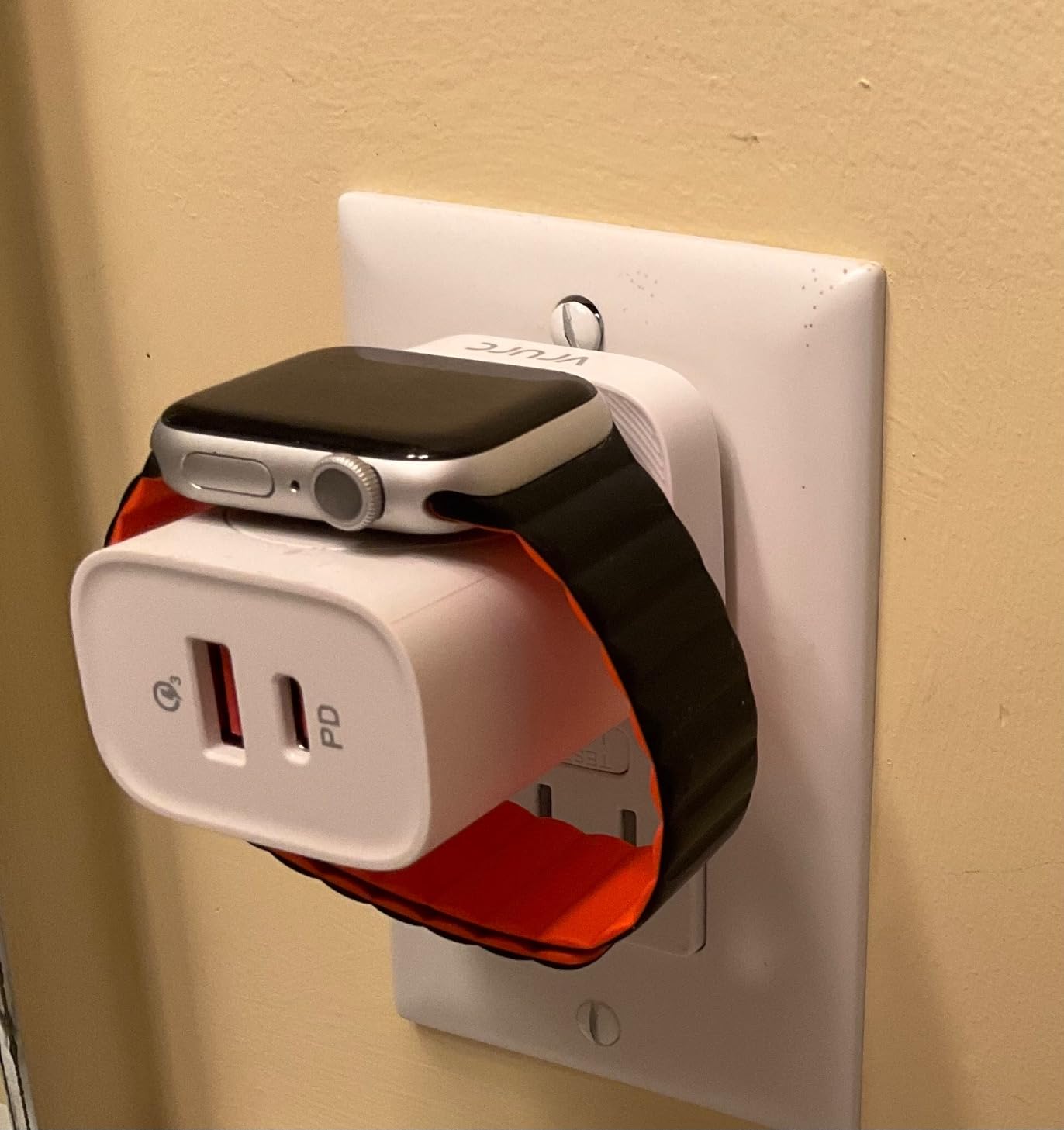
For years, the Apple Watch charged on one surface and the iPhone on another. The Watch might sit on a dresser across the room; the phone might live on a nightstand. The separation made sense when each device had its own dedicated charger, but it created a small nightly routine: plug in the phone, walk over to the Watch, place it on its puck, walk back. The friction was minor but persistent.
Consolidated charging didn’t eliminate devices—it eliminated movement. A single adapter that handled both the iPhone and the Watch meant everything could happen in one place, within arm’s reach of the bed. That shift sounds trivial, but it changed the texture of the nighttime routine. There was no more forgetting to charge the Watch because it was in another room. There was no more waking up to a dead phone because the cable had slipped off the nightstand during the night.
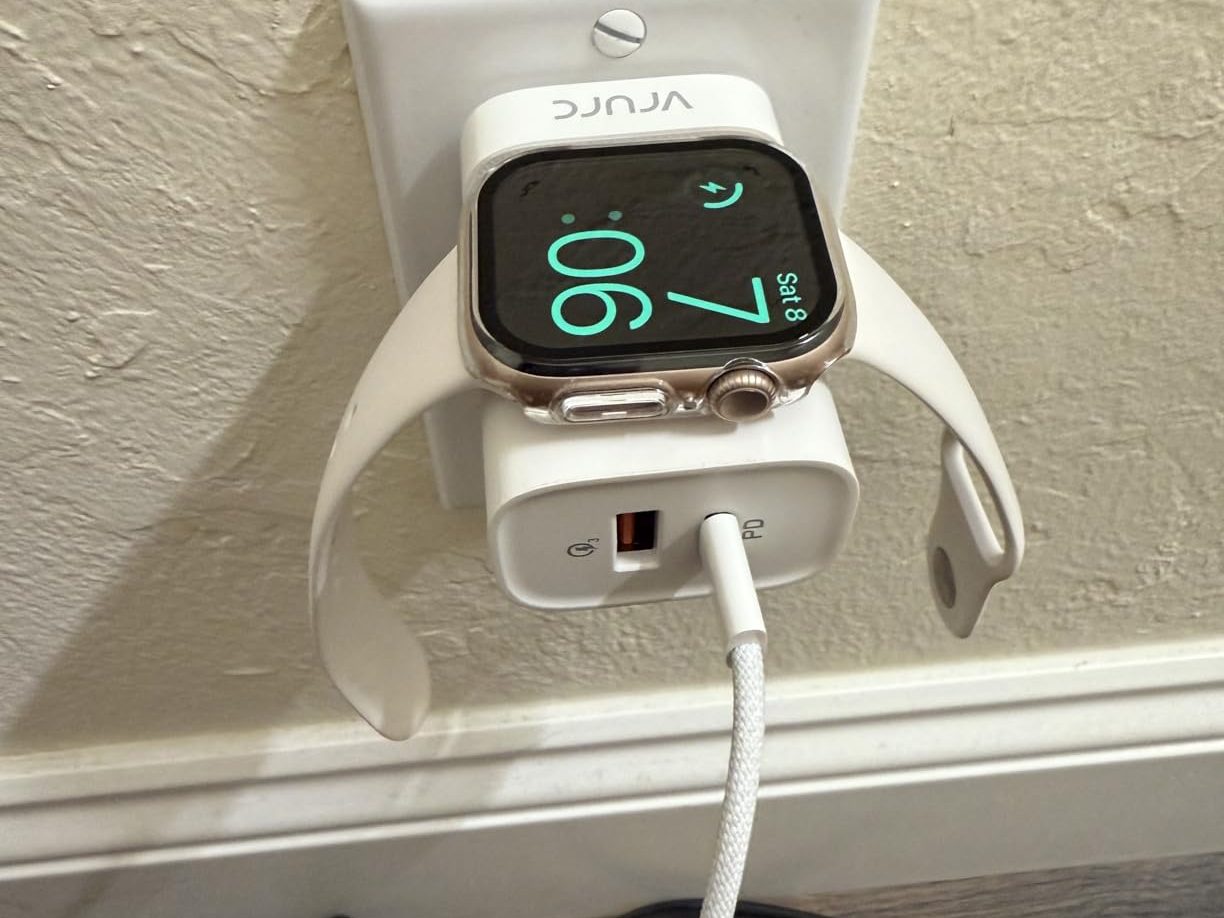
The wireless charging component introduced a new variable. The Watch has always charged wirelessly, but adding wireless iPhone charging to the same adapter meant the phone didn’t need to be plugged in either. Some people found that convenient; others found it finicky. The phone had to be positioned correctly, and a bump in the night could knock it off alignment. Wired charging was still faster and more reliable, but wireless felt cleaner, less cluttered.
Travel exposed the limits of multi-device adapters. Packing a single unit that charged both devices sounded efficient, but it also meant carrying something bulkier than a simple cable. Hotel rooms often had limited outlet access, and a compact adapter that could share a power strip with a laptop charger became more useful than an all-in-one solution that hogged space. The same device that simplified home charging sometimes complicated travel.
SIMILAR
iPhone and MacBook users are compensating for a port problem Apple created
iPhone users are eliminating the tangled cable from every car charging session
iPhone users are transforming nightstands into silent charging infrastructure
Color became an aesthetic signal. A purple adapter sat on a nightstand as a visible object; a black or white one blended in. Some people wanted their tech accessories to disappear; others wanted them to feel intentional, like decor. The choice revealed something about how people thought about their bedrooms—whether they saw them as tech-free zones that happened to have chargers, or as spaces where devices were openly part of the environment.
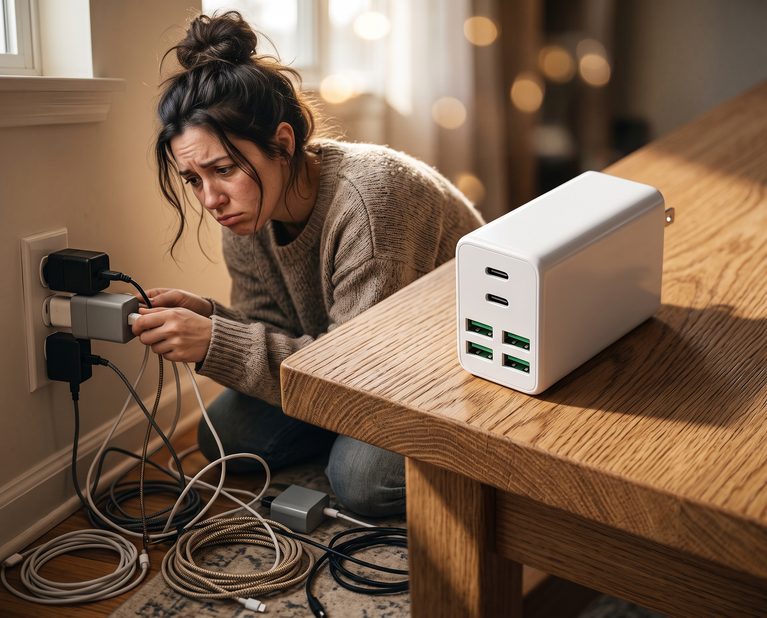
The dual-port USB-C setup reflected a broader ecosystem assumption. People who owned an Apple Watch almost always owned an iPhone, but they might also own an iPad, AirPods, or another device that needed charging. The second port wasn’t redundant—it was a hedge against the reality that most people were managing more than two devices. The adapter became a small hub, a single point of power distribution.
Pricing has come down as the category matured. Previously listed at $35.99, current listings hover around $22.99. That’s still more expensive than a basic single-device charger, but the cost reflects the added functionality. People weigh the price against the alternative of buying separate chargers for each device, and the math usually tips toward consolidation.
What’s changed isn’t the technology—it’s the assumption that charging should be effortless. The adapter that handles two devices without requiring thought has become the baseline expectation. People don’t want to think about power management; they want to drop their devices in a spot before bed and find them ready in the morning. The adapter that enables that invisibility is the one that sticks around.
"Note: Readers like you help support The Apple Tech. We may receive a affiliate commission when you purchase products mentioned on our website."