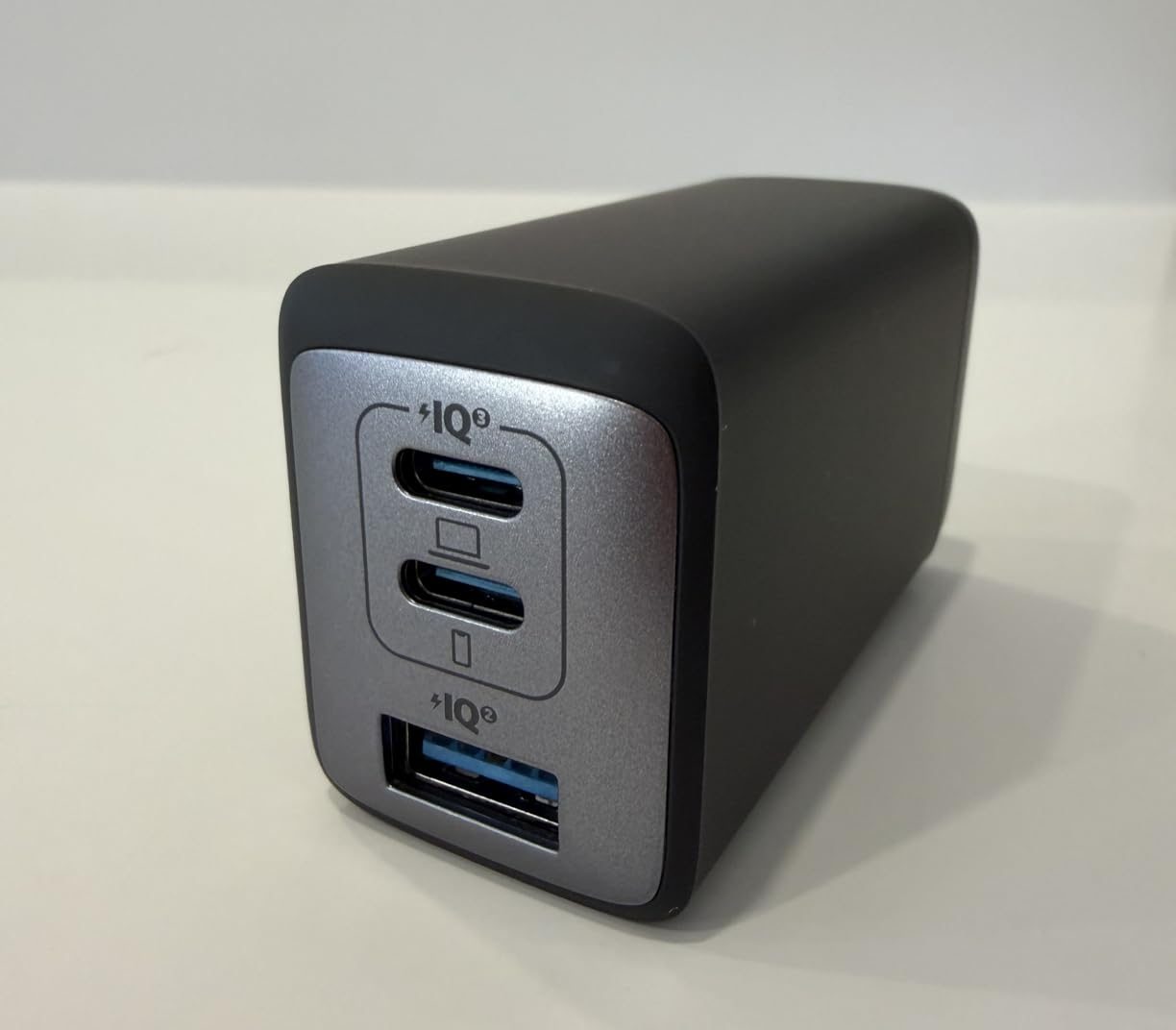
The shift to USB-C across Apple’s product line has turned multi-port chargers from convenience accessories into travel essentials, eliminating the need to pack separate adapters for every device.
The travel bag used to contain a specific kind of chaos: one charger for the MacBook, another for the iPad, a third for the iPhone, maybe a fourth for the AirPods case. Each device had its own power brick, its own cable, its own claim on an outlet. Hotel rooms never had enough outlets in the right places, so you’d unplug the alarm clock or the lamp, redistribute everything, and hope nothing ran out of battery overnight.
USB-C was supposed to fix this, and in some ways it has. The iPhone, the iPad, and the MacBook now all charge via the same connector, which should mean fewer cables. But unifying the connector doesn’t solve the outlet problem—it just shifts it. You still need to plug three things in, and you’re still competing with the limited number of outlets in an unfamiliar room.
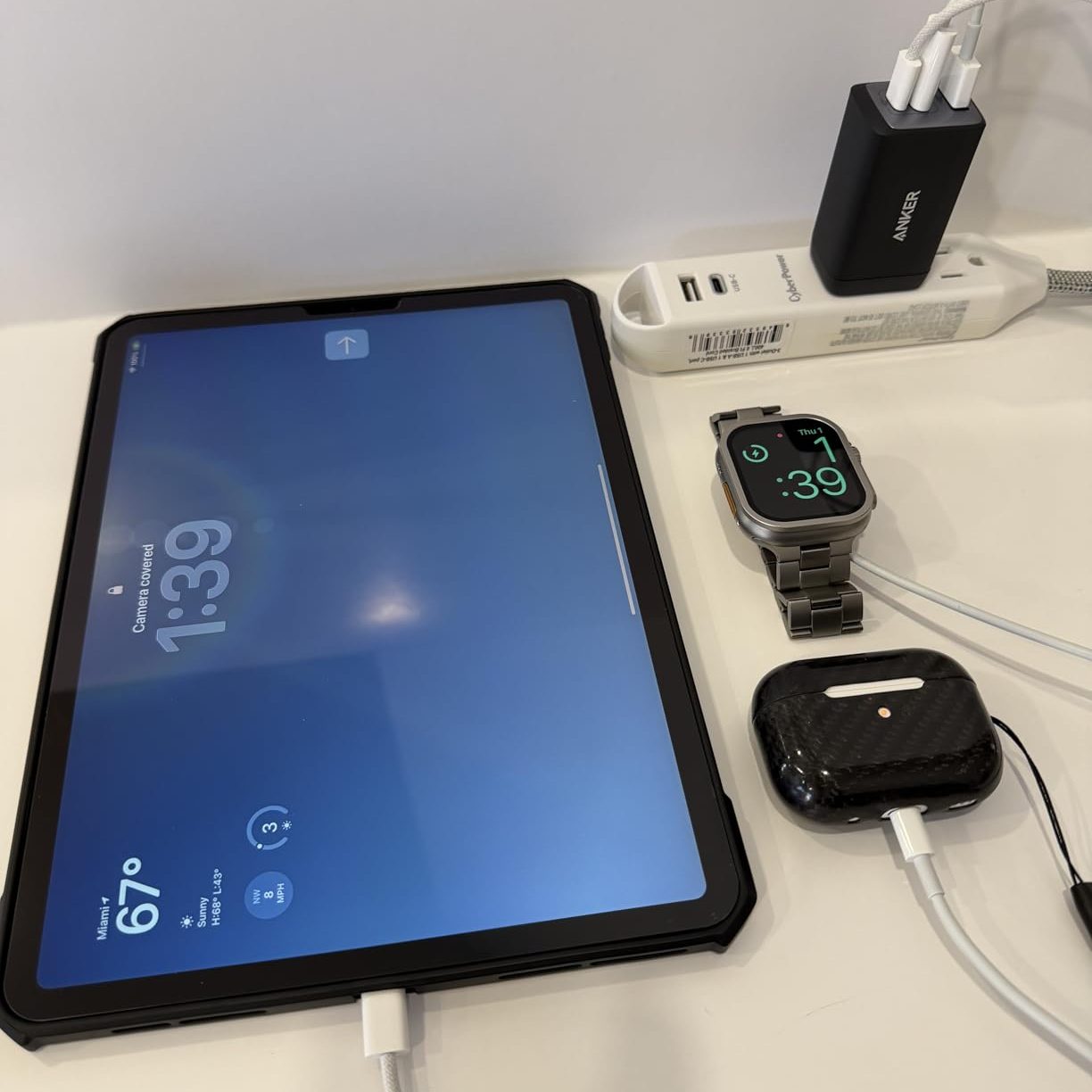
Multi-port chargers solve this by collapsing three or four power bricks into one. A single adapter with multiple USB-C outputs can handle the MacBook, the iPhone, and the iPad simultaneously, which means you only need one outlet. The bag gets lighter not because the devices weigh less, but because the infrastructure supporting them has finally collapsed into something manageable.
Power distribution becomes the new variable. A 65-watt charger can deliver enough power to charge a MacBook Air at full speed, but if you plug in an iPhone and an iPad at the same time, the wattage gets divided. The MacBook charges slower. This isn’t a failure—it’s a tradeoff. You’re choosing convenience over speed, which works fine if you’re charging overnight but becomes a consideration if you need everything topped off in an hour before leaving.
Foldable prongs matter more than they seem like they should. A charger with fixed prongs takes up space in a bag awkwardly—it’s bulky, it catches on things, it doesn’t pack flat. Foldable prongs turn the charger into something closer to a deck of cards, stackable and space-efficient. It’s a small design detail that has an outsized impact on whether the charger stays in your bag or gets left at home.
The shift also reflects a broader behavioral change: people are carrying more devices that all need power. It’s not just the phone anymore. It’s the phone, the tablet, the laptop, the wireless earbuds, the smartwatch, the portable battery. Each one operates independently but depends on the same charging window at the end of the day. A multi-port charger doesn’t eliminate the need to manage all of this, but it reduces the logistical overhead.
There’s a secondary effect when traveling internationally. A single multi-port charger means you only need one plug adapter for foreign outlets, not three or four. The simplification compounds. Previously listed at $40, current listings hover around $26 for compact models that balance wattage with portability. The appeal isn’t just that it works—it’s that it reduces the number of decisions you have to make about what to pack and where to plug in when you arrive.
"Note: Readers like you help support The Apple Tech. We may receive a affiliate commission when you purchase products mentioned on our website."