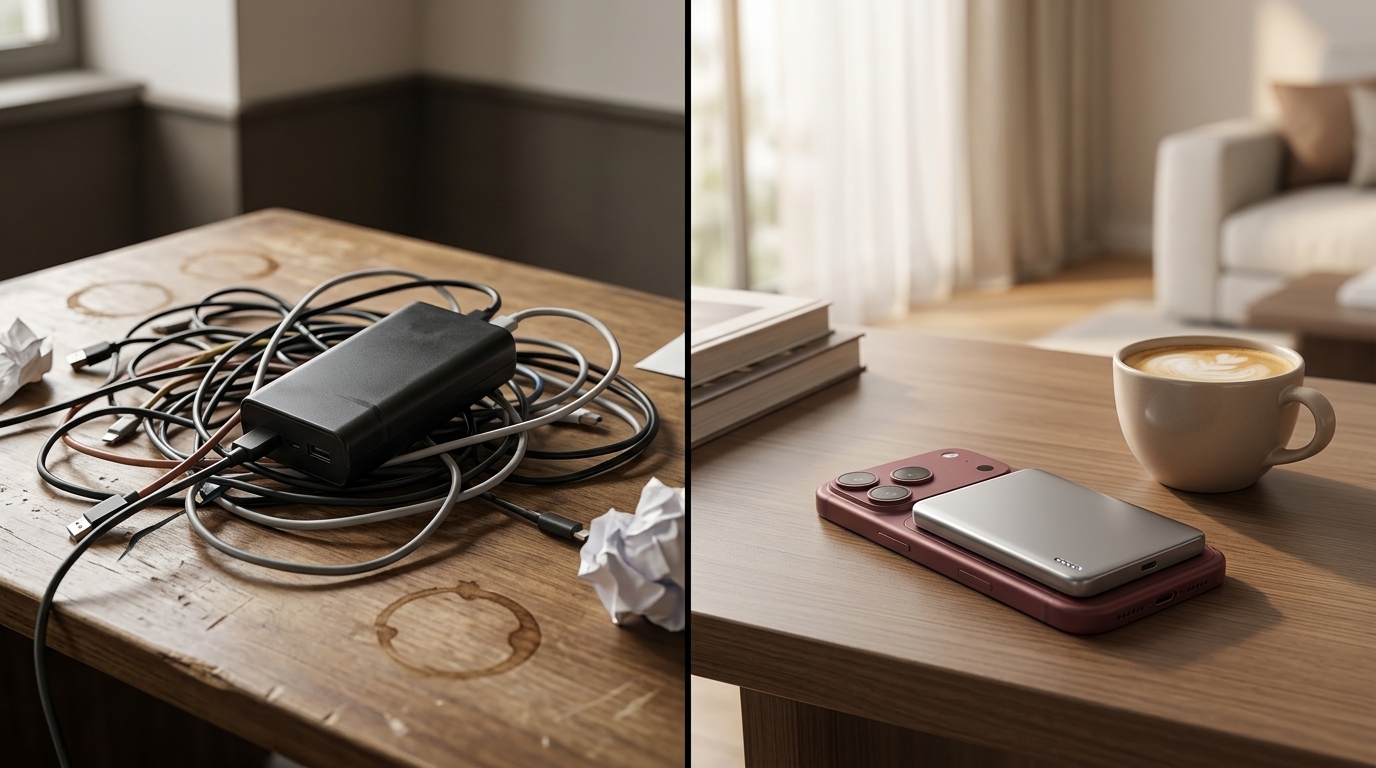

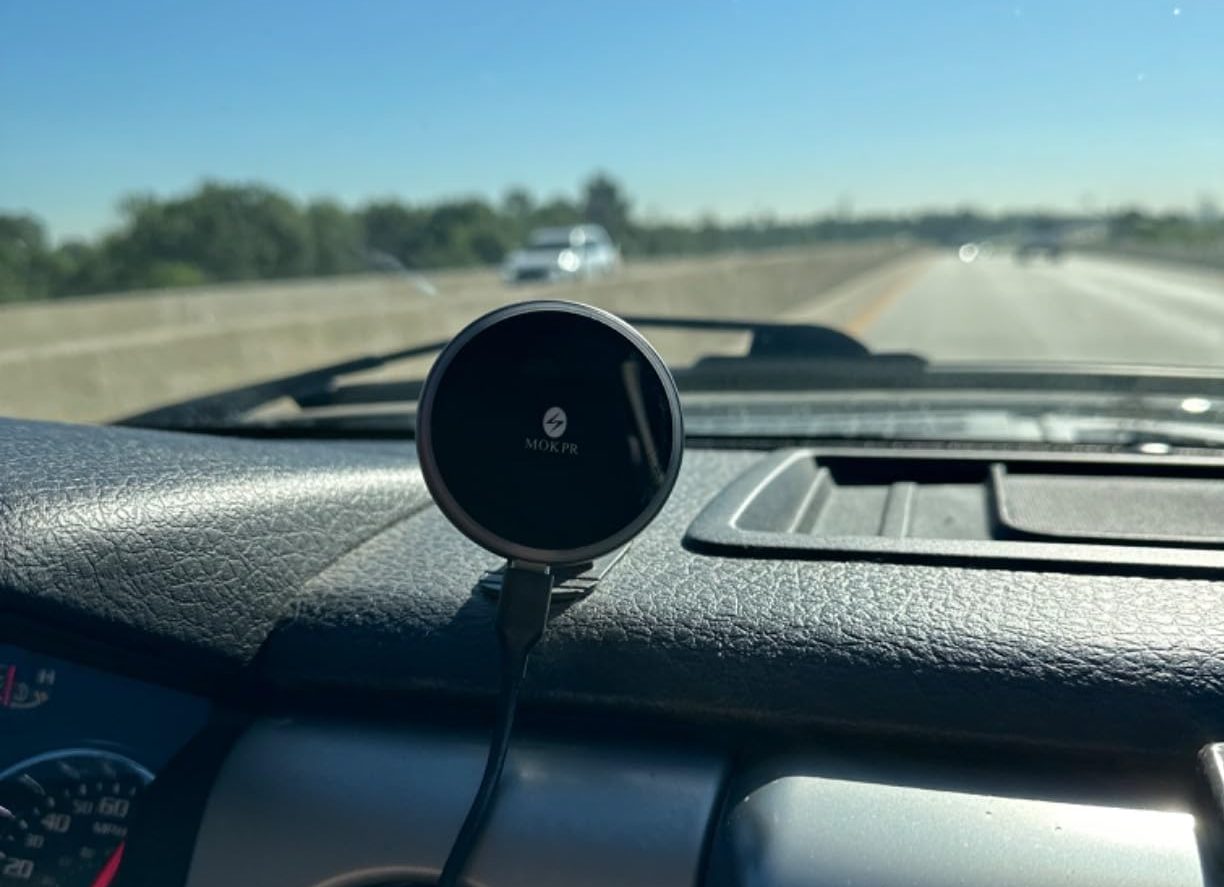
Dashboard phone mounts used to require two hands and attention. The phone had to be aligned with a clamp, squeezed into place, adjusted for angle. The process took long enough that some people waited until they were fully settled in the car before mounting the phone, which meant starting navigation late or driving the first few blocks without directions. Magnetic mounts removed that friction. The phone snapped into place with one hand, mid-motion, without looking.
MagSafe alignment was the key change. Earlier magnetic mounts used generic magnets that required careful placement. The phone would stick, but it might not charge, or it might shift during a turn. MagSafe’s built-in alignment guides meant the phone locked into the correct position every time. That reliability made the mount feel less like a gadget and more like infrastructure.
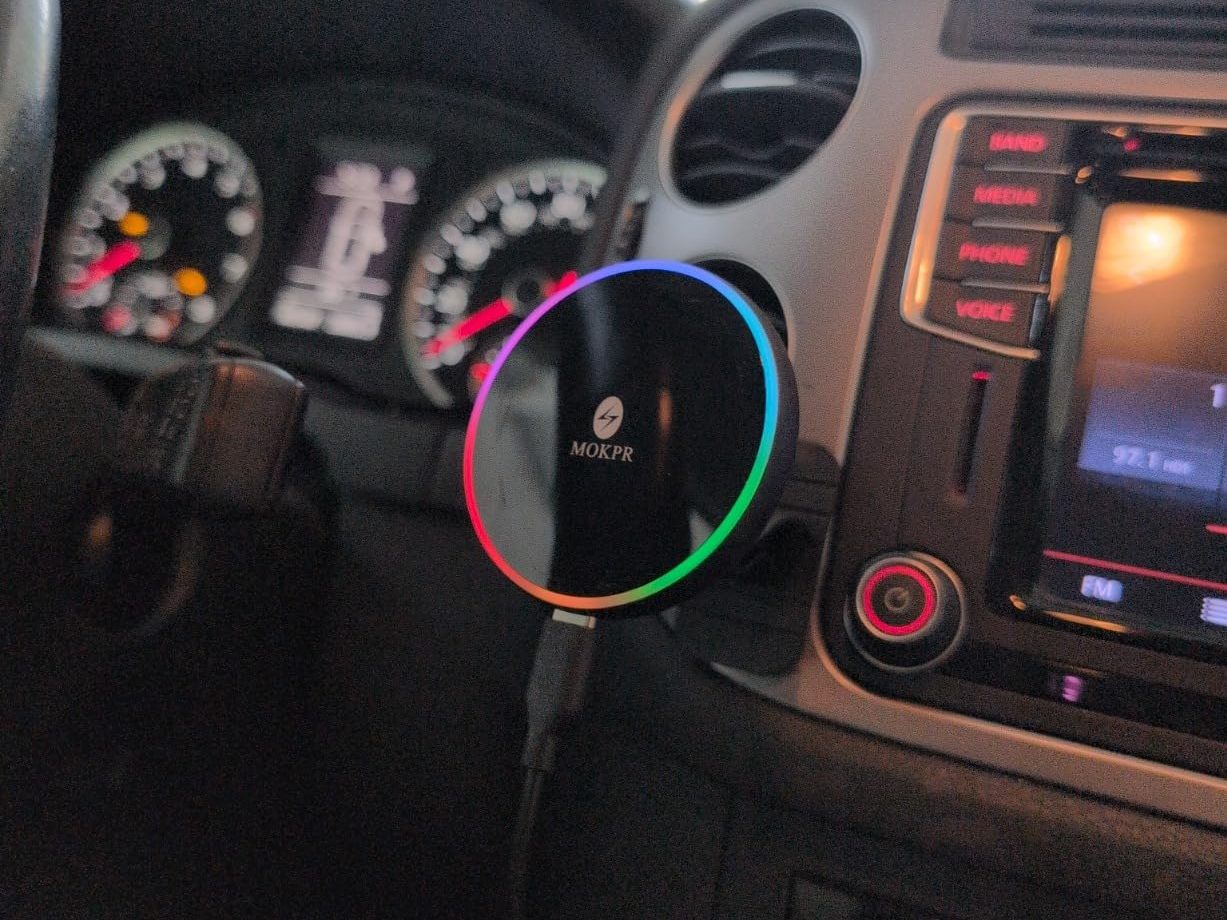
Wireless charging in the car created new behavior. Previously, people plugged their phones into a cable for CarPlay and charging. The cable tethered the phone to the dashboard or center console. Wireless charging meant the phone could sit on a vent-mounted magnetic charger, charging and running CarPlay without a visible cable. The car’s interior looked cleaner, but the real benefit was the ease of grabbing the phone at a stoplight or when parking.
The LED RGB lighting was polarizing. Some users liked the ambient glow, especially at night when it made the mount easier to locate. Others found it distracting or garish, a visual element that drew attention in a space where focus should be on the road. The lighting was often adjustable or could be turned off, which suggested the designers knew it wouldn’t appeal to everyone.
SIMILAR
iPhone and MacBook users are compensating for a port problem Apple created
iPhone users are eliminating the tangled cable from every car charging session
iPhone users are transforming nightstands into silent charging infrastructure
Vent mounting versus dashboard mounting reflected different driving styles. Vent mounts positioned the phone closer to eye level, which reduced the distance the driver’s gaze had to travel from the road to the screen. Dashboard mounts were more stable, less affected by air conditioning adjustments or bumpy roads. People who drove frequently on rough roads often preferred dashboard mounts; people who drove mainly on highways preferred vent mounts.
The fifteen-watt charging speed was faster than many car chargers but slower than wall adapters. For short drives, the charging barely mattered—the phone’s battery would drain slightly or stay level, but it wouldn’t gain much. For long drives, the mount kept the phone alive indefinitely, which was enough. The mount wasn’t meant to fully charge a dead phone; it was meant to prevent a live phone from dying during navigation.
Pricing positioned these mounts as mid-range accessories. Previously listed at $20.59, current listings hover around $15.98. That’s more expensive than basic vent clips but cheaper than premium dashboard mounts with complex adjustments. The price reflected the added functionality of wireless charging and magnetic alignment, features that justified the cost for people who used navigation daily.
The behavioral change was about reducing cognitive load. The mount eliminated the small decisions around phone placement—where to put it, how to angle it, whether to plug it in. The phone went in one spot, charged automatically, and was easily removed when exiting the car. That simplicity made navigation feel less like a task and more like a default behavior, something that happened without planning or effort.
"Note: Readers like you help support The Apple Tech. We may receive a affiliate commission when you purchase products mentioned on our website."