
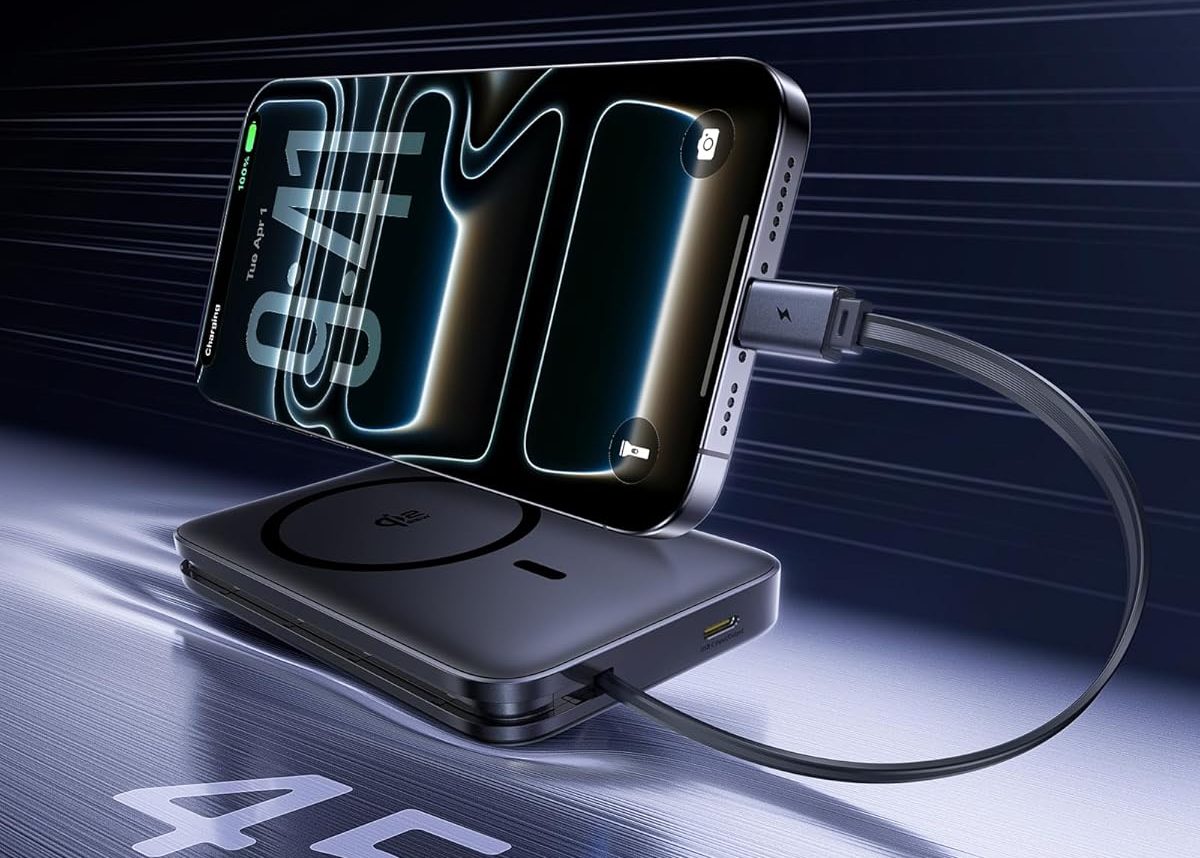
Intro: MagSafe changed how iPhones charge at home, but the shift to magnetic portable batteries has been slower. A new generation of power banks suggests that’s finally changing.
Pull Quote: The appeal isn’t speed—it’s never having to stop what you’re doing.
Article: Charging a phone while using it has always involved compromise. The cable gets in the way. The phone becomes awkward to hold. The port blocks certain grips. For years, iPhone users accepted this as inevitable. MagSafe introduced an alternative, but mostly for stationary charging—pucks on desks, stands on nightstands.
Portable batteries with MagSafe took longer to settle into daily use. Early versions were heavy, slow, or unreliable. The magnetic connection felt tenuous. Users questioned whether the convenience justified carrying another device. But iteration has narrowed those gaps, and a newer set of behaviors is emerging.
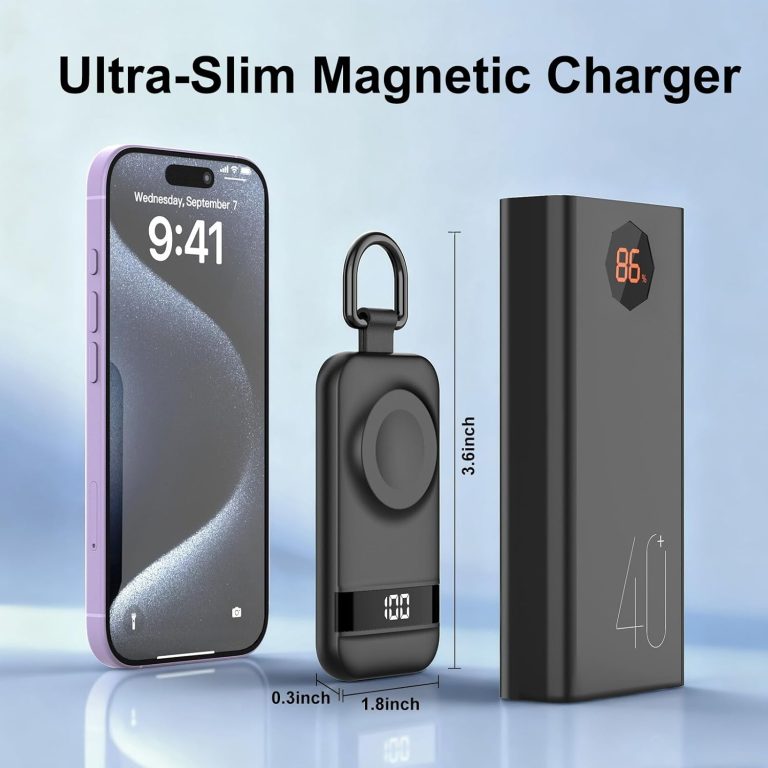
A 10,000mAh magnetic battery that attaches to the back of an iPhone changes the charging equation. The phone stays in hand. The battery snaps into place and begins charging without a cable. For users accustomed to plugging in, the shift is small but persistent. Over time, the cable stays in the bag more often. The battery takes its place.
What distinguishes newer models is output capacity. At 25W wireless and 45W wired, this category of battery can charge an iPhone at full MagSafe speed while simultaneously charging a MacBook or iPad through its USB-C port. That dual capability matters for users who travel with multiple Apple devices. One battery handles both, and the built-in USB-C cable means no hunting for the right cord.
The form factor has thinned. Earlier MagSafe batteries added noticeable bulk. Current designs sit flatter against the phone, making the pairing feel less like an accessory and more like a temporary extension of the device itself. It’s still there—still adding weight—but it no longer feels precarious.
iPhone users who’ve adopted this habit report a specific shift: charging becomes ambient rather than deliberate. The battery attaches during a commute, a meeting, a walk. The phone charges while still being used. When the battery depletes, it detaches. The phone continues as normal. There’s no interruption, no need to find an outlet, no cable to manage.
For those still using older iPhones with Lightning ports, the transition is less seamless. But for anyone with an iPhone 12 or newer, MagSafe compatibility is native. The battery works across models—13, 14, 15, 16—and early reports suggest it will continue forward. That longevity shifts the calculus. It’s not just a battery for this phone. It’s a battery for the next one, too.
The weight is present but expected. A 10,000mAh battery adds roughly the equivalent of a second phone to your pocket or bag. Users adjust. The convenience of magnetic charging outweighs the burden of carrying it, at least for those who’ve made the switch.
Recent listings show a discount bringing the price down by 20% from its typical range.
"Note: Readers like you help support The Apple Tech. We may receive a affiliate commission when you purchase products mentioned on our website."