

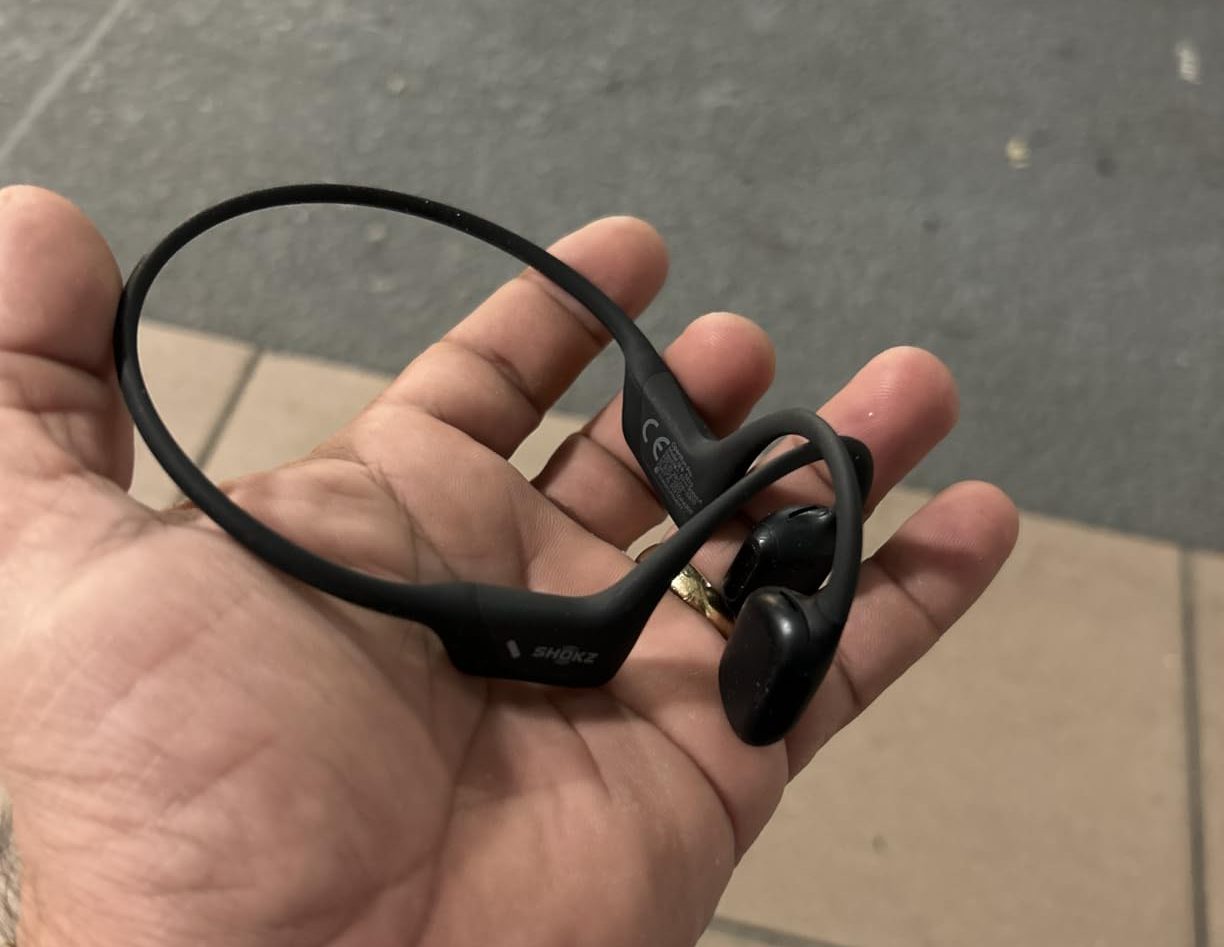
The choice between blocking out the world with noise-canceling earbuds and maintaining environmental awareness has become a daily calculation for runners, cyclists, and commuters who rely on iPhones for audio.
AirPods Pro seal the ear canal and eliminate external sound. This isolation is valuable on planes, in noisy offices, during commutes when you want to disappear into a podcast. It becomes a liability the moment you’re running on a road where cars approach from behind, or cycling through an intersection, or walking through a city where spatial awareness keeps you from stepping into traffic.
Transparency mode attempts to solve this by piping environmental sound through microphones and into your ears, but the experience is mediated. You’re hearing the world filtered through software, with a slight delay, with digital artifacts that don’t exist in natural hearing. A car approaching sounds different through Transparency mode than it does to an unobstructed ear. The distinction is subtle, but in situations where reaction time matters, subtle differences compound.
Bone conduction headphones bypass the ear canal entirely, leaving it open to ambient sound while transmitting audio through vibrations against the skull. You hear your music or podcast, and you simultaneously hear everything around you without technological mediation. The person calling your name, the car horn, the cyclist announcing they’re passing—these sounds matter more when your safety depends on hearing them.
The iPhone’s ecosystem has centered audio around AirPods for years. The pairing is instant. The switching between devices is automatic. Spatial audio, transparency mode, adaptive EQ—Apple has built a comprehensive feature set around in-ear and over-ear products. What it hasn’t built is an open-ear option, which leaves users who prioritize situational awareness to look outside the ecosystem for bone conduction models that connect via standard Bluetooth but lose Apple’s seamless integration.

Audio quality differences are immediately apparent. AirPods deliver full-spectrum sound with strong bass response. Bone conduction lacks the low-frequency impact because bass relies on air pressure in the ear canal. Music sounds thinner. Podcasts and audiobooks come through clearly, but anything bass-heavy feels incomplete. The trade-off is explicit: you accept diminished audio quality in exchange for unobstructed environmental awareness.
Battery life extends beyond what AirPods offer, which matters for long runs or full workdays. Ten hours of continuous playback means the headphones can last from morning through evening without requiring a charging case. AirPods Pro need their case for battery extension, which means you’re managing two devices—the earbuds and the case—while bone conduction models operate independently, requiring only periodic charging directly via USB-C.
Sweat resistance is essential for outdoor use, but it also reflects a broader design philosophy. These headphones are built for conditions that would damage or degrade AirPods over time. Heavy rain, prolonged sweat exposure, dust from trail running—the durability expectations are different. AirPods are water-resistant but treated carefully. Bone conduction models designed for sports are expected to endure harsher conditions without special care.
The integration gap remains persistent. Apple’s ecosystem rewards using Apple products together. AirPods switch automatically from iPhone to iPad to Mac. They show battery levels in widgets. They integrate with Find My. Bone conduction headphones offer none of this. They pair like any Bluetooth device, function reliably, but exist outside the ecosystem’s conveniences. Previously listed at $180, current listings hover around $110 for models with extended battery life and premium tuning. The choice isn’t between good and better—it’s between isolation with seamless integration and awareness with manual management, and for users whose activities demand environmental consciousness, awareness wins despite the ecosystem compromises.
"Note: Readers like you help support The Apple Tech. We may receive a affiliate commission when you purchase products mentioned on our website."