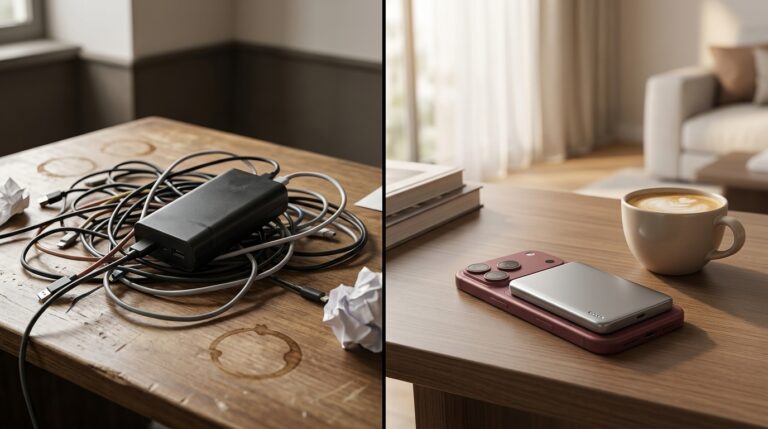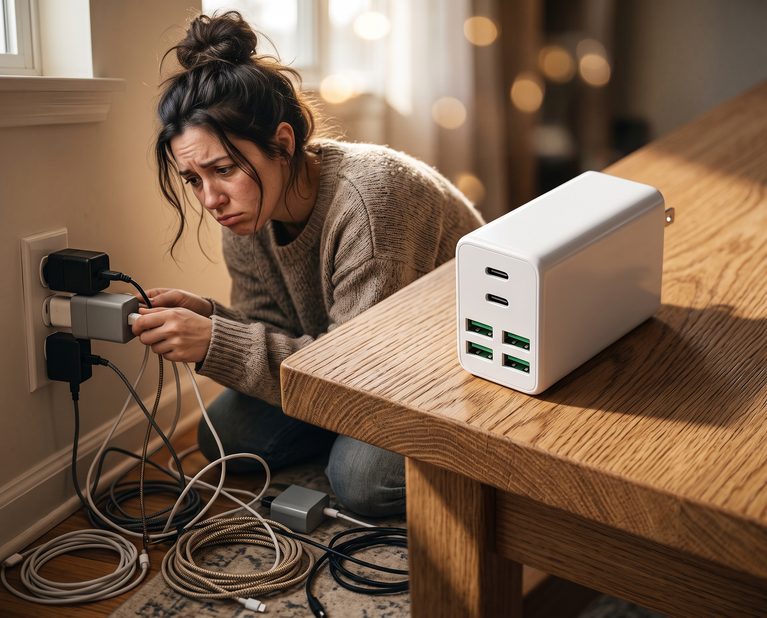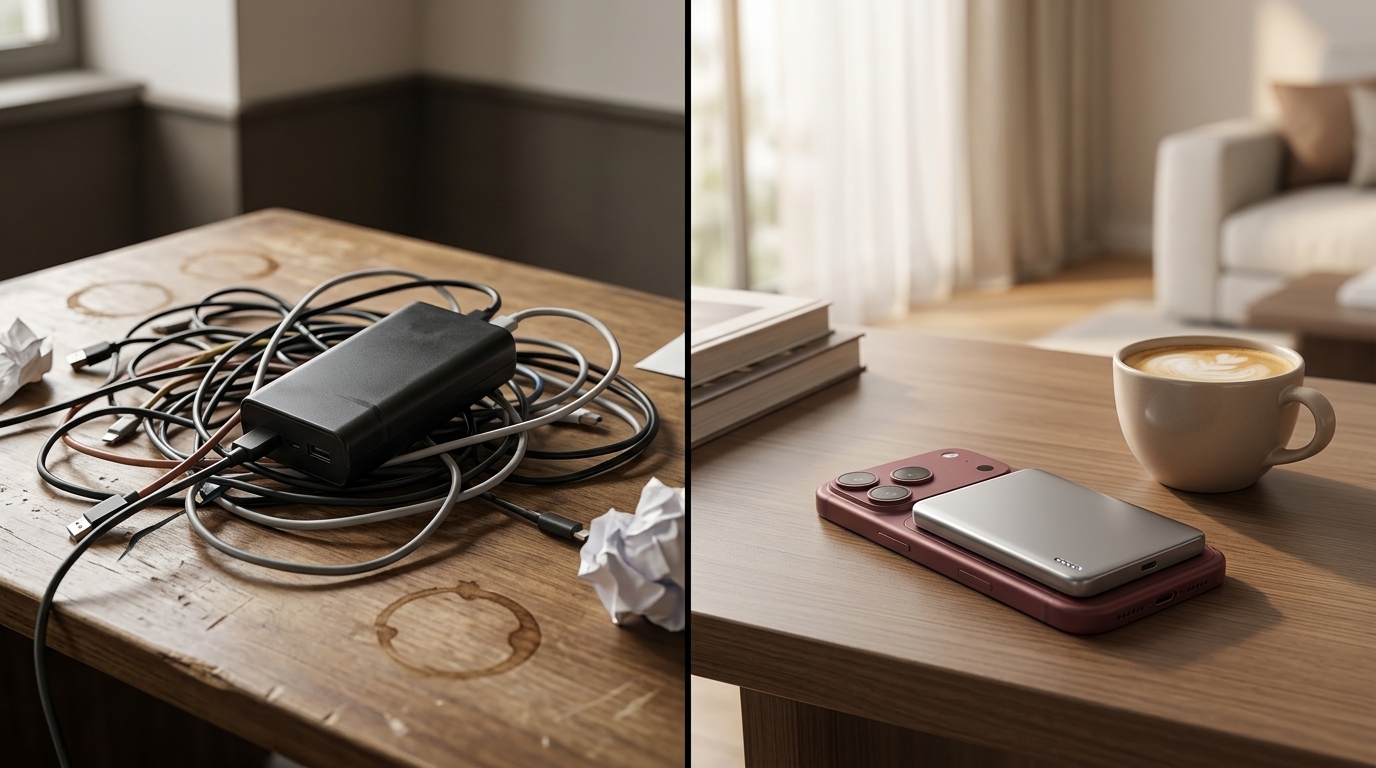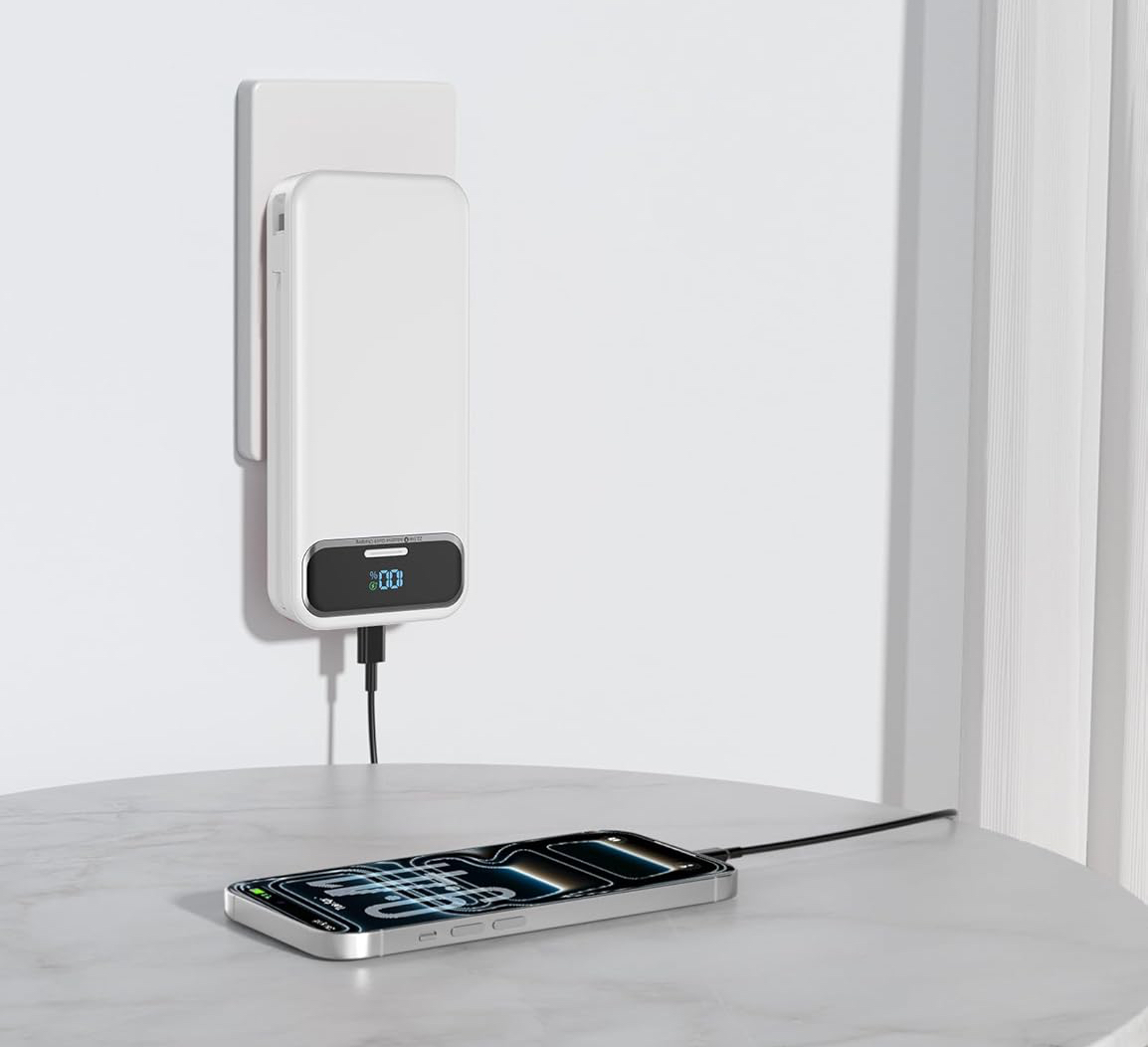
Travel exposes the gaps in how we charge devices. At home, cables stay plugged in. Charging happens in familiar spots. But packing for a trip means gathering pieces—wall adapter, USB cable, portable battery—and hoping nothing gets left behind. The system works until it doesn’t.
For iPhone users especially, the cable question has become more complicated. Older models use Lightning. Newer ones shifted to USB-C. Households often have both. Travelers pack for multiple scenarios, which means more cables, more adapters, more things to forget.
A portable battery with built-in cables and an integrated wall plug changes the equation. Instead of three separate items, it’s one. The cables are permanently attached—typically a Lightning cable, a USB-C cable, and sometimes a micro-USB option. The wall plug folds into the body of the battery itself. To recharge it, you unfold the prongs and plug it directly into an outlet. No adapter needed.
The capacity—20,000mAh—is enough to fully charge most iPhones two to three times. For a weekend trip, that usually means the battery gets plugged in once at the hotel, then powers the phone for the rest of the stay. The LED display shows remaining charge in percentages, which removes the guesswork that older battery packs left open.
What makes this design effective isn’t novelty. It’s reduction. Fewer pieces to track. Fewer opportunities for something to get left in a hotel room or buried in a bag. For users who travel frequently, that simplification compounds over time.
The built-in cables aren’t always the user’s preferred length or style, but they’re always there. That reliability matters more than customization when the alternative is no cable at all. The wall plug adds similar peace of mind—it means one less adapter to carry, one less thing to borrow from the hotel desk.
The behavior shift is subtle. Packing becomes faster. The pre-trip checklist shortens. Charging on the go requires less planning. For iPhone users who’ve spent years managing a tangle of Lightning cables and USB-C adapters, the consolidation feels overdue.
The weight is noticeable—20,000mAh batteries aren’t featherlight—but for most travelers, the tradeoff is acceptable. It’s heavier than a cable alone, but lighter than carrying a cable, adapter, and separate battery.
Previously listed around $50, recent listings have appeared closer to $38.
"Note: Readers like you help support The Apple Tech. We may receive a affiliate commission when you purchase products mentioned on our website."