
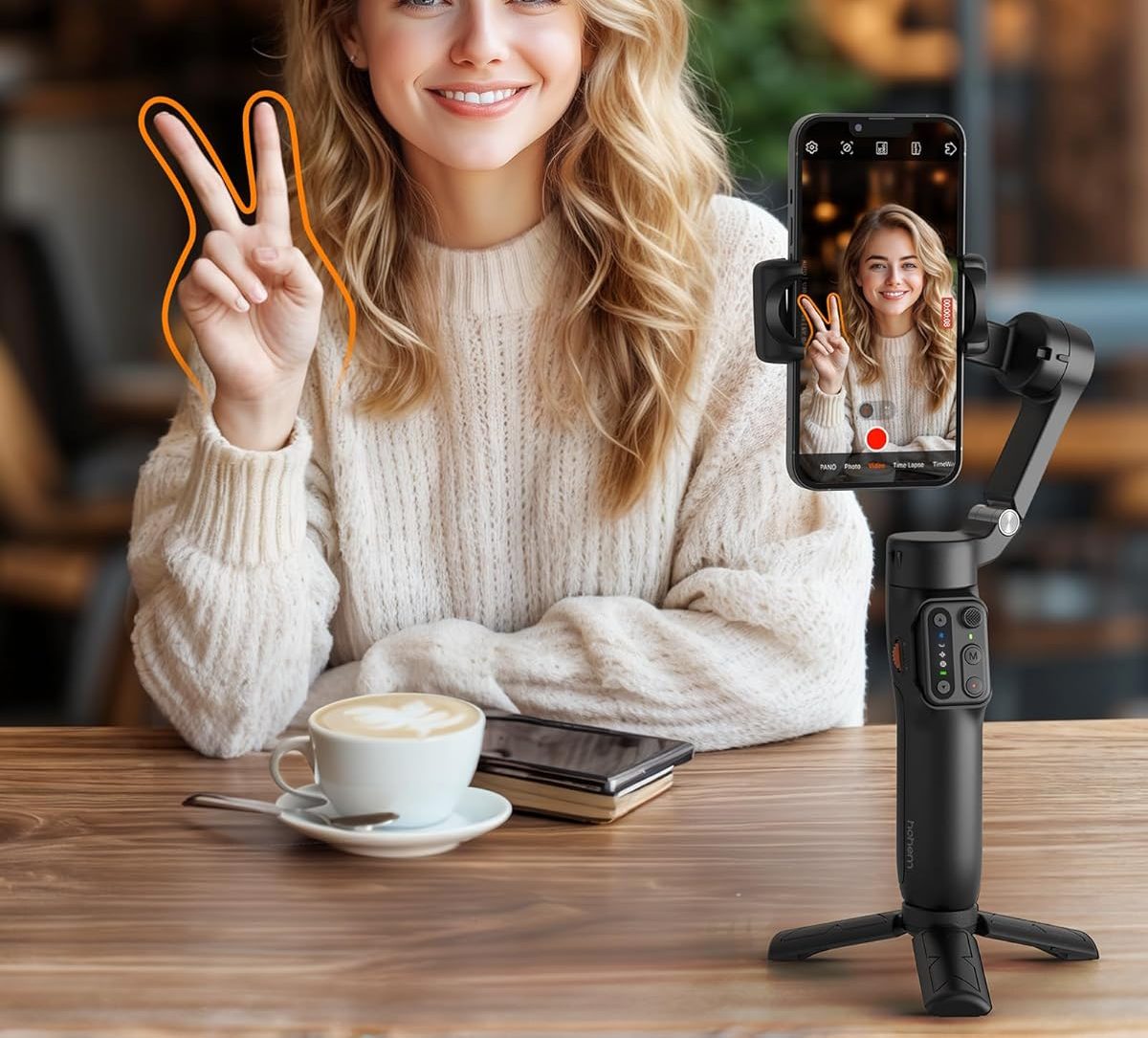
The iPhone has spent years marketing itself as the only camera most people need, and for static moments, that’s largely true. But motion tells a different story. The iPhone shoots beautifully until you’re actually moving through a space, and then the gap between what you saw and what you recorded becomes obvious.
This friction doesn’t announce itself dramatically. It appears in small doses—a birthday dinner where someone walked with their phone extended, a vacation clip that looked smoother in memory than on the screen an hour later. The iPhone’s internal stabilization does work, but it operates within constraints that become visible the moment someone rewatches what they’ve filmed.
A shift happened quietly. People who never considered themselves filmmakers started treating stabilization as infrastructure rather than specialty equipment. Not because they were pursuing a particular aesthetic, but because they’d replayed enough shaky footage to recognize a recurring problem. The language around this equipment changed too—it stopped being called a “gimbal” in casual conversation and became “the thing that keeps it steady.”
What’s notable is how unremarkable this adaptation has become. Stabilizers now fold down and travel in the same mental category as charging cables or AirPods cases. They’re not aspirational gear. They’re a correction for a specific, repeatable limitation that shows up the moment someone walks and films simultaneously.
The iPhone’s video quality keeps improving in ways that are easy to photograph in marketing materials—low light performance, color accuracy, resolution. But the experience of holding the device while moving remains mechanically unchanged, and software can only compensate so much before the physics become visible.
For people who film travel moments or family events, the decision to carry stabilization equipment isn’t about upgrading their content. It’s about closing the gap between intention and result. They wanted their footage to look the way the moment felt, and handheld iPhone video, however computationally refined, kept falling short of that expectation in motion.
Some listings currently reflect a reduction of roughly 20 percent compared with earlier availability. The calculation that matters, though, has less to do with price than with whether someone has rewatched enough of their own footage to notice the shake. Once that threshold is crossed, the behavior tends to stick.
"Note: Readers like you help support The Apple Tech. We may receive a affiliate commission when you purchase products mentioned on our website."